How Tall a Birman’s Cat Tree Should Be
One of the most common questions I get from new Birman parents, or even seasoned ones looking to refresh their feline furniture, is about cat trees. We all want our beloved Birmans to be happy and stimulated, but there's often a lingering doubt: how tall should a cat tree actually be for a Birman? It's a valid concern, because what works for a high-energy, ceiling-scaling breed might be entirely overkill – or even intimidating – for our gentle, more grounded "Sacred Cats." This guide will help you understand your Birman's unique preferences and select the perfect cat tree height to bring them joy and comfort.
Understanding the Birman's Unique Relationship with Height
It's easy to assume all cats love to climb to the highest point in the house, peering down like tiny feline overlords. And while some breeds certainly do, our Birmans have a rather distinctive approach to vertical space. They aren't generally the daredevil acrobats of the cat world, nor are they strictly ground-bound recluses. They sit comfortably in the middle, a true "middle cat" as some breeders call them.
Why the Birman is Not a Ceiling Climber
If you've ever had a Siamese or an Abyssinian, you know the kind of cat that will scale your curtains, cling to the top of your bookshelf, and generally view the ceiling as a personal challenge. That's simply not our Birman. Their ancestors, while perhaps not strictly from ancient Burmese temples as legend suggests, were certainly not bred for extreme aerial maneuvers. Instead, they developed a personality that values companionship and comfort over audacious feats of climbing.
A Birman might enjoy a moderate perch, a spot where they can oversee the household without feeling exposed or precariously balanced. Think of it less as a desire to conquer Everest and more like wanting a comfortable armchair with a good view. They want to be with you, or at least near you, and often that means being on the same general level, perhaps just a little elevated for observation. They don't typically spend their days surveying their domain from the absolute highest point. This gentle nature is a big part of Why a Birman Follows You Without Demanding Anything.
The Birman's Preference for Mid-Height Comfort
So, what does this "middle ground" mean for cat tree height? It means that floor-to-ceiling cat trees, while impressive, often go completely unused by the top couple of levels if they're home to a Birman. Our Birmans tend to prefer perches that are within easy jumping distance, offering a sense of security and a clear escape route if they feel overwhelmed. They like to feel grounded, even when elevated.
They might climb to the middle tiers, curl up, and watch the world go by. This is because they value a sense of belonging and proximity. A Birman might use a cat tree as a cozy nook to observe family life, rather than as a launchpad for aerial attacks on unsuspecting dust bunnies. This preference for comfort and observation is why you might find your Birman on a sofa back or a sturdy table rather than clinging to the top of a giant structure. Understanding How Much Height a Birman Bothers to Jump For is key.
Factors Influencing Your Birman's Cat Tree Height Needs
While the general Birman temperament leans towards moderate heights, there are several individual factors that can influence just how tall your particular Birman might appreciate their cat tree to be. Every cat is an individual, and even within the Birman breed, you'll find variations.
Age and Activity Level
A young Birman kitten, full of boundless but clumsy energy, might initially attempt to scale anything, but their coordination and confidence grow with age. They'll appreciate multiple platforms for exploration and learning, but rarely to extreme heights. As they mature, their true preferences will emerge. Remember, How a Birman's Play Changes at Seven and beyond, indicating a gradual shift in their physical capabilities and interests.
An adult Birman, especially one that's active and healthy, might enjoy a slightly taller tree with multiple levels for stretching and light climbing. However, even then, they're more likely to use the middle sections rather than aiming for the absolute peak. If you have an older Birman, past the age of ten or twelve, their agility might decrease. What an Old Birman Stops Doing Once It Passes Ten often includes less ambitious jumping and climbing. For these senior cats, a tree with lower platforms and gentle ramps is far more appropriate and safer. You don't want them struggling or risking a fall from a height they can no longer comfortably navigate.
Household Dynamics: Other Pets and Children
The presence of other pets, particularly dogs or more boisterous cats, can sometimes influence a Birman's desire for elevation. If your Birman lives with a playful dog, having a mid-height perch can offer them a safe haven, a "dog-free" zone where they can relax and observe without being disturbed. This isn't about escaping a threat, but rather finding a peaceful retreat.
Similarly, in households with young children, a cat tree offers a designated spot where your Birman can retreat from enthusiastic hands, allowing them a sense of control over their interactions. A tree that provides a safe, accessible elevated space can be invaluable for their peace of mind. It's not about hiding, as a Birman is generally quite tolerant with kids, but about having their own space. This plays into Why a Birman Suits a Household With Children, providing a quiet escape.
Personality and Observation Needs
Some Birmans are simply more observant than others. While they are not demanding, they do enjoy being part of the action. A slightly taller cat tree placed near a window or in a busy living area can satisfy this need for observation without requiring them to become a high-flying trapeze artist. They love watching the world go by, whether it's the birds outside or the daily happenings of their family.
However, if your Birman is particularly shy or anxious, a very tall, open cat tree might feel too exposed. For these cats, a sturdy, mid-height tree with enclosed cubbies or private hammocks might offer the security and comfort they crave. Think about where your Birman normally chooses to nap or relax. Do they prefer under the bed, on a low chair, or do they seek out slightly elevated spots like the back of a sofa? Their existing habits will tell you a lot.
Choosing the Right Height: Practical Advice for Your Birman
Now that we understand a Birman's general preferences and the individual factors at play, let's talk practicalities. What does this actually mean when you're standing in front of a bewildering array of cat trees?
Ideal Height Ranges for Birmans
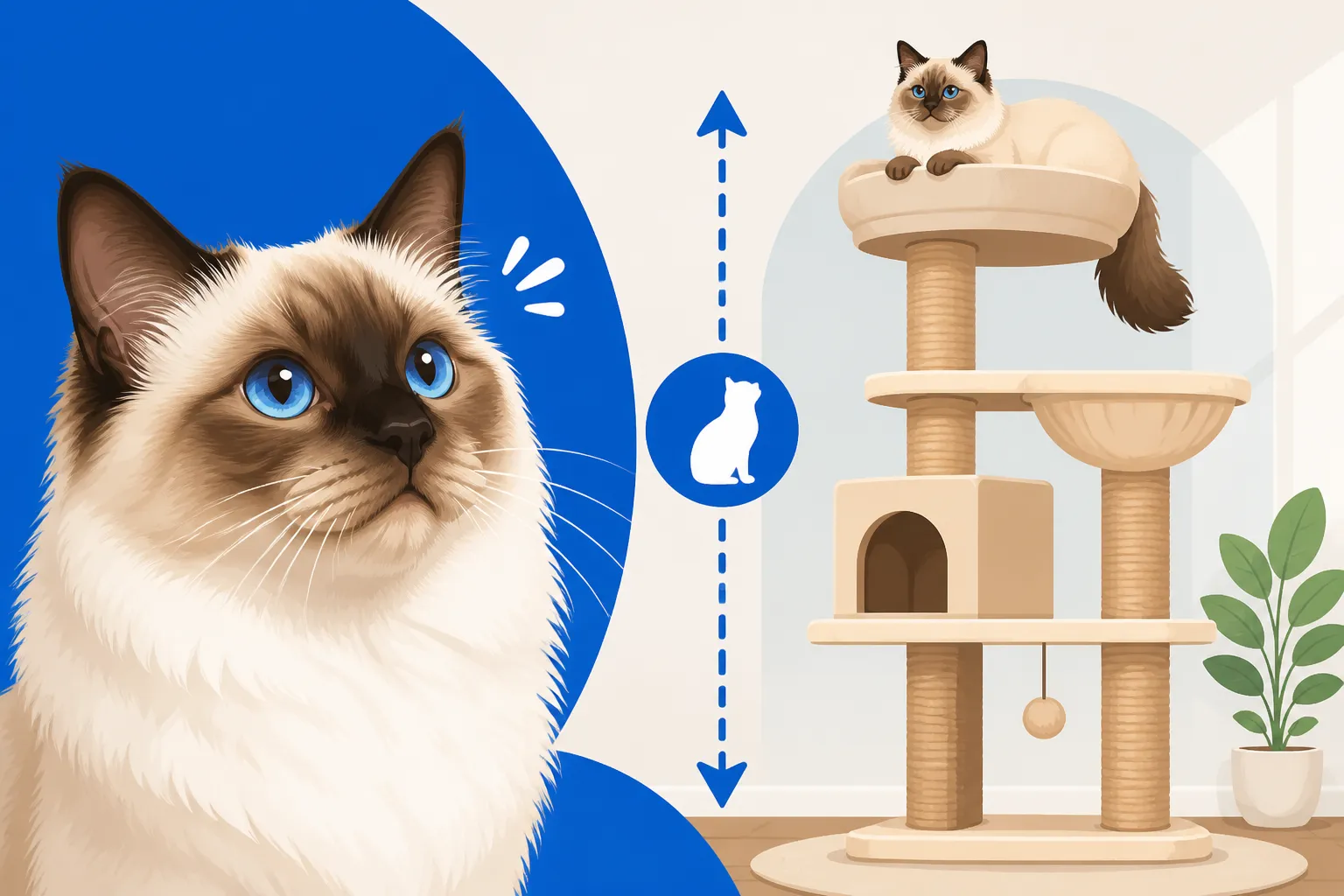
For most Birmans, an ideal cat tree height falls into a "mid-range" category. This typically means anywhere from 3 to 5 feet (around 90 to 150 cm) tall.
- Shorter (2-3 feet): Excellent for kittens, senior Birmans, or those who are less agile. These trees offer easy access and a sense of security without requiring big jumps. They often feature cozy cubbies and perhaps one or two platforms.
- Mid-Range (3-5 feet): This is the sweet spot for the majority of adult Birmans. It provides multiple levels for exploration, scratching posts, and elevated perches for observation without being overly intimidating. Your Birman can easily jump to the highest platform and still feel secure. This range also gives them a good vantage point to interact with you at eye level when you're seated.
- Taller (5+ feet, or floor-to-ceiling): While some Birmans might use the lower and middle sections of a very tall tree, they are unlikely to frequently scale to the very top. If you're considering a taller tree, ensure it has plenty of stable, comfortable platforms at various heights, particularly in the 3-5 foot range, that your Birman will actually use. The very top platforms might end up as decorative dust collectors. Indeed, many Birmans will stop Why a Birman Stops Halfway Up the Cat Tree.
| Birman Age/Type | Recommended Cat Tree Height Range | Key Features to Look For |
|---|---|---|
| Kittens | 2-3 feet (60-90 cm) | Stable base, small steps/ramps, engaging toys, scratch surfaces |
| Active Adults | 3-5 feet (90-150 cm) | Multiple platforms, cozy cubbies, sturdy scratching posts, hammocks |
| Senior/Less Agile | 1-3 feet (30-90 cm) | Wide, low platforms, ramps, soft bedding, easy access, stability |
| Shy/Anxious | 2-4 feet (60-120 cm) | Enclosed spaces, hidden cubbies, secure perches, stability |
What to Look for Beyond Height
Height isn't the only consideration. A cat tree, regardless of its stature, needs to be well-designed to appeal to a Birman.
- Stability is paramount: Birmans are not tiny cats. Males can be quite substantial, and a wobbly tree will deter even the most adventurous Birman. Look for a wide, heavy base and sturdy construction. Always check reviews, perhaps on a site like Amazon, for comments on stability.
- Platform size and comfort: Our Birmans love a good stretch and a comfy nap. Ensure the platforms are large enough for them to sprawl out comfortably, not just perch on. Soft, plush coverings are a big plus.
- Scratching surfaces: Integrated scratching posts wrapped in sisal rope are essential. This encourages appropriate scratching behavior and helps keep their claws healthy.
- Enclosed spaces/cubbies: Many Birmans appreciate a cozy, private hideaway. A cubby hole or a small enclosed bed on one of the lower or middle levels offers a sense of security and a quiet spot for a nap.
- Material: Opt for materials that are easy to clean. While Birmans have a relatively easy-care coat, they still shed. Look for durable, plush fabrics that can withstand regular vacuuming.
- Placement: The most perfectly sized cat tree will be useless if placed in a corner where your Birman never goes. Place it in a high-traffic area, or near a window, where they can observe family life or watch outdoor activities. Many Birmans like to be near their humans, so putting it in the living room where you spend time can be ideal.
Avoiding Overwhelm: When Less is More
Sometimes, our enthusiasm to provide the best for our pets can lead us to overdo it. A massive, multi-level, floor-to-ceiling cat tree might seem like the ultimate feline playground, but for a Birman, it can actually be overwhelming. Too much unused space can feel empty and uninviting.
Focus on quality over quantity of height. A sturdy, well-designed 4-foot tree with comfortable platforms and a cozy cubby will be far more appealing and utilized by your Birman than a towering 7-foot structure with tiny, exposed perches. Remember Why a Birman Prefers Mid Height to the Ceiling – they want comfort and a view, not a summit to conquer.
Integrating the Cat Tree into Your Birman's Environment
A cat tree isn't just furniture; it's a vital piece of enrichment that can significantly enhance your Birman's quality of life. Making it a successful addition to your home involves more than just picking the right height.
Strategic Placement for Maximum Enjoyment
Where you place the cat tree is almost as important as its height. Consider your Birman's natural habits and preferences.
- Near a Window: This is a prime location. Birmans love to watch the world outside, whether it's birds, squirrels, or simply people passing by. A cat tree by a window provides the perfect elevated viewing platform.
- In a Social Area: Place the tree in a room where you spend a lot of time, like the living room or a den. Birmans thrive on companionship and enjoy being near their humans. Even if they're not on your lap, being in the same room, perhaps on their tree, makes them feel part of the family. How a Birman Follows You Room to Room shows their desire for proximity.
- Away from High-Traffic Paths (but still accessible): While Birmans enjoy being social, they also appreciate a spot that isn't constantly in the way of foot traffic. A slightly quieter corner of a social room is often ideal.
- Avoid Isolated Locations: Resist the urge to tuck the cat tree away in a spare room or basement where your Birman might feel lonely or ignored. They do better with company. Why a Birman Does Better With Company applies to their environment as well.
Encouraging Use: Making the Tree Irresistible
Once you've chosen and placed the perfect cat tree, you might need to encourage your Birman to use it, especially if it's new.
- Scent Familiarity: Rub a blanket or toy that smells like your Birman on the cat tree. This helps make it feel like "theirs."
- Treats and Toys: Place a few favorite treats or toys on the lower and middle platforms. This entices them to explore. You might even find some hidden catnip on the top perch!
- Interactive Play: Use a wand toy to guide them up and down the tree. Birmans play gently, so slow, engaging movements work best. Which Wand Toys Move Slowly Enough for a Birman are ideal here.
- Praise and Affection: When your Birman uses the tree, offer soft praise and gentle pets. They respond well to positive reinforcement. Why Praise Motivates a Birman More Than Food holds true here.
- Consider a Companion: If your Birman is an only cat and seems hesitant, consider if they might benefit from a feline companion. Why a Birman Does Badly as an Only Cat is a common experience, and sometimes, a second cat's confidence can encourage the first one.
A cat tree for your Birman is an investment in their happiness and well-being. By understanding their gentle nature, their preference for mid-height comfort, and considering their individual needs, you can choose a tree that they will genuinely love and use for years to come. Look for options on platforms like Amazon, paying attention to reviews about stability and comfort, and you’ll be well on your way to creating a perfect elevated haven for your beloved Birman.
Disclaimer
This article is for general informational purposes only and does not constitute professional advice. Laws, prices and regulations vary by location and change over time. Consult a qualified professional for guidance on your specific situation.