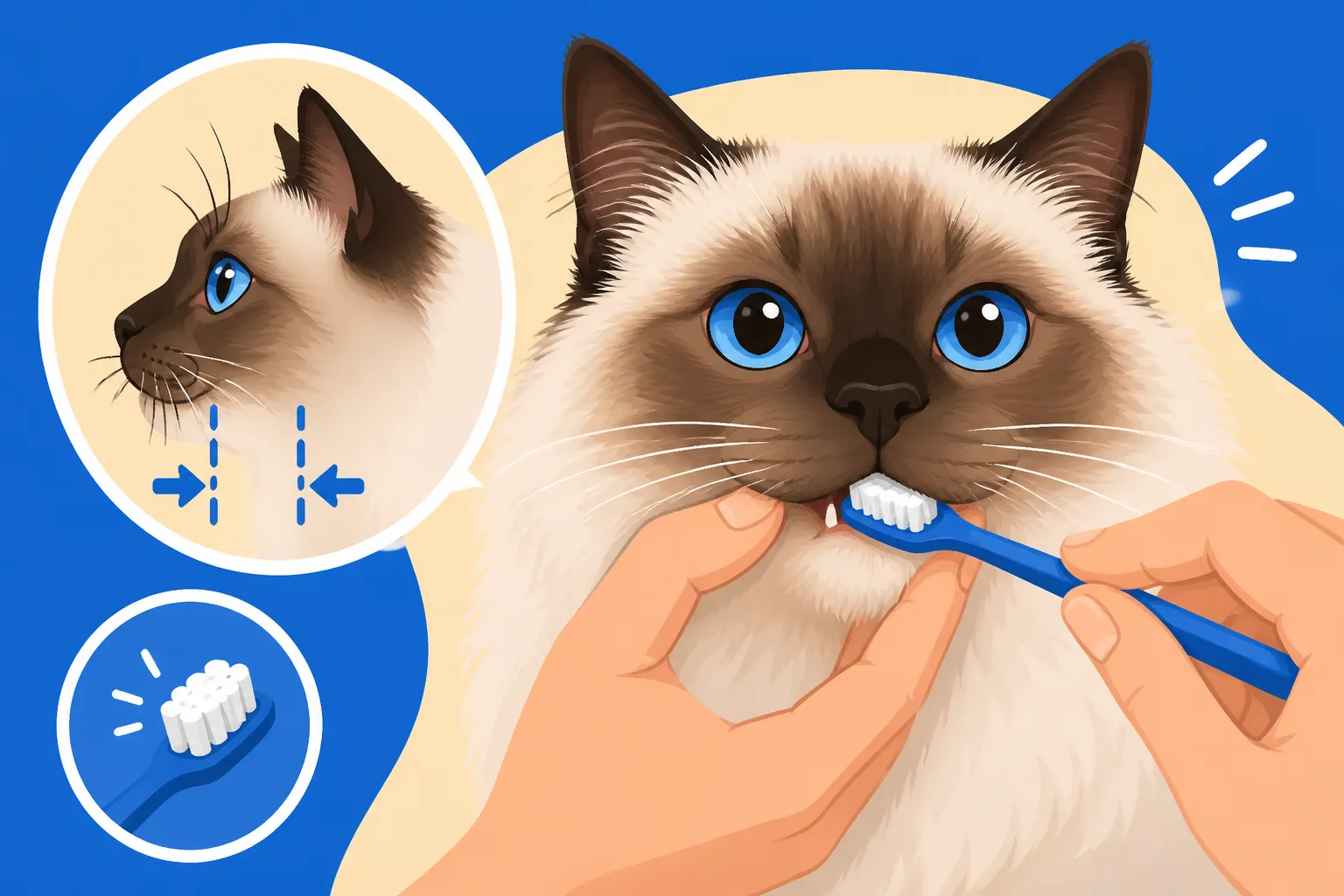
Getting a Toothbrush Into a Birman’s Narrow Jaw
One of the quiet challenges many Birman cat owners face, often without realizing it until dental problems arise, is the unique anatomy of their beloved feline's mouth. Birmans, with their elegant, slightly longer muzzles compared to some of their more "cobby" cousins, nonetheless possess jaws that can be surprisingly narrow, making routine dental care a tricky endeavor. This guide will walk you through everything you need to know about navigating your Birman's delicate oral landscape, from understanding their specific dental needs to mastering the art of toothbrushing and ensuring a lifetime of healthy smiles.
The Birman's Unique Jaw: Why Dental Care is So Crucial
You might look at your beautiful Birman and think, "What a perfect cat!" And they are, of course. But beneath that placid, gentle exterior lies a mouth that requires special attention. Their ancestry, particularly the delicate structures passed down, often means a dental setup that isn't always conducive to self-cleaning, leading to potential issues if left unaddressed.
The Anatomical Reality of a Birman's Narrow Mouth
Many Birman owners, myself included, have had that moment at the vet where the technician gently tries to peer into our cat’s mouth, only to remark on how surprisingly compact and narrow the dental arcade is. While Birmans don't have the extreme brachycephalic (flattened) faces that lead to severe dental crowding in some breeds, their elegant, moderately wedge-shaped head can still result in a jaw that makes manual toothbrushing a bit of a tight squeeze. The smaller size of their mouth, coupled with the way their teeth are set, means there's less natural space for food particles to dislodge or for their tongues to effectively clean surfaces. It’s not necessarily a defect, but it is a characteristic that owners need to be aware of because it directly impacts how easily plaque and tartar can accumulate. Think of it like trying to clean a small, intricate vase with a large brush – it just doesn't quite fit.
Common Dental Issues Birmans Face
Because of this narrow jaw and the inherent genetic predispositions of many purebred cats, Birmans can be prone to several common dental problems. The most prevalent, by far, is periodontal disease. This insidious condition begins with plaque, a sticky film of bacteria, food particles, and saliva, building up on the teeth. If not removed daily, plaque hardens into tartar, or calculus, which is a rough, calcified deposit that can only be removed by professional dental cleaning under anesthesia. Tartar buildup irritates the gums, leading to gingivitis – inflammation of the gums, which often presents as redness, swelling, and bleeding.
If gingivitis isn't treated, it progresses to periodontitis, where the inflammation spreads beneath the gum line, damaging the tissues supporting the teeth. This can lead to bone loss, receding gums, painful abscesses, and ultimately, tooth loss. You might notice your Birman becoming hesitant to eat certain foods, or you might spot a foul odor from their mouth. Beyond periodontal disease, Birmans can also experience resorptive lesions, where parts of the tooth (often the root or crown) are eroded away, exposing sensitive nerve endings. These are incredibly painful and often require extraction. How Dental Disease Progresses in a Birman outlines this process in more detail.
The Silent Progression of Periodontal Disease
One of the most frustrating aspects of dental disease in cats, especially in a quiet, stoic breed like the Birman, is its silent progression. Cats are masters at hiding pain and discomfort, a survival instinct rooted in their wild ancestors. Your Birman might be suffering from significant dental pain, yet continue to eat, play, and interact with you, albeit perhaps with subtle changes that are easy to miss. They might avoid crunching on hard kibble or toys, they might groom less, or they might just seem a little more withdrawn than usual. Why a Quiet Birman Is Easy to Misread goes into how their placid temperament can mask illness. By the time you notice overt signs like drooling, difficulty eating, or a bad smell, the disease is often advanced, requiring more intensive and costly veterinary intervention. This quiet suffering is precisely why a proactive approach to dental care, starting with regular home brushing, is not just recommended, but essential for your Birman's long-term health and comfort.
Starting Early: Laying the Foundation for a Lifetime of Clean Teeth
The best defense against dental problems is a good offense, and that means starting young. Just like with any other aspect of their training and socialization, introducing dental care to your Birman kitten as early as possible sets them up for success and acceptance.
Introducing Handling and Mouth Touches to a Birman Kitten
When you bring home your Birman kitten, they're typically around 12 to 16 weeks old. This is a golden window for socialization and habituation. Even before you introduce a toothbrush, get your kitten used to having their face, mouth, and paws handled gently. Start by simply stroking their cheeks and chin while they're relaxed and purring on your lap. Gradually, over days or weeks, progress to gently lifting their lips to peek at their tiny teeth and gums. Don't force it; keep sessions brief, positive, and always follow with a treat or playtime.
The goal here isn't to clean their teeth yet, but to build trust and desensitize them to having fingers near and eventually in their mouth. This groundwork is vital. A Birman, known for its gentle nature, is often more receptive to this kind of consistent, positive conditioning than some more feisty breeds. Make it a part of your daily cuddle ritual. Remember, patience is your greatest tool. What a Birman Kitten Should Learn by Twelve Weeks includes other crucial early training.
Desensitization: Making the Toothbrush a Friend, Not a Foe
Once your Birman kitten tolerates gentle mouth handling, it's time to introduce the actual toothbrush and toothpaste. Again, think small steps. Start by letting your kitten sniff the cat-specific toothpaste (never human toothpaste, which contains xylitol and fluoride that are toxic to cats). Put a tiny dab on your finger and let them lick it off. Many cat toothpastes come in appealing flavors like chicken or seafood, which can be a great motivator.
Next, introduce the toothbrush itself. Let them sniff it, perhaps even lick a tiny bit of toothpaste off it. The goal is to make it seem like a neutral or even pleasant object, not something threatening. You might gently rub the toothbrush (without toothpaste at first) against their cheek or chin, associating it with positive touch. Over time, you can progress to briefly touching the brush to their gums or the outside of their teeth. Keep it playful and short. If they resist, back off and try again later. This desensitization process might take days, or even a few weeks, but it's an investment in their long-term health and your peace of mind. Introducing a Toothbrush to a Birman Kitten offers more specific tips for this stage.
Establishing a Routine: Consistency is Key
The secret to successful dental care, like any habit, is consistency. Aim to establish a regular time for toothbrushing, ideally daily, or at least every other day. Cats thrive on routine, and knowing what to expect can reduce anxiety. Many owners find that brushing first thing in the morning or just before a favorite meal or treat works best. It doesn't have to be a marathon session; even 30-60 seconds of effective brushing on the outer surfaces of their teeth can make a huge difference.
If you miss a day, don't fret or give up. Just pick up where you left off. The idea is to weave it into the fabric of your Birman's day so it becomes as normal as mealtime or playtime. The cumulative effect of consistent daily care far outweighs sporadic, intense attempts. Remember, your Birman is a creature of comfort and predictability, and a stable routine will make this new habit much more acceptable in the long run.
Selecting the Best Tools for Your Birman's Delicate Jaws
Given the narrowness of a Birman's jaw, choosing the right tools is paramount. You can't just grab any old toothbrush designed for a human or even a larger dog; it simply won't fit or be effective.
Finding the Perfect Toothbrush for a Narrow Mouth
When it comes to toothbrushes for a Birman, size absolutely matters. You're looking for something with a very small head and soft bristles. Here are a few options that often work well:
- Finger Brushes: These slip over your fingertip and offer a very gentle introduction. They provide direct contact and control, which can be great for kittens or highly sensitive cats. However, their cleaning power is limited, and they might not reach all the nooks and crannies effectively for long-term daily brushing.
- Child-Sized Toothbrushes: Some extra-soft child toothbrushes, particularly those designed for infants, can have a sufficiently small head to navigate a Birman's mouth. Just make sure the bristles are truly soft.
- Pet-Specific Toothbrushes: Many brands offer toothbrushes specifically designed for cats, often with a dual-head design (one larger, one smaller) or angled heads to reach back teeth. Look for ones marketed for "small cats" or "kittens." These are often available from pet supply retailers like Chewy or on Amazon, where you can compare different sizes and styles.
- Electric/Sonic Toothbrushes for Pets: While less common for cats, some small, battery-operated sonic toothbrushes for pets exist. These can be very effective if your Birman tolerates the vibration, but they often come with a higher price tag and might be too intimidating for an initial introduction.
The key is to find a brush head that comfortably fits into your Birman's mouth without causing discomfort or having to pry their jaw open too wide. Which Brush Head Fits a Birman's Small Mouth provides more detail on specific dimensions to look for.
Choosing a Cat-Safe and Appealing Toothpaste
This is critical: never use human toothpaste on your cat. Human toothpaste contains fluoride, which is toxic if ingested by cats, and other ingredients like xylitol that are highly dangerous. You must use toothpaste specifically formulated for felines. These are not meant to be rinsed and swallowed safely.
Cat toothpastes come in a variety of flavors designed to be palatable to cats, often resembling their natural prey. Common flavors include:
- Chicken or Poultry: A popular choice for many cats.
- Seafood (tuna, salmon): Another highly appealing option.
- Malt or Liver: Some cats enjoy these richer flavors.
The flavor isn't just a gimmick; it's a huge part of encouraging your Birman to accept the brushing process. Many cats actually enjoy the taste of their toothpaste, turning brushing into a treat rather than a chore. Experiment with a few different flavors to see what your Birman prefers. Brands like C.E.T. or Virbac offer various flavors that are widely available at vet clinics and pet stores, including online retailers. Which Flavored Toothpaste a Birman Will Accept has additional insights on finding the right one.
Exploring Other Helpful Dental Aids and Finger Brushes
Beyond traditional toothbrushes, there are other tools that can either supplement brushing or serve as an alternative if brushing proves impossible for your particular Birman.
- Finger Brushes: As mentioned, these are excellent for introducing the concept of oral care and for cats who are extremely resistant to a standard brush. They allow you to feel exactly where you are touching and apply gentle pressure. They’re less abrasive than bristles, but also less effective at scrubbing off plaque.
- Dental Wipes: These are textured wipes that you wrap around your finger to rub on your cat's teeth and gums. They're a step up from just finger-rubbing but still less effective than a bristled brush. They can be a good interim solution or for maintaining areas that are particularly hard to reach with a brush.
- Oral Rinses/Sprays: These typically contain antiseptic ingredients that help reduce bacteria in the mouth. They are generally less effective than brushing, as they don't mechanically remove plaque, but they can be a helpful addition, especially if your cat has a mild case of gingivitis or if brushing is inconsistent. They often come with applicator tips that can be tricky to use in a narrow jaw.
- Dental Water Additives: These are solutions you add to your cat's drinking water, designed to help reduce plaque and tartar formation. Their efficacy varies, and some cats might refuse to drink water with an additive. They should never replace brushing but can be a supplementary tool.
When selecting any of these, always ensure they are specifically formulated and safety-tested for cats. A quick search on Chewy or Amazon will show you a plethora of options, often with customer reviews that can give you an idea of palatability and ease of use for other cat owners.
| Dental Tool | Pros | Cons | Best Use Case |
|---|---|---|---|
| Finger Brush | Easy to introduce, good tactile control, gentle. | Less effective at plaque removal, limited reach. | Kittens, very sensitive cats, initial desensitization, mild plaque. |
| Small Head Pet Brush | Effective plaque removal, good reach for back teeth, various angles. | Can be intimidating for some cats, requires more cooperation. | Daily brushing for cooperative cats, full dental hygiene. |
| Child-Sized Brush | Often readily available, very soft bristles, small head. | Not cat-specific, check ingredients for toxic substances if not pet-labeled. | Alternative if pet brushes are unavailable, short-term use. |
| Dental Wipes | Convenient, less intimidating than a brush, good for quick cleans. | Less effective than brushing, doesn't get into gum line well. | Quick cleans between brushings, for cats who won't tolerate a brush. |
| Oral Rinses/Sprays | Helps reduce bacteria, can target specific areas. | Does not mechanically remove plaque, some cats resist application. | Supplementary care, managing gingivitis, after extractions. |
| Water Additives | Easiest application (just add to water). | Variable efficacy, some cats may refuse to drink, no plaque removal. | Passive supplemental care, for cats where other methods are impossible. |
A Gentle Approach: Step-by-Step Birman Toothbrushing
Now that you have your tools, let’s talk about the actual process. Remember, a Birman values peace and gentle interaction, so approach this with a calm demeanor and a light touch.
The First Steps: Familiarization and Trust Building
Assuming you've already done the groundwork of handling and toothpaste introduction, your next step is to get the toothbrush into their mouth for the briefest of moments. Start by simply letting your Birman lick the toothpaste off the brush while you hold it. This reinforces the positive association with the flavor and the object.
Once they're comfortable with that, gently lift their lip on one side and quickly brush just one or two teeth near the front of their mouth. Don't worry about getting every tooth; the goal is success, not perfection, especially in these early stages. Immediately reward them with praise, a small treat, or a favorite toy. Keep these initial sessions extremely short – literally just a few seconds of brushing. The focus is on building a positive experience and reinforcing that this is a benign, even pleasant, interaction. If you notice any tension or resistance, stop, reassure your Birman, and try again later or shorten the next session.
Mastering the Technique: Reaching All Surfaces
As your Birman becomes more accustomed to the brush, you can gradually increase the duration and coverage. The key is to focus on the outer surfaces of the teeth, particularly where the tooth meets the gum line. This is where plaque accumulates most rapidly. You'll likely find that focusing on the canine teeth (the long pointy ones) and the molars (the flat back teeth) is most important, as these are often the first areas to develop significant plaque and tartar.
To reach the back teeth in a narrow jaw, you might need to use a slight angle with the toothbrush. Gently pull back their cheek with one finger, and slide the brush in, aiming the bristles towards the gum line at a 45-degree angle. Use small, circular motions, just like you would brush your own teeth. Don't scrub vigorously; gentle, thorough cleaning is what’s needed. Don't worry about brushing the inside surfaces of their teeth; their tongue and saliva do a reasonable job there. Focus your efforts where they matter most – the outer surfaces and gum line. If your Birman starts to show signs of discomfort, like pulling away or trying to bite, stop immediately. Consistency and patience will get you further than force.
Making Each Session Positive and Stress-Free
The entire brushing experience should be as positive and low-stress as possible for your Birman. Here are some tips to achieve that:
- Choose the Right Time: Pick a time when your Birman is relaxed, perhaps after a nap or during a quiet moment of cuddles. Avoid times when they're playful, hungry, or agitated.
- Quiet Environment: Conduct brushing in a calm, quiet space free from distractions or loud noises.
- Gentle Handling: Use soft, reassuring tones and gentle movements. Avoid sudden grabs or forceful restraint. Your Birman's placid nature makes them generally agreeable, but they're also sensitive to abruptness.
- Rewards, Rewards, Rewards: Always, always, always end with a positive reinforcement. This could be a special treat (like a lickable tube treat), a few minutes of intense playtime with a favorite wand toy, or extra cuddles. Make sure the reward is highly motivating for your individual cat.
- Keep it Short: For a Birman with a narrow jaw, extended brushing sessions can quickly become uncomfortable. Aim for 30-60 seconds of effective brushing. Consistency over duration is the goal.
- Praise: Throughout the session, offer soft words of praise, telling your Birman how good they are. Your voice can be a powerful calming tool.
By focusing on these elements, you transform a potentially unpleasant chore into another bonding opportunity, reinforcing the trust you share with your gentle companion.
Navigating Resistance: Tips for a Reluctant Birman
Even the most placid Birman might initially resist having their teeth brushed. It's an unnatural act for a cat, and their instincts tell them to protect their mouth. Don't be discouraged; resistance is normal.
Understanding Why Your Birman Might Resist
There are several reasons your Birman might be reluctant to embrace toothbrushing:
- Novelty and Fear: Anything new can be scary for a cat. The sensation of a brush, the smell of toothpaste, or the feeling of having their mouth manipulated can trigger an instinctual fear response.
- Discomfort or Pain: If your Birman already has underlying dental issues like gingivitis or a resorptive lesion, brushing can be painful. Why a Birman Flinches When Its Back Teeth Are Touched explores this further. If resistance is sudden or intense, a vet check-up might be in order to rule out existing pain.
- Bad Experience: A past negative experience, perhaps a forceful attempt at brushing or an unpleasant vet visit, can make your Birman wary.
- Lack of Control: Cats, including Birmans, like to feel in control of their environment. Being held down or having their head restrained can be distressing.
- Wrong Tools/Technique: A brush that's too big or bristles that are too stiff can cause discomfort, as can an overly aggressive brushing technique.
Identifying the root cause of the resistance can help you tailor your approach and increase your chances of success.
Patience and Positive Reinforcement: The Birman Way
For a Birman, known for their calm and affectionate nature, patience and positive reinforcement are truly the only effective methods. Force will only lead to fear and resentment, making future attempts impossible.
- Go Back to Basics: If your Birman resists, regress to an earlier, more comfortable step. If they're fighting the brush, go back to just handling their face and offering toothpaste on your finger. Rebuild trust slowly.
- Shorter Sessions: Dramatically shorten your brushing sessions. Even if you only manage to touch the brush to one tooth for two seconds, consider it a victory and reward generously.
- More Rewards: Increase the value and frequency of your rewards. What's your Birman's absolute favorite treat? Use that exclusively for brushing sessions. A lickable treat like a churu can be smeared on a plate for them to enjoy immediately after.
- Distraction: Some cats respond well to distraction. While one person brushes, another can offer a treat or play with a quiet toy.
- Vary Position: Try different positions. Some Birmans are more relaxed if they're on your lap, others prefer being on a counter where they feel more secure.
- Consistency, Not Intensity: As mentioned before, consistent, gentle attempts are far more effective than infrequent, forceful ones. Don't expect perfection, just progress.
Remember the Birman temperament: they are gentle and trusting. Harness that trust, rather than breaking it, to make dental care a positive part of their life.
When to Take a Break and Reassess
There will be days when your Birman simply isn't having it. They might be stressed, tired, or just in a mood. On these days, it’s far better to take a break than to push the issue. Forcing a resistant cat can cause fear and aggression, setting back your progress significantly.
If you consistently meet strong resistance, it's time to reassess your approach.
- Rule out Pain: Schedule a vet check-up to ensure there isn't an underlying dental problem causing pain. It’s hard to get a cat to tolerate brushing when their mouth hurts.
- Evaluate Tools: Is your toothbrush too big? Is the toothpaste flavor unappealing? Try a different brand or style of brush, or another flavor of toothpaste. You might even try small cat treats that double as rewards.
- Consult Your Vet or a Professional Groomer: They might have specific techniques or tools for difficult cases. They can also demonstrate proper brushing technique.
- Consider Alternatives: If daily brushing truly isn't possible, you'll need to rely more heavily on other dental care strategies and more frequent professional cleanings.
Don't see "giving up" on daily brushing as a failure. See it as an opportunity to find what does work for your individual Birman, even if that means a different combination of strategies.
Comprehensive Dental Health: Beyond Brushing
While daily brushing is the gold standard for at-home dental care, it's not the only piece of the puzzle. A holistic approach to your Birman's oral health includes diet, specialized products, and professional intervention.
The Role of Dental Diets and Treats
Certain cat foods and treats are specifically designed to help reduce plaque and tartar. These products often have unique textures, shapes, or ingredients that work in a few ways:
- Mechanical Abrasion: Some kibbles are larger and have a fibrous, chewy texture that, when chewed, helps to scrub plaque off the tooth surface. It's like a mild brushing action with every bite.
- Chemical Agents: Other diets or treats contain ingredients that bind to calcium in saliva, preventing its incorporation into plaque to form tartar. Some may have enzymes that break down plaque.
Look for products that carry the Veterinary Oral Health Council (VOHC) seal of acceptance. This seal indicates that the product has met standards for reducing plaque and/or tartar. While dental diets and treats can be beneficial, they are generally considered supplementary to brushing, not a replacement. A cat primarily eating wet food might not get the same abrasive action as one on dental kibble. However, Whether Dental Treats Do Anything for a Birman's Gums notes they can certainly help maintain gum health when used correctly. Brands like Hills t/d or Royal Canin Dental are often recommended by veterinarians. You can find these specialised dental foods and treats at reputable online retailers like Chewy.
Water Additives and Oral Rinses: Do They Work?
Water additives and oral rinses fall into the category of chemical plaque control.
- Water Additives: These are liquids that you mix into your Birman's drinking water daily. They typically contain antiseptics like chlorhexidine or zinc salts that help reduce bacteria in the mouth and freshen breath. The idea is that as your cat drinks, the active ingredients are distributed throughout their mouth. The main challenge is palatability; some cats detect the additive and may refuse to drink, which can lead to dehydration. Always introduce them gradually and monitor your cat's water intake. Their effectiveness is generally considered modest compared to mechanical cleaning.
- Oral Rinses/Sprays: These are applied directly to the gums and teeth. They usually contain similar antiseptic ingredients to water additives. They can be helpful for targeted application, especially if your Birman has a specific area of gingivitis. However, applying them regularly can be challenging, especially in a cat with a narrow jaw and limited patience.
These products are best used as adjuncts to a brushing routine or as a primary method for cats who absolutely will not tolerate brushing. They reduce the bacterial load and can improve breath, but they don't physically remove established plaque and tartar as effectively as brushing or professional cleaning.
The Importance of Professional Veterinary Dentals
Despite your best efforts at home, your Birman will likely need professional dental cleanings throughout their life. This is the only way to remove hardened tartar that brushing cannot tackle.
A professional dental cleaning typically involves:
- Anesthesia: Cats require general anesthesia for a thorough dental cleaning. This allows the veterinarian to perform a complete examination of the oral cavity, including areas below the gum line, without causing pain or stress. While anesthesia always carries a slight risk, modern veterinary anesthesia protocols are very safe, especially with pre-anesthetic blood work and monitoring.
- Scaling: Using ultrasonic and manual dental instruments, the vet or vet technician removes plaque and tartar from above and below the gum line. This subgingival cleaning is crucial, as many dental problems originate here.
- Polishing: After scaling, the teeth are polished to smooth out any microscopic etches left by the scaling tools. This creates a smooth surface that makes it harder for plaque to adhere.
- Dental X-rays: Often, X-rays are taken to assess the health of the tooth roots and jawbone, as many dental problems, like resorptive lesions or root infections, are not visible on the surface.
- Extractions: If severe disease, damage, or pain is present, the vet may perform tooth extractions.
The frequency of professional cleanings depends on your Birman's individual needs, genetics, diet, and the success of your at-home care. Some Birmans may need them yearly, while others might go longer. How Often a Birman's Narrow Jaw Needs a Scale and Polish delves into this frequency. Your veterinarian is the best person to advise on a schedule.
Spotting Trouble: Signs Your Birman Needs Dental Attention
As discussed, Birmans are stoic creatures. It's up to you, their attentive owner, to recognize the subtle cues that indicate dental pain or disease.
Visible Clues: Red Gums, Tartar, and Broken Teeth
While your Birman might not complain, their mouth often tells a different story. When you're doing your regular home brushing, or even just checking their mouth, look for these visible warning signs:
- Red, Swollen Gums (Gingivitis): Healthy gums are pale pink. If you see redness, puffiness, or bleeding along the gum line, especially where the tooth meets the gum, this is a clear sign of inflammation and gingivitis.
- Yellow or Brown Tartar Buildup: Plaque is usually invisible, but once it hardens into tartar, it becomes visible as a yellow, brown, or even greenish-black crust on the tooth surface, particularly near the gum line.
- Foul Breath (Halitosis): While "cat breath" is often accepted, truly foul, offensive breath is not normal and is usually a strong indicator of bacterial overgrowth due to dental disease.
- Broken, Chipped, or Missing Teeth: Periodically check for any obvious damage to the teeth. Cats can break teeth on hard toys or bones, or teeth can become loose or fall out due to advanced periodontal disease.
- Drooling or Pawing at the Mouth: Excessive drooling, especially if it's thick or discolored, or repeatedly pawing at their mouth or face, can signal discomfort or pain.
- Receding Gums: In more advanced cases, the gum line may recede, exposing the root surface of the tooth.
Any of these signs warrant a call to your veterinarian for a thorough examination.
Behavioral Changes: Eating Habits and Pain Signals
Beyond visible signs, your Birman might exhibit changes in behavior that point to oral discomfort:
- Changes in Eating Habits: This is one of the most common, yet often subtle, indicators. Your Birman might:
- Show reluctance to eat hard food (kibble) but readily eat wet food.
- Chew on only one side of their mouth.
- Drop food from their mouth while eating. Why a Birman That Drops Food Has a Mouth Problem highlights this specific symptom.
- Eat more slowly or hesitantly.
- Beg for food but then turn away when offered.
- Decreased Grooming: Painful mouths can make self-grooming difficult, leading to a duller, unkempt coat.
- Reluctance to Be Petted or Touched Near the Face: If your Birman suddenly becomes defensive or flinches when you touch their head or face, it could be a sign of pain.
- Increased Irritability or Withdrawal: While Birmans are typically placid, chronic pain can make them more irritable, less interactive, or cause them to hide more.
- Weight Loss: In severe cases, if the pain is significant enough to interfere with eating, your Birman might start to lose weight. Why a Birman's Weight Should Be Recorded Every Visit is important for tracking this.
If you observe any of these changes, don't wait. A veterinary check-up is essential to identify and address the underlying dental issue.
The Long-Term Consequences of Untreated Dental Disease
Ignoring dental disease can have severe long-term consequences, extending far beyond just a painful mouth and lost teeth. The mouth is a gateway to the rest of the body. The bacteria from severe periodontal disease can enter the bloodstream and travel to other organs, including the heart, kidneys, and liver. This can lead to serious systemic infections and exacerbate existing conditions.
For example, chronic inflammation from dental disease puts a constant strain on the immune system. Kidney disease, a common issue in older cats, can be worsened by the additional bacterial load. Heart conditions can also be complicated by oral infections. Essentially, poor oral health can compromise your Birman's overall well-being and shorten their lifespan. Investing in good dental care isn't just about keeping their breath fresh; it's about safeguarding their entire health for the many happy years you have together. Whether a Birman Keeps Its Teeth Into Its Teens often depends on consistent dental care throughout their life.
Ensuring a Lifetime of Oral Wellness for Your Birman
A commitment to your Birman's dental health is a commitment to their overall happiness and longevity. It's an ongoing effort, but one that pays dividends in quality of life.
Integrating Dental Care into Routine Health Checks
Dental health should be a regular topic of discussion with your veterinarian. Every annual check-up should include a thorough oral examination. Don't hesitate to bring up any concerns you have about your Birman's breath, eating habits, or behavior. Your vet can provide guidance on your home care routine, recommend specific products, and advise on the timing for professional dental cleanings.
As your Birman ages, dental checks become even more critical. Older cats are more prone to dental disease, and early intervention can prevent more serious problems. The veterinarian can also check for other oral issues like oral tumors, which can become more common with age. By making dental health a standard part of your Birman's wellness routine, you're ensuring that potential problems are caught early before they become advanced and painful. How Often a Birman's Teeth Come Off the Vet's List is a great question to ask your vet during these visits.
The Link Between Oral Health and Overall Well-being
It truly cannot be overstated: your Birman's oral health is inextricably linked to their overall health. A healthy mouth means:
- Comfort and Pain-Free Eating: Your Birman can enjoy their food without pain, ensuring proper nutrition and a happy eating experience.
- Better Digestion: Healthy teeth facilitate proper chewing, which is the first step in the digestive process.
- Reduced Systemic Health Risks: By minimizing oral bacteria and inflammation, you reduce the risk of secondary infections affecting vital organs.
- Improved Quality of Life: A Birman free from dental pain is a happier, more active, and more interactive cat. They'll maintain their appetite, groom themselves properly, and engage more fully with their family.
- Fresher Breath: While a minor point compared to health, it certainly makes those Birman cuddles even more pleasant!
Think of daily brushing and regular vet check-ups as fundamental pillars of your Birman's health, just as important as good food and plenty of affection.
A Proactive Approach to Longevity
Given the Birman's potential predisposition to dental issues due to their jaw structure, adopting a proactive, rather than reactive, approach to dental care is the best strategy for ensuring they live a long, healthy, and comfortable life. Don't wait until you notice foul breath or your Birman is struggling to eat. Start handling their mouth when they are kittens. Introduce brushing gently and consistently. Prioritize professional dental exams and cleanings as recommended by your vet.
It's an investment of time and effort, certainly, but the payoff is immense: a happier, healthier Birman who can enjoy all the delicious meals, quiet purrs, and affectionate headbutts that make them such cherished companions. Your beautiful Birman deserves nothing less than a sparkling, pain-free smile throughout their entire life.
Disclaimer
This article is for general informational purposes only and does not constitute professional advice. Laws, prices and regulations vary by location and change over time. Consult a qualified professional for guidance on your specific situation.