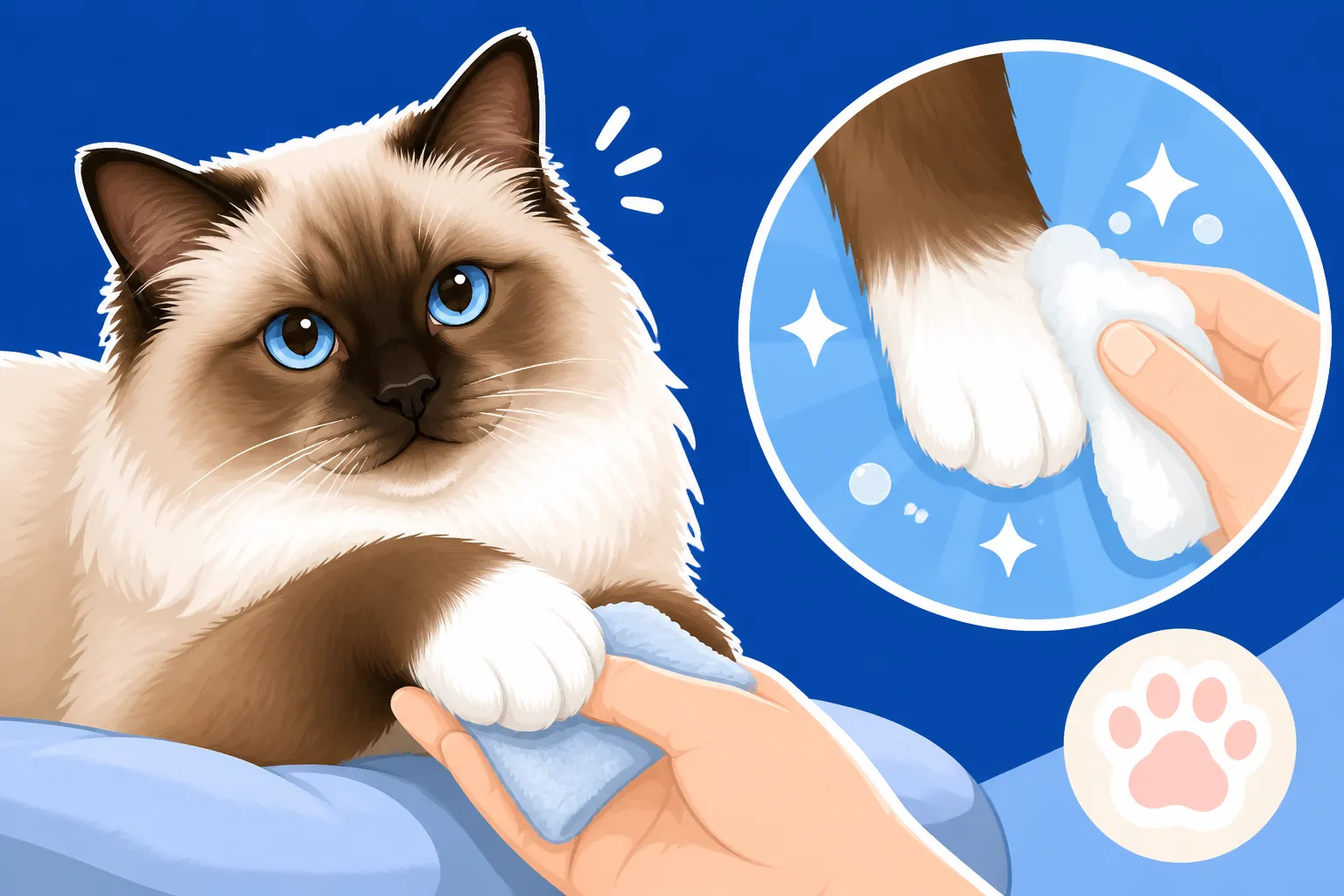
How to Wash a Birman’s White Feet
Oh, those gorgeous Birman white feet! They’re absolutely stunning, aren’t they? Like little snowy boots on those otherwise richly pointed coats. But if you’re a Birman parent, you know the struggle is real: keeping those pristine white "gloves" actually pristine can feel like a full-time job. It’s frustrating when your majestic furball saunters out of the litter box looking like they’ve just dug for buried treasure, leaving a trail of… well, evidence. This guide is here to walk you through how to tackle those inevitable paw stains, keep your Birman’s beautiful white gloves gleaming, and make paw cleaning a breeze for both of you.
Why Birman White Feet Get So Dirty in the First Place
You might wonder why, despite your best efforts, your Birman's white paws always seem to be the first thing to show dirt. It's not just bad luck; there are several reasons why those beautiful gloves are such magnets for grime.
The Lure of Litter Boxes and the Pits of Play
Let’s be honest, where do cats spend a significant portion of their day? The litter box! Even the cleanest cat will track some particles out, and when those paws are brilliant white, every tiny speck shows. Imagine your Birman daintily stepping into the litter, doing their business, and then instinctually digging and covering. Those soft, fine hairs on their paws act like tiny brushes, picking up whatever loose bits of litter are clinging around. It’s not just litter, either. Think about their daily play sessions. Chasing toys under the sofa, exploring dusty corners (because even pristine homes have those!), or simply walking across the floor. Dust, stray crumbs, little bits of whatever has been tracked in – it all adheres to those delicate white hairs.
And while Birmans are typically indoor cats, a moment of curiosity by an open door or a playful romp in an enclosed patio can lead to muddy paws quicker than you can say "treat." They might not be rolling in the mud like a dog, but a few quick steps on damp earth or a dusty porch can turn those white gloves into grey socks in an instant. It’s part of their curious nature, and while they might hide illness behind a placid temperament, they certainly don't hide dirt on those bright white feet!
The Unique Structure of a Birman's Coat on Its Paws
The Birman is known for its luxurious, silky single coat that lacks a woolly undercoat, which means it generally mats far less than other long-haired breeds. This is fantastic for overall grooming! However, the fur on their paws, especially those famous white gloves, has its own characteristics. While the overall coat is fine and flowing, the fur around their toes and paw pads can be a little denser, almost like tiny tufts. This texture, combined with the pure white color, means it’s incredibly effective at highlighting any dirt it comes into contact with.
It's a beautiful genetic trait, those distinct white markings on their feet, often referred to as "gloves" on the front paws and "laces" on the back. The Gloving Gene Every Birman Carries Two Copies Of ensures this unique pattern. However, this genetic gift comes with the trade-off of needing a bit more attention to keep them looking their best. Unlike their body fur, which might shed more openly, the paw fur can hold onto small particles, making them appear dingy. Understanding Why a Birman's Single Coat Never Developed a Woolly Layer helps explain why their body coat is generally easy to maintain, but those delicate white paw tufts still present a cleaning challenge that requires specific care.
Gentle Approaches to Cleaning Your Birman's Paws
Keeping those lovely white gloves pristine doesn't have to be a battle. The key is consistency and using gentle methods that won't stress your Birman. Remember, a calm cat is a cooperative cat, and a Birman is generally quite placid, which helps immensely with grooming tasks.
The Everyday Wipe Down: Tools and Techniques
For daily maintenance, a quick wipe-down is usually all it takes to keep minor dust and litter at bay. This is your first line of defense!
Tools You'll Need:
- Soft Cloths or Pet Wipes: Keep a stash of soft, damp cloths or pet-safe wipes (unscented is best to avoid irritation) near the litter box or wherever your Birman tends to hang out after doing their business. You can find excellent pet wipes on Amazon or specialized pet retailers like Chewy. Just make sure they are specifically formulated for cats and free of harsh chemicals, alcohol, or strong fragrances.
- Warm Water (if using a cloth): A little warm water on a soft microfiber cloth works wonders.
Technique for a Quick Wipe:
- Approach Calmly: Your Birman is probably already a calm companion, often following you from room to room. Use this trust. Pet them gently first. If your Birman is new to paw handling, start by simply touching their paws lightly during cuddle sessions. How to Handle a Birman for Nail Trimming applies here too – gradual desensitization is key.
- Hold a Paw Gently: Support the paw firmly but gently in your hand. Avoid squeezing or pulling.
- Wipe the Pads and Between Toes: Use your damp cloth or wipe to clean the paw pads, getting into the grooves where dirt likes to hide. Then, gently separate the toes to wipe away any litter or debris caught between the paw pads and the fur. Be thorough but quick.
- Wipe the White Fur: Lightly wipe the white fur on the top and sides of the paw, removing surface dust and any discolored areas.
- Repeat for All Paws: Work one paw at a time. Praise your Birman and offer a small treat after each paw, or after completing all four, to create a positive association. This routine will become part of their acceptable handling, much like getting them used to a comb. How to Get a Birman Used to a Comb shares tips for making grooming a positive experience.
Consistency is crucial here. A quick wipe down once or twice a day can prevent minor smudges from becoming stubborn stains.
Tackling Stubborn Stains: Spot Treatments
Sometimes, a simple wipe isn't enough. Maybe your Birman decided to "help" in the garden, or stepped in something you'd rather not identify. For those more stubborn stains, a targeted spot treatment is your next step.
Scenario: Let's say your usually indoor Birman, curiosity getting the better of them, dashed through a slightly muddy patch in the yard during an unexpected door opening. Now their beautiful white gloves have definite streaks of brown.
What You'll Need:
- Mild Pet Shampoo: Crucially, this must be formulated for cats. Human shampoos are too harsh and can irritate their skin. Look for a gentle, tearless, or kitten shampoo. If you're looking for something that specifically helps with white coats, check for "whitening" or "brightening" shampoos at pet stores or on Chewy, ensuring they are still safe and gentle. Which Shampoo Keeps a Birman's Gloves White will give you specific recommendations.
- Two Small Bowls: One for warm, clean water, one for the shampoo mixture.
- Soft Cloth or Cotton Balls/Pads: For application.
- Clean Towels: For drying.
Step-by-Step Spot Treatment:
- Prepare Your Area: Find a comfortable spot, perhaps a bathroom counter or a laundry room sink. Have all your supplies within easy reach. The less fumbling, the better for your Birman’s patience.
- Mix Shampoo: In one bowl, dilute a small amount of pet shampoo with warm water. You don't need much – a pea-sized drop of shampoo in about a cup of water is usually sufficient.
- Wet the Paw: Gently hold the stained paw and lightly dampen the affected white fur with clean warm water from the other bowl. You can use a saturated cotton ball or a corner of a soft cloth.
- Apply Shampoo: Dip a fresh cotton ball or the corner of your cloth into the diluted shampoo mixture and gently work it into the stained fur. Be careful to avoid getting soap into their eyes or mouth. Lather very gently, focusing on the stained areas.
- Rinse Thoroughly: This is critical! Use a clean, damp cloth (rinsed repeatedly with fresh warm water) to carefully wipe away all traces of shampoo. Residue can irritate their skin or attract more dirt. You might need to rinse and wipe several times until the fur feels clean, not soapy.
- Dry: Pat the paw dry with a soft towel. Make sure the fur is as dry as possible to prevent skin irritation or chill. Your Birman's single coat generally dries faster than double-coated breeds, but careful drying is still important. How Long a Birman's Single Coat Takes to Dry is a good reference.
- Praise and Reward: End with lots of praise, gentle petting, and a favorite treat to reinforce that this wasn't a terrible experience.
Full Paw Baths: When and How
A full bath for your Birman's paws should be a rare event, only necessary if they've gotten into something truly awful or the spot treatments aren't cutting it. Remember, most Birmans tolerate water better than some breeds, but it's still best to minimize full submersion if possible.
When is a Full Paw Bath Needed?
- If multiple paws are heavily soiled with something beyond superficial dirt.
- If the substance is sticky, oily, or potentially irritating and requires more extensive washing.
- If a stubborn, deep discoloration persists despite spot treatments.
What You'll Need:
- Pet-Safe Shampoo: As above, gentle and cat-specific.
- Non-Slip Mat: For the sink or tub.
- Several Clean Towels: Birmans have a lot of fur, even if it's a single coat!
- Small Cup or Sprayer: For rinsing.
- Treats and Praise: Essential for positive reinforcement.
Step-by-Step Full Paw Bath:
- Prepare the Bathing Area: A clean sink with a non-slip mat at the bottom is often ideal for just paws. Fill it with a few inches of lukewarm water – not hot, not cold. Have your shampoo, rinsing cup, and towels all within arm's reach.
- Gently Introduce Your Birman: Talk to your Birman in a calm, soothing voice. Slowly place them in the sink, allowing their paws to touch the water. Some Birmans might be surprisingly accepting, others might need more reassurance.
- Wet the Paws: Using the small cup or sprayer on a very gentle setting, thoroughly wet all four paws. Concentrate on the white fur and between the toes.
- Lather with Shampoo: Apply a small amount of diluted pet shampoo to your hands and gently work it into a lather on each paw. Pay close attention to the stained areas, massaging gently. You can let the shampoo sit for a minute or two if the stains are very tough, but keep an eye on your cat's comfort.
- Rinse Completely: This is the most crucial step. Use your cup or sprayer to rinse all the shampoo from the paws. Run your fingers through the fur to ensure no residue is left. Shampoo residue can lead to skin irritation and can make the fur feel sticky, attracting more dirt. Rinse until the water runs clear and the fur feels squeaky clean, not slick.
- Squeeze and Towel Dry: Gently squeeze excess water from each paw. Then, wrap your Birman in a large, soft towel and thoroughly pat their paws dry. You might need multiple towels. Rubbing too vigorously can tangle the fur, so patting and gently blotting is better. Ensure their paws are as dry as possible to prevent chilling and discomfort. A Birman's fine coat dries relatively quickly, but damp paws can still get cold.
Always remember to make bathing a positive experience with patience and rewards. It will make future grooming sessions much easier.
| Cleaning Method | Best For | Tools Needed | Frequency | Birman Comfort Level |
|---|---|---|---|---|
| Everyday Wipe Down | Light dust, fresh litter bits | Damp cloth or pet-safe wipes | Daily | High |
| Spot Treatment | Small, localized stains | Mild pet shampoo, bowls, cloth/cotton, towels | As needed | Medium-High |
| Full Paw Bath | Heavy, widespread soiling | Pet-safe shampoo, non-slip mat, cup, towels | Rarely (as needed) | Medium |
Preventing Future Paw Stains and Maintaining Pristine Gloves
The best defense is a good offense, right? When it comes to your Birman's white feet, preventing stains before they happen is far easier than trying to scrub them out later.
Choosing the Right Litter to Keep Paws Clean
This is, without a doubt, one of the biggest factors in keeping those white gloves sparkling. The type of litter you use directly impacts how much dust and debris clings to your Birman’s paws.
- Avoid Dusty Litters: Clay litters, while popular, can often be incredibly dusty. This fine dust coats your Birman's paws and quickly discolors them. Think about it: every time they dig, a cloud of fine dust surrounds their paws. Why Dusty Litter Ruins a Birman's Gloves explains this perfectly.
- Opt for Low-Tracking, Low-Dust Options: Look for litters marketed as "low dust" or "low tracking." Crystal litters (silica gel) tend to be very low dust and don't cling as much. Paper-based or pine litters can also be good choices, as they are often softer on paws and produce less fine dust. Some brands offer specific "white paw" or "sensitive paw" formulas. Online retailers like Chewy and Amazon have a vast selection, often with detailed customer reviews that mention dust levels and tracking.
- Consider Larger Granules: Litters with slightly larger or irregularly shaped granules may be less prone to clinging to paw fur compared to very fine, sand-like litters.
- Litter Mats Are Your Friends: Place a high-quality litter mat outside the litter box. These mats are designed to catch litter particles from your Birman's paws as they exit, significantly reducing tracking throughout your home and preventing those tiny bits from getting ground into their white fur elsewhere.
- Frequent Scooping: This might seem obvious, but a clean litter box means fewer chances for your Birman to step in soiled litter and track it out. Aim to scoop at least twice a day, if not more. For white-footed cats, it's particularly important to keep the box pristine. How Often to Change Litter for a White Footed Cat is a good read on maintaining a hygienic litter box for your Birman.
By being mindful of Which Litter Suits a White Gloved Cat, you'll see a noticeable difference in how clean your Birman's paws remain between deeper cleaning sessions.
Environmental Management and Routine Grooming
Beyond litter choices, your home environment and a consistent grooming routine play a huge role in preventing dirty paws.
- Keep Floors Clean: Regularly vacuuming or sweeping your floors will drastically reduce the amount of dust and dirt available for your Birman to pick up. Even a perfectly groomed Birman can get dirty paws if they're walking on dusty surfaces all day.
- Regular Nail Trims: Long claws are excellent at picking up and retaining dirt, especially in the delicate fur around the toes. Keeping your Birman's claws trimmed short means less surface area to grab onto grime. If you're unsure how to do this safely, ask your vet or a professional groomer for a demonstration. How to Handle a Birman for Nail Trimming provides helpful tips for making this a stress-free process.
- General Brushing: While less directly related to paw cleanliness, a regular full-body brushing routine will keep your Birman’s coat healthy and reduce shedding. This helps manage overall dust and loose fur in your home, which can otherwise settle and be picked up by those white paws. Which Comb Gets Through a Birman's Ruff Without Pulling is a great resource for choosing the right tools for their silky coat.
- Prevent Outdoor Adventures: As much as possible, keep your Birman indoors. The outdoor world is full of dirt, mud, and other unsavory substances that will quickly ruin those white gloves. If they do go outside in an enclosed catio, ensure it's kept clean and dry.
Diet and Overall Coat Health
You might be thinking, "What does diet have to do with clean paws?" It's true that diet isn't a direct paw-cleaning tool, but a healthy, well-nourished coat is inherently easier to maintain and can even be more resistant to staining.
- High-Quality Nutrition: A diet rich in essential nutrients, particularly omega fatty acids, contributes to a healthy skin and coat. A lustrous, well-conditioned coat with good hair follicle health might shed dirt more easily and be less prone to dullness or discoloration.
- Omega Fatty Acids: Look for cat foods that list omega-3 and omega-6 fatty acids (like those from fish oil or flaxseed) high in their ingredient list. These are fantastic for coat health. You can also find omega supplements on Chewy or Amazon if your vet recommends them. Why Omega Oils Matter for a Birman's Coat delves deeper into this topic.
- Hydration: Ensuring your Birman drinks enough water is also vital for overall health, including skin and coat condition. While it won't directly whiten their paws, good hydration supports healthy skin, which in turn supports healthy fur. Why a Birman's PKD History Makes Water Intake Matter is an important read about Birman hydration needs.
While diet won't magically repel dirt from those white gloves, it provides the foundation for a resilient, healthy coat that's simply easier to keep clean and beautiful. Taking a holistic approach to your Birman’s care, from their environment to their diet, will make those routine paw cleanings much less frequent and much more manageable.
Disclaimer
This article is for general informational purposes only and does not constitute professional advice. Laws, prices and regulations vary by location and change over time. Consult a qualified professional for guidance on your specific situation.