Which Longhairs Rebuilt the Birman After 1945
Imagine the heartbreak of a breed almost vanishing, its unique beauty and gentle spirit on the very brink of extinction. That was the grim reality for the Birman cat after the devastation of World War II. With so few individuals left, dedicated breeders faced an immense challenge: how do you bring a breed back from the brink when its genetic pool is nearly empty? This guide will delve into the incredible story of the longhaired breeds that stepped in to save the Birman, outlining their crucial contributions and the lasting legacy of their genetic influence on the beloved "Sacred Cat of Burma."
The Birman's Brink: Post-War Devastation and the Call for Help
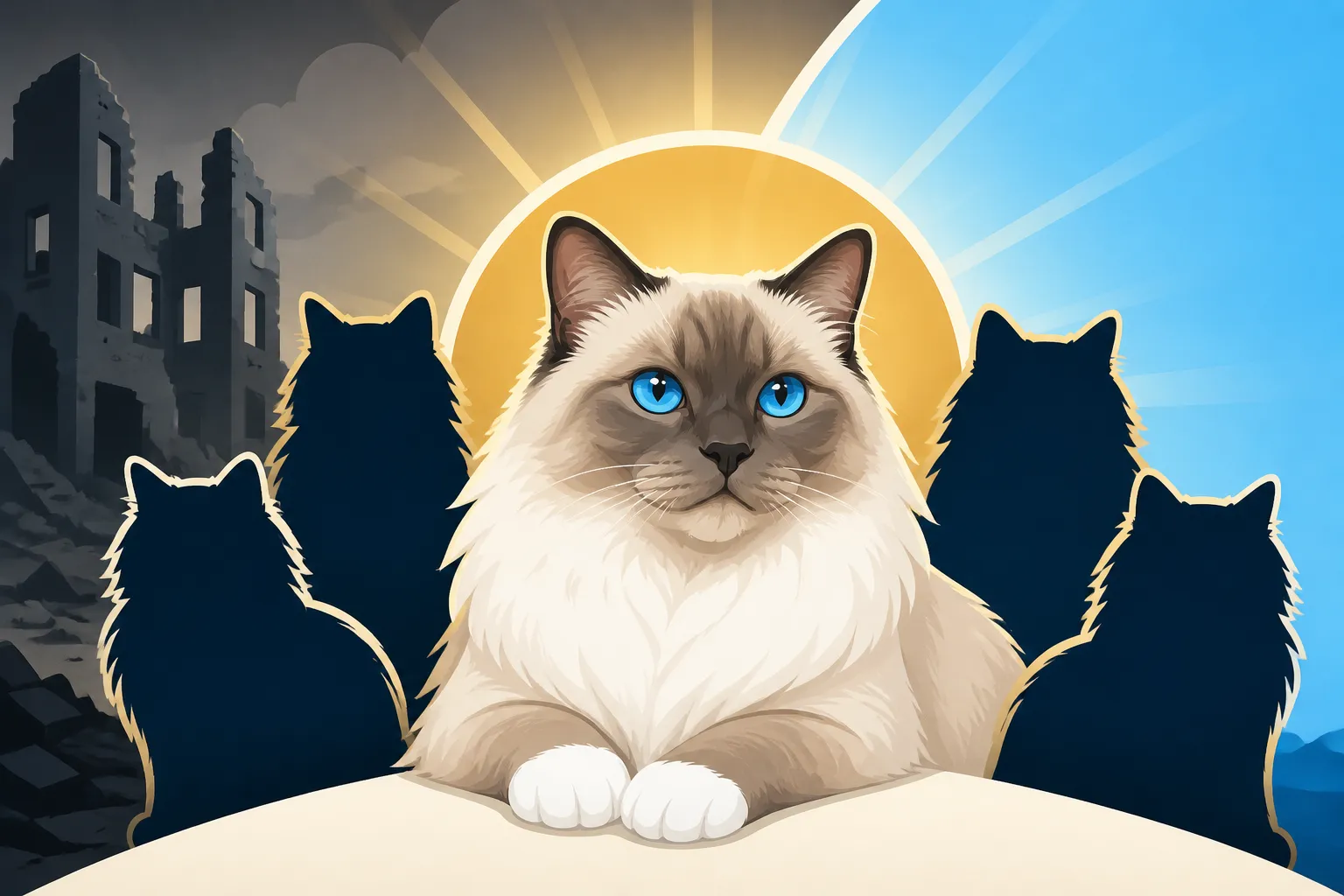
The Second World War swept across Europe, leaving destruction in its wake that extended far beyond human lives and infrastructure. Many purebred cat populations, especially those housed in catteries that were bombed or whose breeders were displaced, suffered catastrophic losses. The Birman, with its already small and somewhat fragile gene pool established in France, was hit particularly hard. It wasn't just a matter of losing a few cats; the very survival of the breed hung by a thread, with documented history suggesting that only a bare handful survived. The Birman Came Out of the War With Two Cats Left tells a vivid part of this story.
The Catastrophic Decline: Only Two Birmans Left
Think about it: how do you continue a breed with just two cats? This wasn't just a shortage; it was a genetic catastrophe. With such a minuscule number, the genetic diversity was virtually non-existent. Mating these two remaining individuals would lead to intense inbreeding, inevitably bringing to the forefront any hidden genetic weaknesses, potentially dooming the breed to health problems and a rapid decline in vigor. Breeders were looking at a total reset, a near-impossible task that required immense dedication and a deep understanding of feline genetics. The sheer despair of that moment, looking at a once-cherished breed reduced to almost nothing, must have been overwhelming.
The challenge wasn't just about numbers; it was about maintaining the essence of the Birman. These cats were known for their striking point coloration, deep blue eyes, long silky coat, and distinctive white "gloves" on their paws. Recreating this unique combination from a fragmented genetic base, while simultaneously battling the effects of inbreeding, was a monumental undertaking. Every decision, every mating, would carry the weight of the breed's future. The historical accounts of Which Two Cats Every Birman Descends From really highlight the narrow escape this breed had.
The Ethical Dilemma: Outcrossing for Survival
To save the Birman, breeders had to make a difficult, but ultimately necessary, decision: outcrossing. This meant introducing genetic material from other breeds to widen the gene pool, add vigor, and slowly rebuild the population. It was an ethical tightrope walk, as every addition meant a temporary deviation from the established Birman look and temperament. The goal was to reintroduce key traits like long hair, pointed coloration, and a gentle nature, then meticulously breed back towards the Birman standard.
The process of outcrossing is not a quick fix; it's a multi-generational project. Imagine selecting donor cats from other longhaired breeds, carefully making a cross, and then breeding those offspring back to the surviving Birmans or subsequent Birman-type offspring. Each generation required careful selection to retain the desired Birman traits while slowly eliminating the traits of the outcross breed. It was a testament to the perseverance of early Birman breeders who were committed to preserving this beautiful cat. Why Post War Outcrossing Was Unavoidable for the Birman goes into more detail on this critical decision.
The Persian's Indispensable Contribution to the Birman's Physique
When faced with the need for a longhaired breed to help rebuild the Birman, the Persian cat was an obvious and essential choice. Persians were well-established and renowned for their luxurious, flowing coats and substantial body type. They offered a ready source of the longhair gene and robust physical characteristics that were desperately needed to restore the Birman's numbers and physical presence.
Reintroducing Luxuriant Long Hair and Body Type
The Birman's signature silky, non-matting single coat and sturdy, medium-boned body needed to be re-established. The Persian, with its dense, long double coat, provided the genetic raw material for length and fullness. While the Birman's coat is distinct from the Persian's, the longhair gene itself was crucial. When crossed with the surviving Birmans, the Persian infusion helped bring back a substantial body and a beautiful, flowing coat, laying the foundation for future generations to refine that texture and length to the Birman ideal.
It wasn't just about the hair; it was also about body structure. Persians are known for their cobby, well-muscled build. This physical robustness was important for vitality in the Birman gene pool, which was at risk of becoming delicate due to extreme genetic bottlenecking. The offspring of these crosses would initially look more like longhaired domestics or even half-Persians, but over successive generations, careful breeding and selection would begin to shape them back into the Birman's distinctive rectangular frame and moderate build. It was a slow and painstaking process, requiring a keen eye for type.
The Unintended Genetic Baggage from the Persian Line
While the Persian was invaluable for rebuilding the Birman, this genetic contribution also came with certain "baggage." No breed is perfect, and introducing new genetics invariably means introducing potential new health considerations. One of the most well-known examples of this is Polycystic Kidney Disease (PKD). Why PKD Reached the Birman Through the Persian explains this link perfectly. PKD is an inherited condition that causes cysts to form in the kidneys, eventually leading to kidney failure.
For generations, Birman breeders have worked tirelessly to screen for and eliminate PKD from their lines, demonstrating the ongoing commitment required to manage the legacies of outcrossing. Today, responsible breeders utilize DNA testing to ensure their breeding cats are clear of the PKD1 gene. This vigilance is a direct consequence of the historical need for the Persian outcross. Beyond specific diseases, the Persian's cobby body and flatter face, while not standard in the Birman, also needed to be carefully bred out to restore the Birman's unique head shape and more moderate body. If you're looking for information on managing health, sites like Chewy offer resources and specialized diets that can sometimes help with kidney health in cats.
The Siamese Influence: Preserving Pointed Coloration and Temperament
While the Persian was crucial for coat and body, another significant longhaired breed, the Siamese, likely played a role, especially in solidifying the point coloration and perhaps contributing to certain aspects of temperament. The Siamese are quintessential pointed cats, and their vivid point colors were invaluable for the Birman.
Stabilizing the Colorpoint Gene
The Birman's defining characteristic, beyond its white gloves, is its pointed coloration – darker points on the ears, mask, paws (above the gloves), and tail, contrasting with a paler body. This color pattern is a form of partial albinism, genetically controlled. The Siamese is famously known for this very same genetic trait. By introducing Siamese genetics, breeders could reinforce and stabilize the colorpoint gene within the recovering Birman population.
This was vital because even if the surviving Birmans carried the gene, having a stronger, more diverse source from the Siamese helped to ensure its consistent expression in subsequent generations. It meant that while the early outcross kittens might not have looked exactly like Birmans, they would reliably carry the pointed gene, allowing breeders to select for other Birman characteristics while keeping the color pattern intact. What Siamese Blood Brought Into the Birman details this further.
Adding Grace and Vocal Character
Siamese cats are known for their sleek, elegant bodies, long legs, and distinctive vocalizations. While the Birman is not as slender or vocal as a purebred Siamese, some of these traits might have been subtly introduced and then selectively bred for modification. The goal was never to create a Siamese-Birman hybrid, but to use the Siamese's positive attributes to enrich the Birman's developing lines.
For instance, the Birman has a generally less cobby body than a Persian, exhibiting a more rectangular and moderately elegant frame. The Siamese influence could have helped counteract some of the extreme cobby type that might have come from the Persian outcrosses, guiding the breed back towards a balanced physique. In terms of temperament, while the Birman is famously quiet, the Siamese's communicative nature might have offered a broader spectrum of feline personalities to work with, eventually refined into the Birman's characteristic gentle, companionable silence, punctuated by soft trills rather than loud meows. The Small Trill a Birman Uses Instead of a Meow perfectly describes this.
The Careful Art of Selection and Breeding
The period after the war was not just about making crosses; it was about meticulous, disciplined breeding to bring the Birman back to its established standard. This required a deep understanding of genetics, an unwavering vision, and incredible patience over many generations. Breeders weren't just producing kittens; they were sculpting the future of an entire breed.
Balancing Type, Temperament, and Health
Imagine the challenge: you have kittens that might have a Persian coat density, a Siamese voice, but you need to achieve the Birman's silky coat, gentle trill, and placid temperament, all while monitoring for health issues like PKD or HCM that could surface. It was a complex balancing act. Breeders had to decide which offspring were closest to the Birman standard in terms of physical appearance (type), personality (temperament), and overall health.
This meant making tough decisions about which cats to breed and which to place as pets. The goal was always to incrementally move closer to the ideal Birman. Every generation required careful evaluation of head shape, eye color, coat texture, body length, and crucially, the specific patterns of the white gloves and laces. It was truly an art, combining scientific understanding with an aesthetic vision for the breed. For example, ensuring proper nutrition from kittenhood is vital during this type of delicate breeding, and Chewy provides a wide variety of high-quality foods for all life stages.
The Long Road to Re-Establishing the Breed Standard
Re-establishing a breed standard after such devastation takes decades. It’s not just about producing a cat that looks Birman; it's about producing a cat that breeds true, meaning that its offspring consistently exhibit the desired Birman traits. This requires several generations of carefully selected pairings, each aiming to consolidate the Birman characteristics and dilute the traits of the outcrosses.
Registries also played a crucial role, often setting up special registration processes for these "foundation" cats and their offspring, acknowledging the necessity of outcrossing while guiding breeders towards the ultimate goal of a purebred Birman. This meant careful documentation of pedigrees and a clear understanding of the breed's lineage, even with the outcrosses. It was a slow but steady march towards perfection, driven by the passion of a dedicated few.
The Lasting Impact on the Modern Birman
The efforts of those post-war breeders were undeniably successful, giving us the magnificent Birman cat we cherish today. However, the legacy of that rebuilding period continues to shape the breed, both in its unique characteristics and in the ongoing health considerations breeders must address.
A Unique Blend of Traits
The modern Birman is truly a testament to the careful blending of its ancestral influences. It possesses the substantial, longhaired presence derived from the Persian, but refined into a less cobby body and a uniquely silky, non-matting single coat. The pointed coloration, reinforced by Siamese lines, is now a stable and beautiful characteristic, often with those striking, sapphire-blue eyes. The temperament, too, is a wonderful blend: companionable and intelligent without being overly demanding or vocal. The Birman Sits Between the Siamese and the Persian really sums up this unique position.
Their placid nature, often attributed to the Persian side, is balanced by an engaging curiosity, a trait perhaps subtly influenced by the Siamese. They are known for following their humans quietly from room to room, preferring to be near rather than on them. This gentle, affectionate nature, coupled with their stunning appearance, has made the Birman one of the most beloved longhaired breeds, perfectly suited for family life. Whether you need a new scratching post or some enriching toys, Chewy has a fantastic selection tailored for various cat temperaments.
Health Legacies and Vigilance
While the Birman was successfully rebuilt, the genetic challenges that necessitated outcrossing, and the subsequent introduction of new genetic material, mean that vigilance in health screening remains paramount. For example, as discussed earlier, the risk of Polycystic Kidney Disease (PKD) from Persian outcrosses made DNA testing essential for Birman breeders. Similarly, other conditions, such as Hypertrophic Cardiomyopathy (HCM), while not necessarily a direct result of outcrossing but present in many purebred populations, require diligent screening through regular echocardiograms. How HCM Shows Up in a Birman is a critical read for any Birman owner.
Responsible breeders are transparent about their health testing results, working to ensure the long-term health and vitality of the breed. This includes screening for specific genetic markers and regularly checking heart health, as outlined in articles like How Often a Breeding Birman Needs Scanning. The dedication shown by those early breeders to save the Birman is now mirrored by the ongoing commitment of modern breeders to ensure its continued health and well-being for generations to come.
| Outcross Breed | Primary Contributions to Birman | Potential Genetic Legacies | Current Health Screening Relevance |
|---|---|---|---|
| Persian | Long hair, substantial body type, gentler temperament, point stabilization | Polycystic Kidney Disease (PKD1), cobby body tendency, extreme facial features (bred out) | PKD1 DNA testing is essential for all breeding Birmans. |
| Siamese | Reinforcement of point coloration, elegance in body type, less extreme vocalization (refined) | Potential for more slender body, specific vocal patterns (largely bred out), some genetic predispositions (less significant currently) | No specific Siamese-linked diseases are now major concerns for Birmans, but overall genetic diversity monitoring remains key. |
Disclaimer
This article is for general informational purposes only and does not constitute professional advice. Laws, prices and regulations vary by location and change over time. Consult a qualified professional for guidance on your specific situation.