What Genetics Say About the Birman’s Origin
The Birman cat's origins are shrouded in a captivating, almost mythical tale that has been passed down through generations of fanciers and breeders. While these legends paint a beautiful picture, they can leave prospective owners feeling a little unsure about the breed's true historical development and, more importantly, its genetic health legacy. This guide aims to pull back the curtain on the romanticized narratives and explore what modern genetic science actually tells us about how this beloved "Sacred Cat of Burma" truly came to be.
The Birman's Legendary Origins Versus Scientific Fact
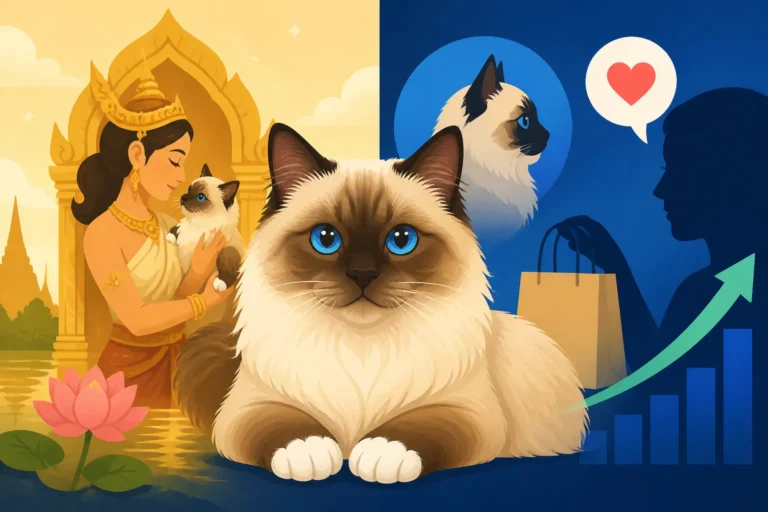
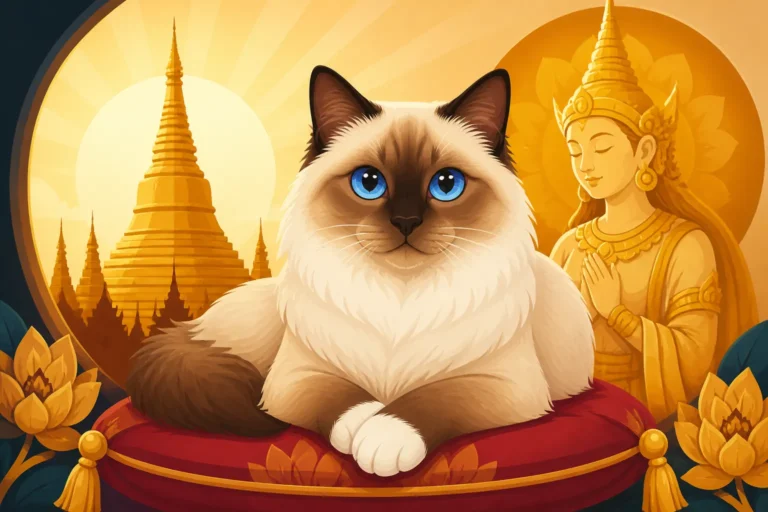
For many years, the story of the Birman cat was inextricably linked to the legend of the Temple of Lao-Tsun, high in the mountains of Burma. This enchanting tale speaks of a golden-eyed goddess, a revered priest, and a magical transformation that bestowed the distinctive white "gloves" upon the temple cats. It's a story that captivates the imagination and certainly adds to the mystique of the breed, explaining their serene demeanor and unique markings with a touch of the divine.
The Sacred Cat of Burma Legend
The legend itself is a beautiful narrative. It tells of a priest named Mun-Ha who worshipped the golden goddess Tsun-Kyan-Kse. By his side was his beloved white cat, Sinh, with golden eyes like the goddess. When raiders attacked the temple and killed Mun-Ha, Sinh placed his paws on his dying master. In that moment, the goddess transformed Sinh. His fur turned golden, his eyes sapphire blue, and his paws remained pure white, symbolizing purity and loyalty. All the other temple cats were said to have undergone the same transformation. This tale, first documented in France, truly solidified the Birman's image as a sacred, almost mystical creature. It's a story that breeders and enthusiasts still share today, evoking a sense of ancient lineage and spiritual connection, and it is a key part of why the breed is known as The Birman Is the Sacred Cat of Burma, and the Story Is a Legend. This reverence for their white paws, or gloves, is also often explained by the legend; it is Why the Birman Legend Explains the White Gloves.
Where the Legend Falls Short
As beautiful as the legend is, modern genetic science and historical records tend to paint a more grounded, if less mystical, picture. While the Birman certainly has an "oriental" feel in its point coloring, suggesting a connection to Southeast Asian cats, direct evidence for its specific origins in ancient Burmese temples is, unfortunately, lacking. The breed as we know it today actually solidified its identity and unique traits in Europe, primarily France, in the early 20th century. The legend likely served a romantic purpose, enhancing the breed's appeal and giving it a captivating backstory in its early days of development and promotion within Western cat fancy. It's not uncommon for beloved breeds to acquire such evocative tales, but when we look at DNA, we find a different narrative of careful breeding and, crucially, survival.
Genetic Insights into the Birman's Ancestry
Modern genetic analysis, particularly through studies of feline DNA, has allowed us to peer beyond the charming legends and understand the true tapestry of breeds that contributed to the Birman we cherish today. What we find is a story not of divine intervention, but of human dedication to preserving and refining a unique feline aesthetic, often under challenging circumstances.
The Post-War Bottleneck and Outcrossing
The Birman breed faced a devastating blow during World War II. The sheer decimation of cat populations across Europe meant that by the war's end, the Birman was critically endangered. It's said that only two known Birmans survived the conflict in France: a male named Orloff and a female named Xenia de Kaabaa. This dire situation created a severe "bottleneck" in the breed's gene pool. To save the Birman from extinction, breeders had no choice but to engage in extensive outcrossing – mating the surviving Birmans with other suitable breeds to inject much-needed genetic diversity and rebuild the population. This pivotal period is crucial to understanding The Birman Was Rebuilt From Two Cats and It Shows and How Two Cats in 1945 Shaped the Birman's Health. The decision to outcross was not taken lightly, but it was absolutely essential for the breed's survival and is a major part of Why Post War Outcrossing Was Unavoidable for the Birman.
Tracing Back to Persian and Siamese Influences
Genetic studies and historical records strongly indicate that the primary breeds used in the Birman's post-war reconstruction were the Persian and the Siamese. The Persian, with its long, luxurious coat and quiet demeanor, contributed to the Birman's plush, non-matting single coat and its calm temperament. The Siamese, on the other hand, brought the stunning blue eyes, point coloration, and a more slender, elongated body type compared to the cobby Persian. These contributions are evident in the Birman's physical characteristics today – they are neither as extreme as a modern Persian nor as lithe as a Siamese, sitting beautifully as a "middle cat" between the two. What Persian Blood Brought Into the Birman and What Siamese Blood Brought Into the Birman are important discussions for anyone trying to understand the nuances of the Birman's appearance and temperament. The mix created a truly unique animal, balancing the best traits of its ancestors. The outcrossing was so successful that many Birmans carry a diverse genetic makeup, and brands like Chewy offer a wide range of food suitable for longhaired cats with varied nutritional needs, reflecting this diverse heritage.
The Gloving Gene – A Unique Birman Marker
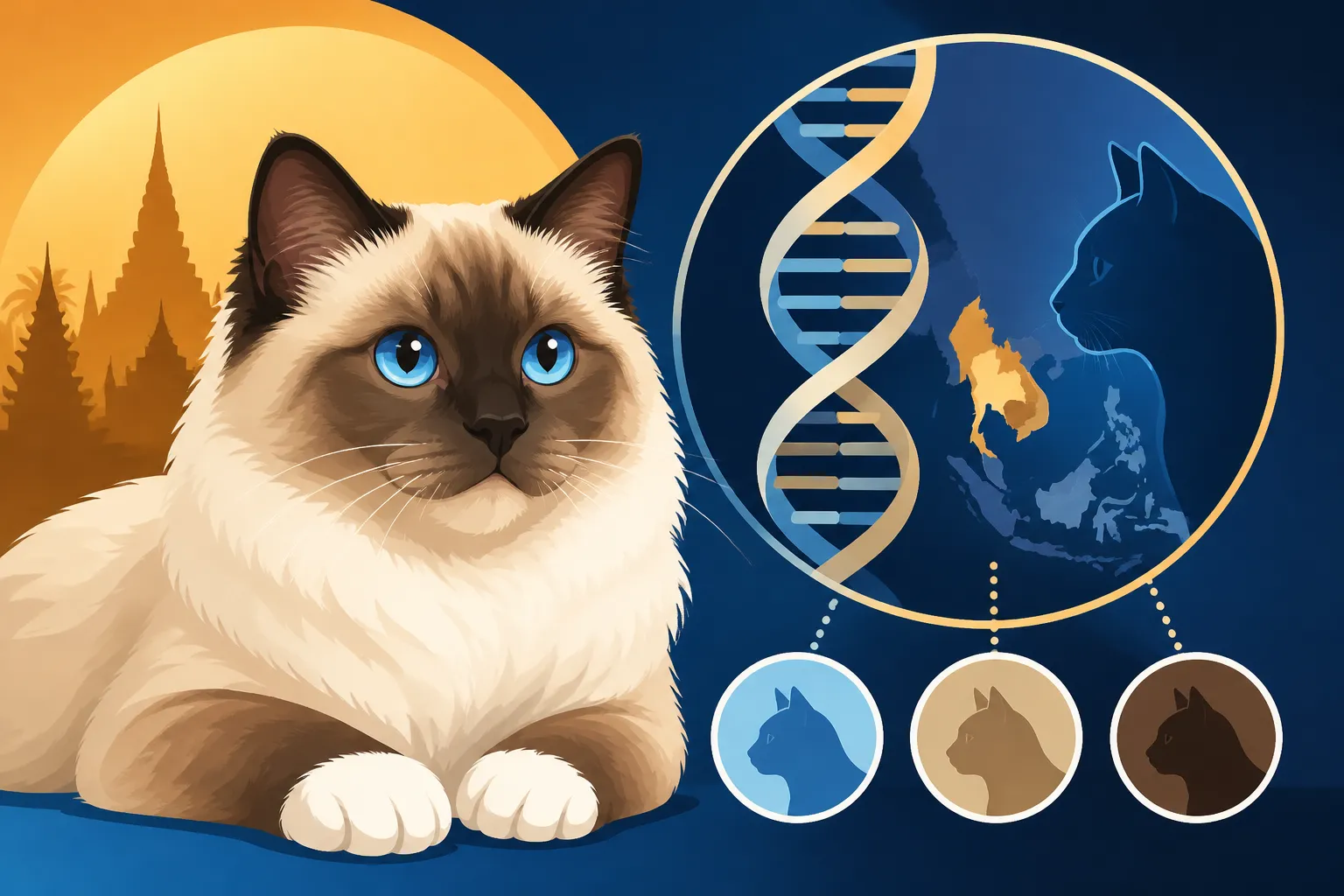
One of the most defining characteristics of the Birman cat is its distinctive white paws, often referred to as "gloves" on the front feet and "laces" or "gauntlets" on the hind feet. This trait is absolutely unique to the Birman breed. Genetic research has identified a specific genetic mutation on the KIT gene that is responsible for these white markings. This gene, known as the KIT gloving variant, is fixed within the Birman population, meaning every Birman cat carries two copies of this gene. It's what makes a Birman a Birman, visually speaking. What the KIT Gloving Variant Does is a fascinating dive into the science behind this iconic feature. While other pointed breeds exist, none have the precise and consistent white markings that are the hallmark of the Birman. The presence of this specific genetic marker further solidifies the breed's distinct lineage and provides a clear genetic fingerprint, distinguishing it from other cat breeds that might superficially appear similar.
Key Genetic Markers and Their Significance
Beyond the gloving gene, the broader field of feline population genetics offers a deeper understanding of the Birman's genetic health and diversity. When a breed undergoes a severe bottleneck, like the Birman did, it often results in a reduced gene pool, which can have implications for genetic predispositions.
Understanding Population Genetics in Breed Development
Population genetics looks at the genetic variation within and between populations. For the Birman, the post-war bottleneck meant that all modern Birmans descend from a very small number of individuals – effectively What Two Founder Cats Did to the Birman's Inbreeding Figure. This can lead to a higher degree of inbreeding, even if unintentional, and can concentrate certain genes, both beneficial and potentially harmful, within the population. While breeders have worked diligently to expand the gene pool since the war, the initial impact of such a small founder group is still detectable in genetic analyses. Understanding this history is vital for responsible breeding practices, aiming to increase heterozygosity (genetic diversity) where possible, and avoid the inadvertent proliferation of undesirable traits. Even today, responsible breeders monitor for a wider variety of genetic markers than just coat color, looking for indicators of overall health and vigor.
How Genetic Testing Validates Pedigrees
In the past, pedigree analysis relied solely on written records, which, while valuable, could sometimes contain errors or deliberate misrepresentations. Today, genetic testing provides an undeniable tool for validating a cat's parentage and lineage. DNA tests can confirm that a cat is indeed descended from its stated parents, ensuring the integrity of breed lines. For a breed like the Birman, with a complex history involving significant outcrossing, genetic testing can also help trace back the contributions of different ancestral breeds, providing scientific support for historical breeding records. This kind of verification is crucial for maintaining accurate studbooks and ensuring that breeding decisions are made on a solid, factual basis, rather than relying solely on anecdote. Many Birman owners use online resources like Chewy to research breeders and understand the importance of verifiable health tests and pedigrees.
Implications of Genetic Origins for Birman Health and Breeding
The journey of the Birman, shaped by both legend and genetic necessity, has important implications for their health and for responsible breeding practices today. Understanding where the breed came from helps us protect its future.
Inherited Health Concerns from Ancestral Breeds
While the outcrossing after World War II was essential for the Birman's survival, it also meant introducing genes from other breeds, some of which carried their own predispositions to certain health issues. For example, Polycystic Kidney Disease (PKD), a common genetic kidney disorder, is prevalent in Persians, one of the main outcross breeds. Consequently, PKD was introduced into the Birman gene pool. Thanks to modern genetic testing, responsible breeders can now screen their cats for the PKD1 gene mutation, effectively preventing its transmission to future generations. This highlights why Why PKD Reached the Birman Through the Persian is a crucial piece of information for Birman owners and breeders. Another genetic concern, though much rarer, is Feline Hypotrichosis with Thymic Aplasia, also known as Birman Hypotrichosis or FOXN1 deletion. This devastating condition, leading to bald kittens and immune deficiency, is also screened for by responsible breeders. Awareness of conditions like these, and the availability of genetic tests, ensures that breeders can make informed choices to improve the health of the breed. It's why it's vital to know How Rare Birman Hypotrichosis Actually Is, so breeders can continue to work towards its eradication.
Here’s a simplified comparison of legendary vs. genetic origin claims:
| Feature | Legendary Origin (Temple of Lao-Tsun) | Genetic/Historical Origin (Scientific Consensus) |
|---|---|---|
| Location | Ancient Burma (Myanmar), high in the mountains | Europe, primarily France |
| Date | Ancient times, tied to spiritual events | Early 20th century, solidified post-WWII |
| White Paws | Divine transformation, loyalty of sacred temple cats | Specific genetic mutation (KIT gloving variant) unique to Birmans |
| Ancestry | Pure, sacred line from temple cats | Reconstructed from a narrow founder base, involving Persian and Siamese outcrosses |
| Key Event | Death of priest Mun-Ha, divine intervention | Near extinction during WWII, followed by deliberate outcrossing efforts |
| Evidence | Oral tradition, romantic legend | Genetic studies (DNA markers), historical breeding records |
The Future of the Birman Gene Pool
The knowledge gained from genetic studies is invaluable for shaping the future of the Birman breed. By understanding the breed's narrow founder base and the historical outcrossing events, breeders can strategically work to maintain and even increase genetic diversity. This involves careful selection of breeding pairs, utilization of genetic health tests, and sometimes, even considering controlled outcrossing with other breeds (though this is a rare and highly debated practice, usually only undertaken under strict breed council approval). The goal is to move beyond mere survival and towards a thriving, robust population with minimal genetic disease burden. Organizations and registries actively encourage breeders to conduct DNA tests for known conditions and publish health results to promote transparency. This collective effort ensures that the serene, beautiful Birman cat continues to grace our homes for many generations to come, as healthy as they are beloved. It’s an ongoing conversation, as breeders work hard to ensure Whether the Birman Gene Pool Has Widened Since in a healthy way. For owners, this means choosing kittens from breeders who are transparent about their health testing and pedigree history, often found via reputable breeder directories or even through online communities that discuss products from companies like Chewy.
The journey of the Birman cat from mysterious legend to genetically understood breed is a testament to both human fascination and scientific progress. While the myths add a touch of magic, the genetic reality offers a deeper appreciation for the dedication that went into preserving this unique and beloved feline companion.
Disclaimer
This article is for general informational purposes only and does not constitute professional advice. Laws, prices and regulations vary by location and change over time. Consult a qualified professional for guidance on your specific situation.