What Laces and Gauntlets Mean on a Birman’s Price Tag
One of the most exciting, yet sometimes puzzling, aspects of bringing a Birman cat into your life is understanding their unique markings and how these can influence their price. You might hear breeders talking about "gloves," "laces," and "gauntlets," and it can feel like a secret language. Don't worry, you're not alone in feeling a little lost! This guide is here to demystify these terms, explaining exactly what they mean and how these beautiful, sometimes tricky, markings play a huge role in a Birman's price tag, helping you navigate the world of Birman ownership with confidence.
Understanding Birman Markings and Their Importance
The Birman cat is truly a vision of elegance, known for its striking color points and, most famously, its pure white "gloves" on all four paws. These unique markings are not just pretty; they are fundamental to the breed standard and directly impact how a kitten is valued, whether it's destined for a show career or a loving family home.
The Birman's Signature: Color Points and White Gloves
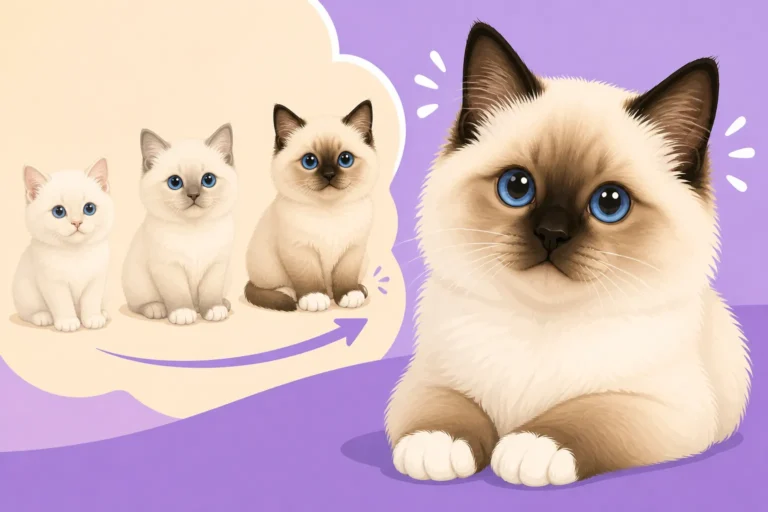
Imagine a Birman kitten, born almost entirely white, a blank canvas awaiting its true colors. Slowly, over weeks and months, the points—the ears, face, legs, and tail—begin to darken, revealing shades of seal, blue, chocolate, lilac, red, or cream. This gradual darkening is a fascinating process, but what truly sets the Birman apart are those pristine white feet. These "gloves" are a hallmark of the breed, believed by legend to represent the purity of a temple cat's feet, unstained by worldly concerns.
Each paw must have distinct white markings, ideally symmetrical and perfectly clean. It's a fine balance of genetics and artistry that breeders strive for, and any deviation can change a kitten's classification and, by extension, its price. We're talking about very specific details here, not just a general splash of white. It's a quest for perfection that defines much of the breeding world, and it’s why a breeder will often explain the specifics of a kitten's markings in great detail, as these are the defining features of the breed.
The Genetic Dance Behind the Gloving
It might surprise you to learn that every Birman cat carries two copies of the "gloving gene." It’s what gives them their distinctive white feet, distinguishing them from other pointed breeds like the Siamese or Himalayan. This gene is fixed within the breed, meaning it's always present. However, the expression of this gene—how perfectly those gloves, laces, and gauntlets manifest—is influenced by a complex interplay of other modifier genes. This is why you can have two Birman parents with exquisite markings, and their litter might still produce kittens with slight variations.
This genetic unpredictability is both the challenge and the charm of breeding Birmans. Breeders spend years studying pedigrees and observing how certain lines produce markings, trying to perfect those elusive white socks. It’s not as simple as 'gloving gene present = perfect gloves'. The nuances of How the Gloving Gene Works in a Birman are truly intricate, involving factors that influence the extent and symmetry of the white, making each kitten a unique testament to this genetic dance. The goal is always to produce kittens that adhere as closely as possible to the breed standard, especially concerning these crucial paw markings.
Why Show Standards Dictate Price
For many breeders, the ultimate aim is to produce cats that meet, or even exceed, the breed standard set by organizations like the Cat Fanciers' Association (CFA) or The International Cat Association (TICA). These standards are incredibly detailed, describing everything from head shape and eye color to, crucially, the precise configuration of the white gloves. A kitten that perfectly embodies these standards is considered "show quality" and will command the highest price.
Why? Because a show-quality Birman represents years of careful breeding, genetic research, and significant investment from the breeder. These cats are the ones that will go on to compete, win titles, and potentially contribute to the next generation of exceptional Birmans. Kittens with "pet quality" markings, while still beautiful and healthy, might have minor deviations from the standard that preclude them from the show ring. These differences are often imperceptible to the average cat lover but are critical to the discerning eye of a judge or a seasoned breeder. This is why The Gloves Decide What a Birman Kitten Costs more than almost any other single factor.
The Ideal Birman Glove: A Breeder's Dream and Your Price Tag
When we talk about a Birman's gloves, we're not just talking about white paws. There's a very specific, almost poetic, description of what makes a glove "perfect" according to breed standards. This ideal is what breeders strive for, and it's the benchmark against which a kitten's value is often measured.
The Definition of a "Perfect" Front Glove
For the front paws, the ideal white glove should be perfectly symmetrical and end in an even line, or a slight, upward curve, where the white meets the point color. Imagine drawing a precise line around the paw, just above the pads, and that's where the white should stop. There should be no irregular splashes of color creeping into the white, nor should the white extend too far up the leg, which would blur the distinct line that is so cherished. The texture of the fur on these gloves is also important; it should be silky and smooth, consistent with the rest of the Birman's magnificent single coat.
Breeders pay meticulous attention to these details from the moment the kittens' points begin to develop. They'll examine each tiny paw, hoping to see those clean, crisp lines forming. A kitten with impeccably marked front gloves is a prized possession in a litter because it demonstrates the genetic quality and careful planning behind the breeding. This level of precision is truly what makes Why Perfect Birman Gloves Are Almost Impossible to Breed such a challenge, and why those perfect examples are so valuable.
The Importance of Symmetry and Purity
Beyond just the front paws, symmetry across all four feet is paramount. Each glove should ideally mirror the others in shape and length. A kitten with four perfectly matched white gloves and equally elegant "laces" (which we'll delve into next) is a rare gem. Any significant asymmetry—one front glove higher than the other, or a front glove that doesn't match its hind counterpart—is considered a fault. The white must also be pure, free from any flecks of color or "smudging" that would indicate a messy line.
This pursuit of symmetry and purity isn't merely aesthetic; it's a reflection of the breed's historical and mythical origins. The Birman legend speaks of the goddess T'sin-Kyan-Kse bestowing the white paws upon the sacred temple cats, symbolizing their purity. While a lovely story, it underpins the very real and rigorous standards that govern the breed today. A Birman that exhibits this perfect symmetry is a testament to dedicated breeding programs and an understanding of the intricate genetics involved.
How a Breeder Judges a Birman Kitten's Gloves
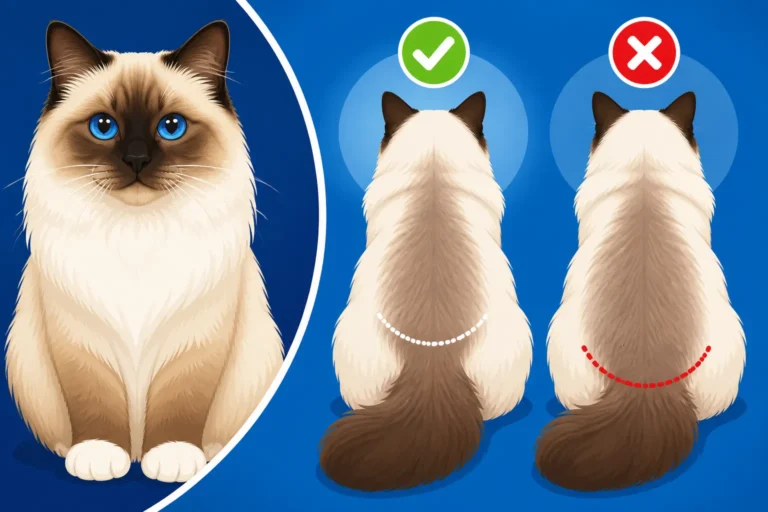
A breeder's job is part art, part science. They meticulously How a Breeder Judges a Birman Kitten's Gloves from early on, often when the kitten is just a few weeks old, though the final judgment can't be made until around 12-16 weeks. They'll look at the front paws for the clean, even line, ensuring the white doesn't extend too high. For the back paws, they'll check for the "laces"—the specific white markings that run up the back of the hind legs. These laces should be of equal length and end in a distinct, inverted V-shape.
It’s a thorough, often daily, observation process. They'll consider how A Birman Kitten's First Year, From White to Pointed unfolds, watching the points and white markings develop. A breeder knows that even slight variations can make a difference. A kitten that presents with what appears to be flawless gloving at eight weeks might still have slight changes as it matures, but by twelve weeks, the markings are usually stable enough for a breeder to confidently grade them. This is why most ethical breeders won't let kittens go to their new homes until they are at least 12-13 weeks old, ensuring their markings are properly set and evaluated.
Laces: The Elegant Extension and Its Value
Beyond the primary white gloves on all four paws, the Birman breed standard includes another distinctive white marking on the hind legs: the "laces." These specific markings are a beautiful and crucial component of the Birman's appearance, and their perfection significantly contributes to a cat's show quality and, consequently, its price.
What Exactly Are Birman Laces?
Birman laces refer to the white markings that extend up the back of the hind legs, running from the white glove itself. Think of them as delicate white "stockings" or "spurs" that continue elegantly upwards. According to the breed standard, these laces should ideally be symmetrical and end in a distinct, inverted V-shape. They must remain on the back of the leg and not wrap around to the sides or front, maintaining a clear distinction from the point color of the leg. This is a subtle but incredibly important detail that differentiates truly excellent markings from those that are merely good.
These laces are a direct counterpoint to the clean, even line of the front gloves, adding another layer of complexity and beauty to the Birman's overall appearance. They provide a graceful extension of the white marking, emphasizing the leg's shape without overpowering the point color. It's this intricate detail that truly makes a Birman's gloving complete and harmonious, contributing to the breed's iconic look.
The "Ideal" Lace: Placement and Length
The "ideal" lace should be of moderate length, neither too short (which might look like a truncated glove) nor too long (which could be confused with a gauntlet, a fault we'll discuss shortly). Typically, they should extend approximately one-third to halfway up the hock (the ankle joint) on the back of the hind leg. Crucially, both hind legs should feature laces of identical length and shape, forming that perfect inverted V. Consistency between the two back legs is just as important as the individual quality of each lace.
Breeders spend years aiming for this ideal, understanding that precise placement and symmetrical length are highly valued. A deviation, such as one lace being significantly longer or shorter than the other, or one that curves awkwardly, would be considered a fault in the show ring. This level of precision is why How Rare Perfect Birman Glove Symmetry Is is often reflected in the kitten's price. The elegance of perfectly matched laces speaks volumes about the quality of the breeding line and the dedication of the breeder.
How Perfect Laces Elevate a Birman's Price
A Birman kitten with impeccable front gloves and perfectly symmetrical, well-defined laces on its hind legs will always command a higher price. This is because such markings are difficult to achieve consistently and are a strong indicator of a top-quality, show-potential cat. When you find a kitten with this level of marking, you're looking at a rarity, a cat that truly embodies the breed's ideal.
These cats are not only sought after by other breeders for their potential to produce similarly well-marked offspring, but also by exhibitors who dream of success in the show ring. For families seeking a pet, while perfect laces might not be their top priority, they signify a kitten from a lineage where health, temperament, and adherence to breed standards are all carefully considered. It's one of the key factors in What a Birman With Four Even Gloves and Matching Laces Costs, placing these kittens in the highest price bracket. This attention to detail in markings is a reflection of the breeder's overall commitment to excellence in their program.
Gauntlets: The Unwanted Mark and Its Impact on Price
Just as there's an ideal for Birman gloves and laces, there are also markings considered undesirable, or "faults," in the breed standard. Among these, "gauntlets" are perhaps the most significant in affecting a Birman's show potential and, consequently, its price. Understanding gauntlets helps explain why some Birmans are priced differently.
Identifying Birman Gauntlets
Gauntlets occur when the white marking on a Birman's hind leg extends too far up the leg, particularly on the front or sides of the hock. Instead of the delicate "lace" that stays confined to the back of the leg, a gauntlet is a broader, often irregular, white patch that "sleeves" the leg higher than is permissible. It can sometimes give the appearance of the cat wearing a long white sock or boot, rather than a refined glove and lace. The key distinction is that while laces are specific white markings on the back of the hind legs, gauntlets denote an excessive and incorrectly placed white marking on the hind legs overall.
This marking disrupts the elegant flow of the point color and is considered a significant deviation from the breed's ideal. It’s not just a little extra white; it's white in the wrong place, violating the precise boundaries set by the standard. A breeder will carefully distinguish between a perfectly formed lace and a gauntlet, as the impact on the kitten's classification is substantial.
Why Gauntlets Are a Fault in the Show Ring
In the world of cat shows, gauntlets are considered a major fault, and depending on their severity, can even lead to disqualification. The breed standard emphasizes the distinct separation between the white gloves/laces and the colored points of the leg. A gauntlet blurs this line, compromising the classic Birman look. Judges are trained to spot these discrepancies immediately, as they indicate a lack of adherence to the genetic ideal of the breed.
A Birman with gauntlets, no matter how lovely its temperament or other features, cannot compete successfully in the show ring. This isn't to say the cat isn't beautiful or worthy of love; it simply means it doesn't meet the stringent aesthetic criteria for competitive showing. It's a key reason Why a Birman With Gauntlets Cannot Be Shown. For breeders who invest heavily in producing show-quality animals, the presence of gauntlets in a kitten means it will be sold as a pet, not a show or breeding prospect.
The Price Adjustment for a Birman With Gauntlets
The presence of gauntlets almost always places a Birman kitten into the "pet quality" price bracket. These kittens will be considerably less expensive than their impeccably marked littermates destined for the show ring. While still purebred Birmans with all the wonderful personality traits we adore, their markings simply don't align with the ideal. This means that What a Birman With Gauntlets Costs From a Breeder will be on the lower end of the Birman kitten price spectrum.
For prospective owners who aren't interested in showing or breeding, a Birman with gauntlets can be an excellent option. You get all the charm, beauty, and loving companionship of the breed, often at a more accessible price point. It’s an example of Why a Mismarked Birman Is a Pet Price Cat, offering a fantastic opportunity for families who prioritize personality and health over strict adherence to show standards. These cats are just as loving and wonderful as any perfectly marked Birman, they just won't be winning any ribbons for their feet!
Why These Markings Matter to a Birman's Price
It might seem overly particular to focus so much on white markings on a cat's paws, but for a breed like the Birman, these details are everything. They are foundational to the breed's identity, history, and the very definition of its aesthetic appeal. This deep connection to specific physical traits is what drives the pricing structure in the purebred cat world.
The Birman Standard's Focus on Paws
When you look at the official breed standards from major registries, you'll notice a significant portion of the points (the scoring system used in judging) are allocated specifically to the paws, their white gloves, and laces. This isn't arbitrary; it reflects the historical significance of these markings. The legend of the Birman's origin inextricably links the cat's divine transformation with its pure white feet. This story, whether literal or symbolic, underscores why these features are so sacred to the breed.
Beyond the legend, these markings are a distinguishing characteristic. There are other pointed longhairs, but only the Birman has these specific white gloves and laces. It's a trait that breeders have worked for generations to preserve and perfect. Therefore, a Birman that perfectly exemplifies these markings is seen as a true representative of the breed's ideal, making those paws a focal point of valuation.
Pet vs. Show Quality: The Marking Divide
This intense focus on markings creates a clear divide between "pet quality" and "show quality" Birmans. A show-quality cat has markings that are nearly flawless according to the breed standard. This means symmetrical, clean white gloves on the front paws, and equally precise laces on the hind paws. These are the cats that breeders hope will win titles and carry on their lines with exceptional genetics. They are the cream of the crop, and their price reflects that rarity and potential.
Pet-quality Birmans, on the other hand, are just as wonderful companions but have minor "mismarks." This could be a glove that's slightly too high or low, asymmetry between the paws, a gauntlet, or an uneven lace. These deviations don't impact the cat's health or personality one bit, but they do mean the cat won't excel in the show ring. Therefore, they are priced lower, making them accessible to families who simply want a loving Birman companion. It's not uncommon for Why One Birman Litter Spans Two Thousand Dollars in Price simply due to these marking differences.
The Breeder's Investment in Perfect Markings
Achieving consistently perfect markings requires immense dedication and investment from breeders. It involves:
- Careful Genetic Selection: Breeders must meticulously choose parent cats with excellent markings, hoping to pass those traits to their offspring. This means knowing the pedigrees inside and out, sometimes reaching back to Which Two Cats Every Birman Descends From.
- Health Testing: Before any breeding takes place, both parents should undergo extensive health testing for genetic conditions prevalent in the breed, such as HCM and PKD. This is a significant financial and time commitment.
- Ongoing Evaluation: As mentioned earlier, breeders spend weeks monitoring kittens as their markings develop, making careful assessments.
- Time and Resources: The cost of quality food, veterinary care, registration fees, and the sheer time a breeder invests in each litter is substantial.
When you purchase a well-marked, show-quality Birman, you're not just paying for the kitten; you're contributing to the perpetuation of the breed standard and supporting a breeder's commitment to responsible practices. It's an investment in the future of the Birman breed. Conversely, a Why a Cheap Birman Is Usually Untested often lacks this significant investment, which can lead to heartbreaking issues down the line.
Beyond Gloves: Other Factors Influencing Birman Kitten Costs
While gloves, laces, and gauntlets are undeniably major players in a Birman's price tag, they are by no means the only factors. Many other elements contribute to the overall cost of a Birman kitten, from its coat color to the reputation of the breeder and the comprehensive care invested in its early life.
Point Color and Rarity
The classic Birman colors are seal point and blue point, which tend to be the most common. However, Birmans also come in chocolate point, lilac point, red point, cream point, and tortie point, as well as tabby (lynx) variations of all these colors. Some of these colors are genetically rarer or require specific breeding combinations, which can influence price. For example, a lilac point or cream point Birman is often seen less frequently and might command a slightly higher price than a traditional seal point, simply due to its perceived rarity or the additional genetic planning required to produce it.
It's not usually a drastic price difference like that between a pet-quality and show-quality glove, but it can be a noticeable bump. Breeders who specialize in rarer point colors often have longer waiting lists due to the demand for these unique beauties. So, while you're admiring those perfect white gloves, also consider if a particular point color has captured your heart, as this might also play a small part in the final cost.
Health Testing and Pedigree Assurance
This is arguably one of the most critical, yet often overlooked, factors influencing a Birman's price. Reputable breeders invest heavily in health testing their breeding cats for genetic conditions common in the Birman breed. This includes screening for Hypertrophic Cardiomyopathy (HCM) via echocardiograms, and Polycystic Kidney Disease (PKD) through DNA tests. They also test for the FOXN1 gene, which causes Birman Hypotrichosis. These tests are not cheap, and they need to be performed regularly, especially for HCM.
A kitten from parents with clear health certificates, a verifiable pedigree going back generations, and registration with a recognized cat association will naturally cost more. This higher price is your assurance that the breeder has done everything in their power to produce healthy, genetically sound kittens. It reduces your risk of encountering expensive and heartbreaking health issues down the line. Always ask a breeder about their health testing protocols and expect to see documented proof. This commitment to health is paramount and often reflected in the price, making a kitten from a thoroughly tested line a more valuable investment in the long run. You should ask to see proof of Which Results a Birman Breeder Must Put in Writing for both parents.
Breeder Reputation and Support
A breeder's reputation is built on years of ethical practices, healthy cats, and happy clients. A highly reputable breeder will often have a waiting list, glowing testimonials, and a transparent approach to their breeding program. They will provide ongoing support for the life of your cat, answering questions and offering advice long after you've taken your kitten home. This level of support and expertise is invaluable, especially for first-time Birman owners.
Conversely, a breeder who offers kittens at suspiciously low prices, cannot provide health certificates, or seems evasive about their practices is a red flag. The peace of mind that comes from knowing your kitten came from a responsible, caring environment is worth a premium. Reputable breeders are also members of breed clubs and adhere to ethical codes, further solidifying their standing. They won't just sell you a kitten; they'll often become a lifelong resource for your Birman journey.
Navigating the Birman Market: Finding Your Perfect Companion
Finding the right Birman kitten involves more than just looking at pictures; it's about doing your homework, asking the right questions, and understanding what you're truly investing in. With the nuances of markings and prices, it's essential to approach the process with a clear head and a bit of savvy.
Researching Reputable Birman Breeders
This step cannot be stressed enough. A reputable breeder is your best ally in finding a healthy, well-socialized Birman. Start by looking for breeders who are registered with major cat associations (like CFA, TICA, GCCF in the UK, or FIFe in Europe) and are members of Birman breed clubs. These affiliations often imply adherence to a code of ethics and breed standards.
When you contact a breeder, don't be afraid to ask detailed questions:
- What health screening do they perform on their breeding cats (HCM, PKD, FOXN1)? Can they provide documentation?
- How often do they have litters?
- What is their philosophy on kitten socialization?
- What is the typical age kittens leave their cattery? (Usually 12-16 weeks for Birmans).
- Can you visit their cattery (or at least see extensive videos and photos) to observe the living conditions and the temperament of the parent cats?
A good breeder will be just as keen to interview you to ensure their kittens go to loving, appropriate homes. They'll want to know about your lifestyle, experience with cats, and home environment. Websites like Healthy Paws, which offer pet insurance, often highlight the importance of starting with a healthy pet from a responsible breeder, as it can impact long-term costs. Remember, a responsible breeder prioritizes the well-being of their cats above all else, and this includes finding the best possible homes.
Understanding Contracts and Guarantees
When you purchase a Birman kitten from a reputable breeder, you will typically receive a contract. This document is vital and should outline the terms of the sale, including:
- Health Guarantee: What health conditions are covered, for how long, and what remedies are offered if an issue arises.
- Registration Papers: Details about the kitten's pedigree and registration with a recognized cat association. Often, pet-quality kittens are sold on a spay/neuter contract, meaning you agree to have them altered by a certain age and will not use them for breeding. This is Why a Mismarked Birman Is Sold on a Neuter Contract.
- Microchip Information: Ensuring the kitten is microchipped and explaining how the registration will be transferred to your name.
Always read the contract carefully and ask for clarification on anything you don't understand. A good contract protects both you and the breeder and ensures the welfare of the kitten. It should specify that the breeder stands behind their kitten's health for a reasonable period, often covering genetic defects. Don't be shy about asking specific questions, such as Whether a Birman Guarantee Covers HCM or other serious genetic conditions.
Considering a Mismarked or Retired Birman
If the price of a perfectly marked, show-quality Birman is beyond your budget, or if you simply prioritize personality over perfection, consider a "mismarked" kitten or even a retired adult Birman.
- Mismarked Kittens: As we've discussed, these are kittens with minor variations in their gloves or laces that make them unsuitable for the show ring, but they are otherwise healthy and just as loving. They offer the joy of Birman companionship at a lower price point. They are the same breed, same temperament, just with unique white socks!
- Retired Adult Birmans: Breeders sometimes rehome retired breeding cats (queens or studs) who have finished their contributions to the breeding program. These cats are often already spayed/neutered, litter-trained, and well-socialized. They typically come at a significantly reduced price and are seeking a quiet, loving retirement home. This can be a wonderful way to give a deserving adult cat a forever home while still getting a purebred Birman. Just be sure to inquire about their full health history and why they are being rehomed. Many older Birmans, like any older cat, might begin to slow down from What an Ageing Birman Slows Down From.
Whether you choose a perfectly gloved show champion or a charmingly mismarked pet, remember that the true value of a Birman lies in its gentle nature, affectionate personality, and unwavering companionship. The perfect cat for you isn't always the one with the perfect markings, but the one that perfectly fits into your heart and home. For feeding these beautiful cats, especially as they age, look for high-quality food options that support their health and coat.
| Marking Type | Description | Breed Standard Compliance | Impact on Price Category |
|---|---|---|---|
| Ideal Glove | Pure white, symmetrical, ending in an even line on front paws. | Excellent: Highly desired, show quality | Higher (Show/Breeding) |
| Ideal Lace | White extension on back of hind legs, symmetrical, inverted V-shape, mid-hock. | Excellent: Highly desired, show quality | Higher (Show/Breeding) |
| Mismark | Minor deviations: uneven glove lines, slight asymmetry, white too high/low. | Fault: Not suitable for show, pet quality | Moderate (Pet) |
| Gauntlet | Excessive white extending too far up the front/sides of hind legs. | Major Fault/Disqualification: Pet quality | Lower (Pet) |
Disclaimer
This article is for general informational purposes only and does not constitute professional advice. Laws, prices and regulations vary by location and change over time. Consult a qualified professional for guidance on your specific situation.