Why Glove Genetics Are Unpredictable in a Birman
If you've ever admired a Birman cat, you know those stunning white "gloves" on their paws are part of their unmistakable charm. But if you've delved into the world of Birman breeding or even just tried to understand why one kitten in a litter might have perfect gloves while another has a splash of color where it shouldn't be, you've likely encountered a puzzling truth: the genetics behind those gloves are incredibly unpredictable. This guide will explore why this distinctive trait can be such a delightful, yet exasperating, mystery for breeders and owners alike.
Understanding the Birman's Unique Gloving Gene
The Birman's distinctive white feet, or "gloves," are what truly set the breed apart visually. It's not just a random patch of white; there's a specific pattern breeders strive for. However, despite a known genetic component, achieving that "perfect" glove can feel like chasing a rainbow.
The KIT Gloving Variant and Its Inheritance
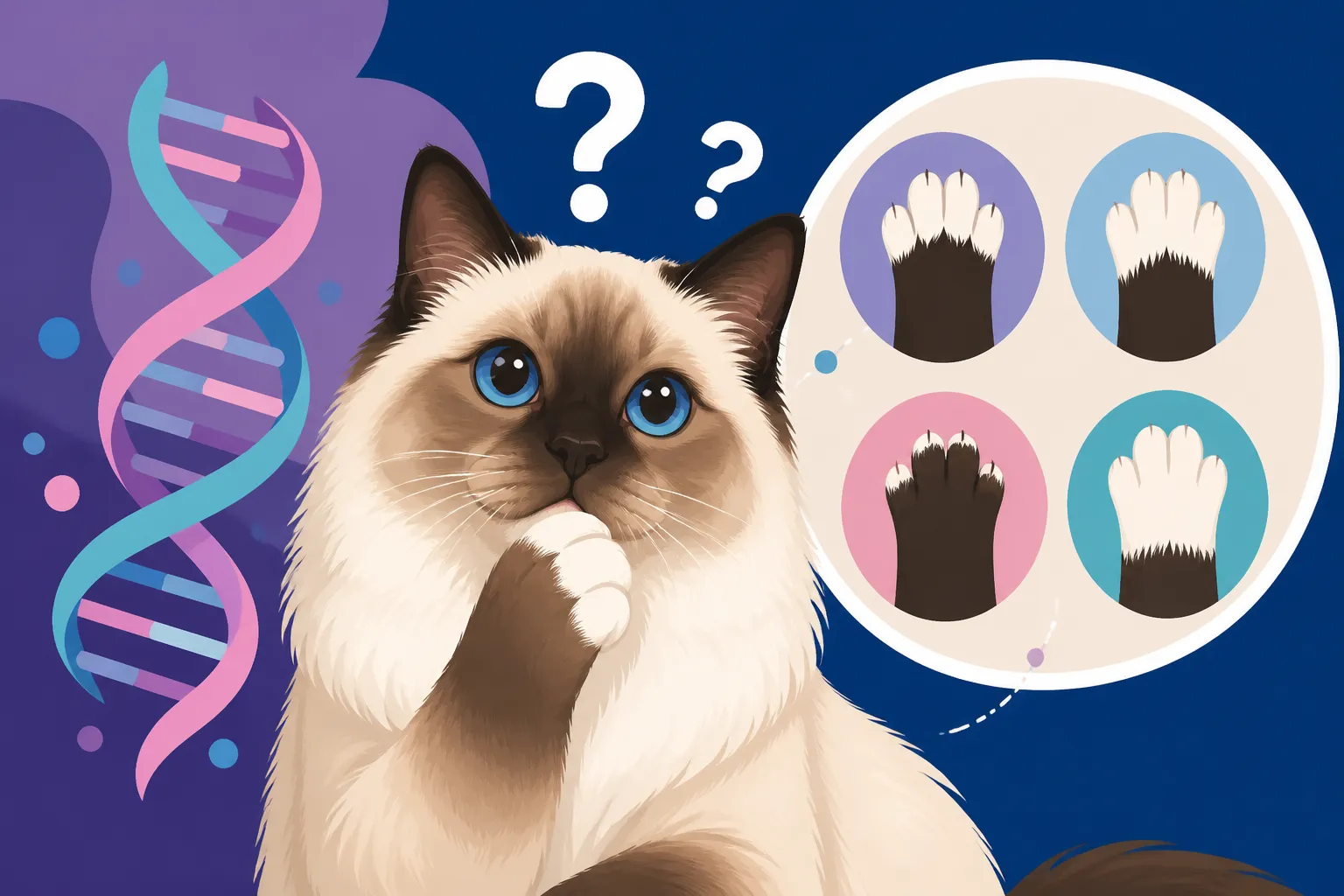
At the heart of the Birman's gloving lies a specific genetic variant in the KIT gene. This isn't just a theory; it's a known mutation that has been identified by scientists. Unlike many other traits that might have dominant or recessive patterns, the gloving gene in Birmans is a bit more nuanced. It’s essentially "fixed" within the breed, meaning that virtually all Birmans carry two copies of this specific variant. You might think, then, that if every Birman has the gene, every Birman should have perfect gloves, right? Oh, if only it were that simple!
The reality is that while the KIT gene variant is present, its expression – how it actually manifests on the cat's paws – is influenced by a whole host of other factors. It's like having the blueprint for a house, but the final appearance depends on the specific materials used, the weather during construction, and even the skills of the builders. This is why even among Birmans who all carry the same underlying genetic instruction, the outcome can be wildly different, leading to the unpredictable nature of their markings. We know The Gloving Gene Every Birman Carries Two Copies Of, but knowing it's there doesn't make the outcome a certainty.
Why Every Birman Carries Two Copies
It truly is a defining characteristic of the breed that virtually every Birman carries two copies of the gloving gene. This isn't a gene that some have and some don't; it's fundamental to what makes a Birman a Birman. This genetic uniformity arose partly from the breed's challenging history, particularly after the Second World War when the breed was almost entirely wiped out, leaving only a handful of individuals to rebuild the lines. This severe bottleneck meant that the surviving cats, and thus all their descendants, carried this particular genetic marker.
So, when we talk about Why Every Birman Carries Two Copies of the Gloving Gene, we're talking about a trait that's been deeply embedded in the breed's DNA. However, this inherent presence doesn't guarantee flawless execution. It means the potential for gloves is always there, but the devil is in the details of how perfectly those gloves are painted onto each paw. The mystery isn't if they'll have gloves, but what kind of gloves they'll have.
How a Birman Kitten's Gloves Change as It Grows
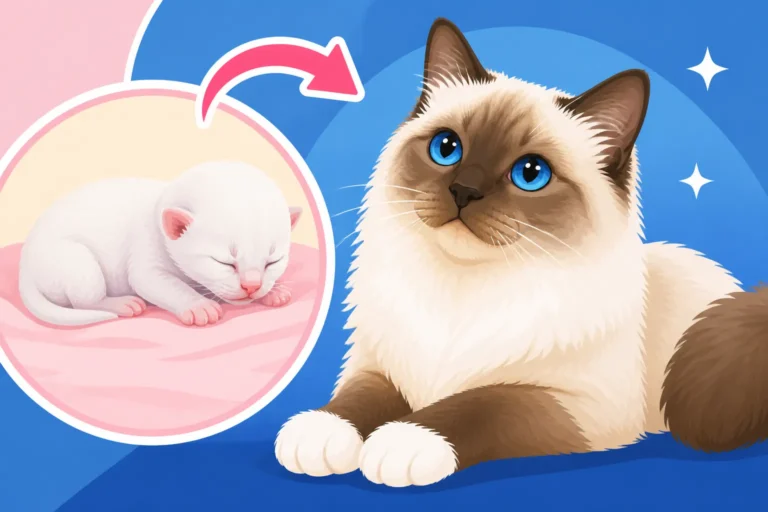
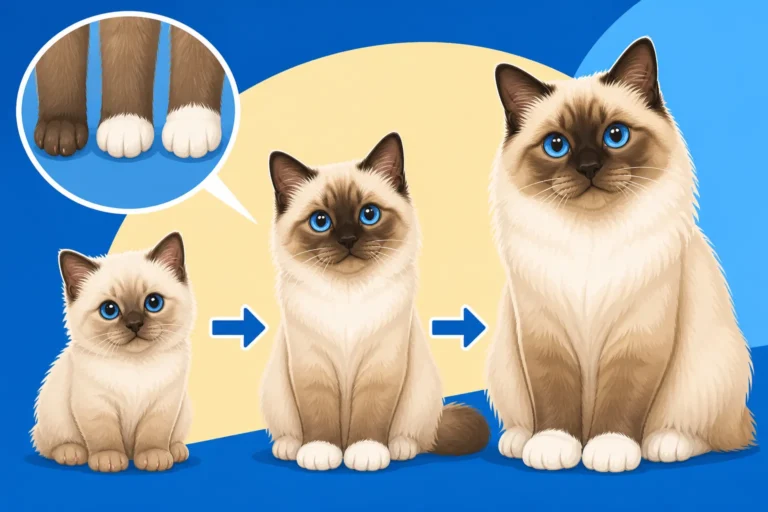
One of the most fascinating, and frankly, anxiety-inducing, aspects of Birman gloving for breeders is that a kitten's markings aren't set in stone at birth. When a Birman kitten is born, it's almost entirely white, and its points (the colored areas like ears, face, paws, and tail) will gradually darken as it grows. The same goes for the gloves. A breeder might look at a tiny kitten's paws and have an idea, but nothing is certain until much later.
The gloves can appear to "grow" or "shrink" as the kitten develops, and the white can sometimes creep up or recede from the desired line. What looked promising at eight weeks might be slightly off at twelve, or vice-versa. This means that a kitten destined for the show ring might only reveal its true potential — or its disqualifying fault — several weeks into its development. This slow revelation of markings makes the breeder's job incredibly complex, adding another layer to How a Birman Kitten's Gloves Change as It Grows and contributing to the overall unpredictability.
The Role of Modifier Genes and Environmental Factors
If the presence of the main gloving gene isn't enough to guarantee perfect markings, what else is at play? The answer lies in a complex interplay of other genes and even environmental influences that can subtly, or not so subtly, alter the outcome.
The Hidden Influence of Modifier Genes
Think of the primary gloving gene as the command to "paint the paws white." Modifier genes, on the other hand, are like the instructions that tell how to paint them: "make the line crisp here," "stop the white at this exact point," or "add a splash of white on the back of the leg." These are multiple, smaller genes that interact with the main gloving gene, fine-tuning its expression. They dictate the symmetry, the length of the white "laces" up the back of the hind legs, and the evenness of the white on the front paws.
Because many different modifier genes are involved, and their inheritance isn't always straightforward, predicting the exact outcome is incredibly difficult. Two parents with excellent gloves might produce kittens with less-than-ideal markings, or vice-versa, because of the random assortment of these modifier genes during conception. This is a huge part of Why Birman Gloves Vary Despite the Fixed Gene. It's a genetic lottery, and breeders are constantly trying to understand the combinations, which is why a good diet is so important for overall health, even if it won't directly 'fix' glove genetics.
Environmental Factors That Play a Part
While genetics are the primary driver, environmental factors can also subtly influence how a Birman's points and gloves develop. The most notable environmental factor for point coloration (the darker areas) is temperature. Birmans are a pointed breed, meaning their color develops in cooler areas of their body. This is why kittens are born white and gradually develop color.
For gloves, the direct link to environment is less pronounced but can still play a role. Factors like general health, nutrition, and even stress during critical developmental periods might have minor influences on how the white markings settle. While you can't change a cat's genetics with diet, ensuring optimal health and development through high-quality food, readily available from retailers like Chewy, ensures the cat has the best chance to express its genetic potential as intended. A robust system supports all physical developments, including coat and marking formation, even if it can't fundamentally alter the genetic instructions.
The Puzzle of Symmetrical Markings
One of the biggest challenges in Birman breeding is achieving perfect symmetry. The breed standard calls for an even distribution of white on all four paws, with specific requirements for the front gloves and the rear "laces." This level of precision is incredibly hard to consistently achieve. It's rare to find a Birman with four perfectly matching gloves that meet every aspect of the standard, from the crispness of the line to the exact height and length of the white on each paw.
This pursuit of symmetry is a testament to the unpredictable nature of the gloving. Even when the main gloving gene is fixed, and breeders meticulously select for parents with good markings, the subtle variations introduced by modifier genes and the sheer randomness of genetic inheritance make consistent perfection elusive. How Rare Perfect Birman Glove Symmetry Is is a constant topic of discussion among breeders, highlighting just how tough this aspect of the breed truly is.
Challenges for Breeders and Owners
The unpredictable nature of Birman glove genetics presents unique challenges for both dedicated breeders striving for the ideal and prospective owners seeking a perfect companion.
The Breeder's Quest for Perfection
For a Birman breeder, the goal is often to produce kittens that adhere as closely as possible to the breed standard, and the gloves are a major part of that. This means carefully selecting breeding pairs based on their own glove markings, as well as the markings of their ancestors and previous offspring. It's a constant balancing act between preserving the breed's health, temperament, and those elusive perfect gloves. Breeders spend years, even decades, trying to refine their lines, only to find that even the most promising pairings can yield unexpected results.
This quest for perfection can be frustrating, as genetics don't always follow a predictable arithmetic. A kitten with a tiny smudge of color on a toe, or a lace that extends just a hair too high, can mean the difference between a show-quality cat and one designated as a pet. It's a testament to the dedication of Birman breeders that they continue to work towards these high standards, understanding that Why Perfect Birman Gloves Are Almost Impossible to Breed is a fundamental reality of this enchanting cat.
The Impact on Show and Pet Kittens
The glove markings directly influence a kitten's classification and, consequently, its price. A kitten with "show quality" gloves – meaning they meet the breed standard almost flawlessly – will command a higher price, reflecting the breeder's time, effort, and the inherent rarity of such markings. These are the kittens that might one day grace the show ring.
On the other hand, kittens with "mismarked" gloves, even if the variations are minor, are typically sold as pet-quality cats. These are still wonderful, healthy Birmans with all the delightful personality traits of the breed, but their markings fall outside the strict show criteria. This doesn't make them any less lovable, but it does mean they won't be competing. This distinction explains Why One Birman Litter Spans Two Thousand Dollars in Price – it's all about those gloves! Pet owners might find these kittens to be a fantastic option, often available at a more accessible price point, and just as capable of filling a home with joy.
Managing the Expectations of Future Owners
For prospective Birman owners, understanding the unpredictability of glove genetics is crucial. Many people fall in love with the ideal image of a Birman with pristine white gloves, symmetrical and perfectly placed. However, breeders often have to manage expectations, explaining that perfection is rare and that slight variations are common and entirely normal.
A good breeder will be transparent about a kitten's markings, explaining any deviations from the standard. They might share photos of What a Birman's Front Gloves Should Look Like or illustrate Where a Birman's Back Lace Should End to help new owners understand the nuances. Ultimately, whether a kitten is "show quality" or "pet quality" due to its gloves, its personality, health, and ability to bring companionship remain paramount. It's important for owners to remember that a slightly uneven glove doesn't diminish the cat's innate beauty or its capacity to be a cherished family member.
Managing Expectations and Appreciating the Variety
The unpredictability of Birman glove genetics is a fundamental aspect of the breed. While it presents challenges, it also encourages us to appreciate the unique beauty of each individual cat.
Embracing the Uniqueness of Each Birman
Once you accept that genetic perfection in gloving is a rare and elusive goal, you can truly start to appreciate the unique beauty of every Birman. No two Birmans are exactly alike, and their individual markings, including the charming quirks of their gloves, contribute to their distinct personalities and visual appeal. This perspective shifts the focus from rigid standards to the joy of individual variation.
Consider a Birman whose white on one front paw might be slightly higher than the other, or a "lace" on a back leg that doesn't quite meet the desired length. These are often called "mismarks," but in a pet home, they are simply distinguishing features that make your Birman one of a kind. It's a reminder that beauty truly lies in individuality, and the slight unpredictability of their gloving adds to their charm, rather than detracting from it.
The Beauty Beyond the "Perfect" Standard
The breed standard provides a benchmark, particularly for those involved in showing Birmans. However, the vast majority of Birmans are beloved family pets, and their happiness and health are far more important than the exact placement of their white paws. A Birman with slightly "imperfect" gloves is just as affectionate, playful, and intelligent as one with show-winning markings.
For those considering adding a Birman to their family, it’s worth remembering that Why a Mismarked Birman Is a Pet Price Cat means you're getting all the wonderful traits of the breed at a potentially lower cost, without sacrificing any of the love and companionship. The standard is a guideline for breeding programs, but the true measure of a Birman is in its heart, not its paws. Ensuring your Birman's general well-being, from consistent veterinary care to pet insurance from providers like Healthy Paws, should always be the top priority, regardless of its markings.
Practical Tips for Birman Owners
For Birman owners, understanding the genetics behind the gloves means letting go of the idea of perfection and embracing the individuality of your cat. Here are a few practical considerations:
- Appreciate the Journey: Watch your Birman kitten's points and gloves develop. It's a fascinating process that unfolds over the first few years of their life.
- Focus on Health: Regardless of glove markings, prioritize your Birman's health. Regular vet check-ups, a balanced diet, and plenty of love will ensure they thrive.
- Educate Yourself: Learn about the breed's history and genetic predispositions. This knowledge deepens your appreciation and helps you be a responsible owner. For example, understanding What the KIT Gloving Variant Does enriches your connection to your cat's unique genetic heritage.
Understanding the complex and often unpredictable nature of Birman glove genetics helps us appreciate the intricate dance of heredity. While breeders strive for perfection, owners can find immense joy in the unique characteristics that make each Birman a truly special and cherished companion.
Birman Glove Markings: Ideal vs. Common Variations
| Feature | Ideal Breed Standard | Common Variations Encountered | Impact on Show/Pet Status |
|---|---|---|---|
| Front Gloves | Pure white, stopping at the bend of the paw, perfectly even and symmetrical. | Uneven length, extending too high ("booted"), or having colored spots. | Significant: Major fault for show, common for pet. |
| Rear Gloves | Pure white, covering toes and extending up the back of the hock in an inverted "V" (laces). | Laces uneven in height, extending too high (gauntlets), or missing entirely. | Significant: Major fault for show, common for pet. |
| Symmetry | All four gloves and laces should be perfectly matched. | Asymmetry in height, shape, or extent of white on different paws. | High: Critical for show, less so for pet. |
| Color Purity | White must be pure, with no colored spots or ticking. | Occasional colored spots (toe beans, small patches of color). | Minor to moderate fault for show, negligible for pet. |
| Crispness | The line between white and point color should be sharp and well-defined. | Blurred or feathered line between white and color. | Minor fault for show, generally overlooked for pet. |
Disclaimer
This article is for general informational purposes only and does not constitute professional advice. Laws, prices and regulations vary by location and change over time. Consult a qualified professional for guidance on your specific situation.