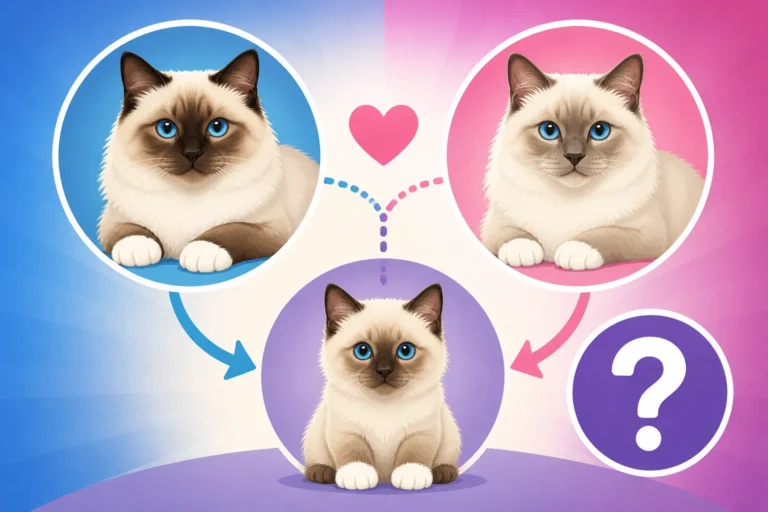
What a Blue Point Birman Looks Like
Have you ever found yourself scrolling through endless pictures of Birman cats, utterly captivated by their stunning point colors, but then a little confused when trying to pin down exactly what makes a "Blue Point" distinct? It’s a common experience, trust me. There are so many subtle variations and nuances in their coats! This guide is here to unravel that mystery for you, walking you through the gorgeous specifics of what truly defines the exquisite appearance of a Blue Point Birman, from the tips of their ears to their perfectly gloved paws.
The Basics of Birman Point Coloring and the Blue Point Difference
Birman cats, regardless of their specific point color, are renowned for their striking colorpoint pattern. This isn't just a random splash of color; it's a genetic marvel influenced by temperature. Understanding this foundation is key to appreciating the unique beauty of the blue point.
Understanding Point Color Genetics
At the heart of any Birman's color lies a fascinating genetic trait: a temperature-sensitive albinism gene. This gene means that the color pigment only fully develops in the cooler parts of the cat's body – typically the extremities, or "points." These points include the ears, mask (face), paws, and tail. The warmer core body stays much lighter. This is why you'll never see a Birman with a uniformly dark body coat; it will always be lighter than its points, creating that beautiful contrast we all adore.
When it comes to the "blue" in Blue Point, we're talking about a dilute form of black. Think of it like this: the original genetic blueprint for black pigment is present, but a modifying gene acts like a dimmer switch, diluting that intense black into a softer, cooler shade of grey. This isn't a silver or a stark charcoal; it's a muted, ethereal grey that holds a hint of blue, hence the name. This dilution applies specifically to the areas where pigment can express itself, which are those cooler points. If you've ever wondered why your Birman kitten started off so pale, it's all part of this fascinating genetic dance. Why Every Birman Kitten Is Born Pure White
The Signature Blue Point Palette
So, what does this genetic dilution translate to visually? A Blue Point Birman presents a truly elegant and harmonious color scheme. The body fur is typically a cool, icy white, often described as a frosty white or even a very pale, almost imperceptible bluish-white. There might be a slight, delicate shading of this cooler tone across the back or flanks, but it's always soft and never creates a harsh contrast with the points. This muted body color serves as the perfect canvas for the richer, deeper point coloration.
The points themselves – the mask, ears, legs, and tail – are a striking, consistent slate grey-blue. This isn't a dark, inky blue like a Siamese, but a softer, more powdery shade. Imagine the color of a clear winter sky just before dusk, or the subtle hue of a blue slate tile. The key is the consistency; a well-marked Blue Point Birman will have an even distribution of this slate grey-blue pigment across all its points, without blotches or streaks. This creates a beautifully soft and sophisticated appearance, often described as having a serene or gentle aesthetic compared to the bolder Seal Points. It's a color that truly embodies quiet elegance.
Distinctive Features of a Blue Point Birman's Appearance
Beyond the mesmerizing coat, several other physical traits work together to complete the picture of a Blue Point Birman, creating a stunning overall impression that’s instantly recognizable. These details, from their eyes to their paws, are crucial elements of their breed standard.
Eyes, Nose Leather, and Paw Pads
One of the most captivating features of any Birman, and particularly pronounced in the harmonious palette of a Blue Point, are their eyes. Birmans are famed for their deep, brilliant sapphire-blue eyes. For a Blue Point, these eyes provide a vivid pop of color against the softer tones of their fur and points. The depth of blue in their eyes is truly remarkable, often described as an intense, sparkling jewel tone that can seem to glow from within. This dazzling eye color complements the cool tones of their coat beautifully, creating a mesmerizing gaze that's hard to look away from. It's truly one of the defining characteristics of the breed, and something that breeders strive for. You'll notice these stunning eyes really come into their own as the kitten matures. When a Birman's Eye Color Reaches Full Blue
Beyond the eyes, a Blue Point Birman's nose leather and paw pads are also characteristic. The nose leather, the soft skin on the tip of their nose, will be a consistent slate grey-blue, perfectly matching the point color. This isn't a pink nose, nor is it a dark black; it’s a direct reflection of their dilute blue pigment. Similarly, their paw pads, those adorable little cushions on their feet, will also be this distinctive slate grey-blue. These subtle, coordinating details are part of what creates such a cohesive and elegant look for the Blue Point Birman. They complete the picture, reinforcing the overall blue theme in a gentle and understated way.
The Iconic White Gloves and Laces
What truly elevates the Birman, regardless of its point color, and makes it unmistakably unique, are its iconic white "gloves" on the front paws and "laces" on the hind paws. These white markings are completely distinct from the temperature-sensitive point coloration; they are controlled by a separate gene. For a Blue Point Birman, these pure white markings create a breathtaking contrast against the slate grey-blue points and the icy white body.
Imagine the front paws looking as if they've been delicately dipped in pristine white paint, extending up to a clean, even line where the white meets the blue point color. These are the "gloves." On the hind paws, the white extends higher up the back of the leg, forming what are known as "laces" or "gauntlets," which ideally taper to a point. These white markings should be as pure and unblemished as possible, providing a crisp, sharp border against the darker point color. What a Birman's Front Gloves Should Look Like This clean delineation is highly valued in the breed standard and contributes significantly to the Birman's regal appearance. These white feet are not just pretty; they are the legendary mark of the Birman cat, rooted in ancient lore and a hallmark of their pedigree. Keeping them pristine can sometimes be a fun challenge, especially if your Birman enjoys exploring everything with those lovely white paws!
How Age and Environment Influence a Blue Point's Look
The beauty of a Blue Point Birman isn't static; it evolves over time and can even be subtly influenced by the world around them. Understanding these changes helps you appreciate the full spectrum of their aesthetic journey.
Point Development from Kitten to Adult
When a Birman kitten first enters the world, it’s a tiny bundle of pure white fluff. This is one of the most charming aspects of the breed – watching their colors slowly bloom. The temperature-sensitive gene means that the warmer environment of the queen's womb, and the initial weeks of life, prevent significant pigment development. Slowly, as the kitten grows and its extremities become cooler than its core, those faint blue points begin to emerge. You might first notice a subtle greyish tinge on the tips of their ears and their nose.
Over the next several weeks and months, these points will gradually deepen and spread. The pale, frosty blue will become more defined on the ears, nose, tail, and eventually the legs. It’s a bit like watching a watercolor painting slowly take on more vibrant hues. However, it's important to remember that a Birman’s full adult coloration isn't typically reached until they are around two to three years old. Their coat density and the depth of their point color continue to mature, creating that rich, fully expressed blue point appearance we admire. How Many Years a Birman's Points Take to Finish Darkening So, if your young Blue Point Birman seems a little paler than older ones you've seen, don't fret – they're just still developing their full glory!
Environmental Factors and Color Depth
It's truly fascinating how a Birman's coat color can be influenced by its environment. Because of that temperature-sensitive gene, a Blue Point Birman living in a consistently cooler climate or a house kept at a lower temperature will often develop darker, more intense blue points than a Birman living in a very warm environment. The chillier air allows the pigment to express itself more strongly in those cooler extremities. Conversely, a Birman living in a perpetually warm household might have slightly lighter, softer points.
This isn't just about the points; even the body coat can be subtly affected. While always remaining light, a Birman in a colder setting might develop a slightly cooler, almost bluish cast to its body fur compared to one in a warmer environment, which might retain a more pristine icy white. Think about the slight variations you see between individual Blue Points – sometimes it's genetics, but sometimes it's simply where they call home. Why a Birman Living Somewhere Cold Gets Darker Of course, extreme temperature changes aren't ideal for any cat, but within normal household ranges, you can definitely observe these subtle shifts. It's another layer of unique charm for the Birman owner, knowing that their cat's appearance is, in a small way, a living reflection of their cozy home.
What a Blue Point Birman Is Not (Common Misconceptions)
With so many beautiful pointed breeds out there, it's easy to get a little mixed up. Understanding what sets a Blue Point Birman apart, and what it isn't, can help clarify their distinctive identity.
Distinguishing from Other Pointed Breeds
It’s easy to look at a Blue Point Birman and think of other pointed breeds, as they share some superficial similarities. The most common comparison is often with the Ragdoll. Both breeds are large, long-haired, and have striking blue eyes and point coloration. However, the critical difference lies in the white markings. A Birman's white "gloves" and "laces" are a hallmark that sets it apart. While Ragdolls can have white on their paws, it's typically a different pattern, often extending further up the legs in a "mitted" pattern, and lacking the precise, pristine "gloved" look of the Birman. How a Birman Differs From a Ragdoll on Sight The Birman also tends to have a slightly more moderate body type compared to the larger, floppier Ragdoll.
Another breed sometimes confused with the Birman is the Himalayan, which is essentially a pointed Persian. Himalayans also boast beautiful point colors and blue eyes, but their most distinguishing feature is their flat, brachycephalic (pushed-in) face. The Birman, in contrast, has a distinctly Roman nose and a more classic, rounded head shape without the extreme facial flattening. Why a Himalayan Has No Gloves and a Birman Does They also lack the Birman's characteristic white gloves and laces. Knowing these key differences helps you truly appreciate the unique combination of features that defines the Birman. It's not just the color, but the entire elegant package that creates their specific breed identity.
Beyond the Blue: Other Birman Point Colors
While the Blue Point Birman is undeniably stunning, it's important to remember that "blue" is just one of many exquisite point colors recognized within the Birman breed. This helps put the Blue Point's appearance into context. Other popular and equally beautiful point colors include Seal Point, which features very dark brown, almost black, points; Chocolate Point, with its warm, milk-chocolate colored points; and Lilac Point, a much paler, pinkish-grey dilution of chocolate. You might also encounter Red (Flame) Points, Cream Points, and various Torbie (Tortoiseshell-Tabby) and Tabby Points, each with their own unique charm. Which Point Colors the Birman Standard Allows
Each of these color variations adheres to the same core Birman standard: a lighter body contrasted with darker points, brilliant blue eyes, and those essential white gloves and laces. What makes the Blue Point particularly special, however, is the soft, gentle aesthetic created by its cool, diluted grey-blue points and icy white body. It’s a color that exudes calm and sophistication, often appealing to those who prefer a less dramatic, more ethereal look. While all Birmans are beautiful, the Blue Point truly carves out its own niche of serene elegance within the breed's diverse palette. If you’re ever curious about how a Birman sits in the wider cat family, remember their origins. How the Birman Sits Between the Siamese and the Persian
To summarize the key visual traits of a Blue Point Birman:
| Feature | Description |
|---|---|
| Body Color | Icy white to frosty white, often with a delicate, almost imperceptible bluish-white shading, particularly on the back. Always significantly lighter than the points. |
| Point Color | Consistent, even slate grey-blue on the mask, ears, legs, and tail. This is a softer, diluted black pigment, not a deep navy. |
| Eye Color | Deep, vivid sapphire blue. Intense and sparkling, providing a striking contrast to the cool coat tones. |
| Nose Leather | Slate grey-blue, matching the point color. |
| Paw Pads | Slate grey-blue, matching the point color. |
| White Markings | Pure white "gloves" on the front paws, extending to a clean line. Pure white "laces" or "gauntlets" on the back paws, extending higher and tapering. These must be pristine and clearly delineated from the points. |
| Coat Texture | Long, silky, with little to no undercoat. Flowing and soft to the touch. |
| Head Shape | Strong, rounded skull, full cheeks, medium-length Roman nose, moderate stop. |
| Body Type | Medium to large, sturdy, elongated body. Well-muscled. |
When you look at a Blue Point Birman, you're not just seeing a cat; you're seeing a living work of art, a harmonious blend of cool tones, striking blue eyes, and those unforgettable white markings. It's a look that promises grace, elegance, and a truly gentle companion. Ensuring their coat remains healthy and vibrant also involves good nutrition, so always choose high-quality food. Remember, a healthy cat is a beautiful cat, and sometimes the little things like excellent food can make a big difference in maintaining that silky coat. What Feeding a Coat Like the Birman's Costs Each Month And just like with any cherished family member, considering pet insurance from providers like Healthy Paws can give you peace of mind, knowing you're prepared for whatever life might throw your way, allowing you to focus on enjoying your beautiful Blue Point Birman.
Disclaimer
This article is for general informational purposes only and does not constitute professional advice. Laws, prices and regulations vary by location and change over time. Consult a qualified professional for guidance on your specific situation.