Why Only Two Copies Cause the Birman Disease
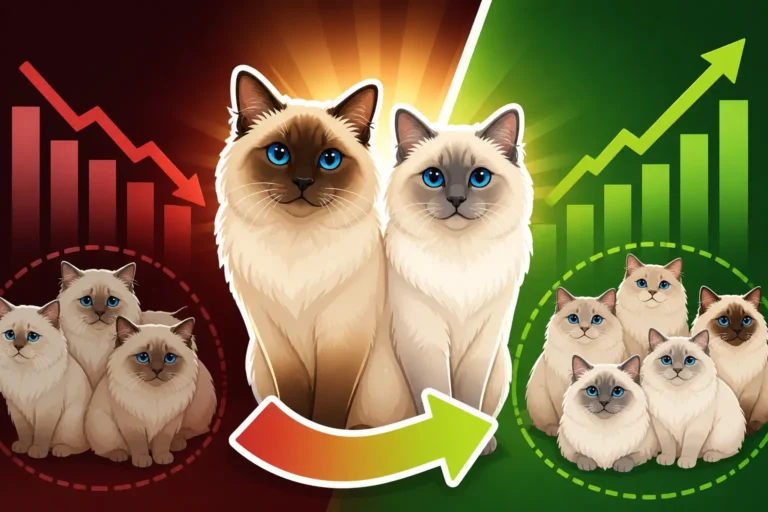
Recessive genetic inheritance in Birman cats explains why diseases like Birman Hypotrichosis manifest only when kittens inherit two mutated alleles.
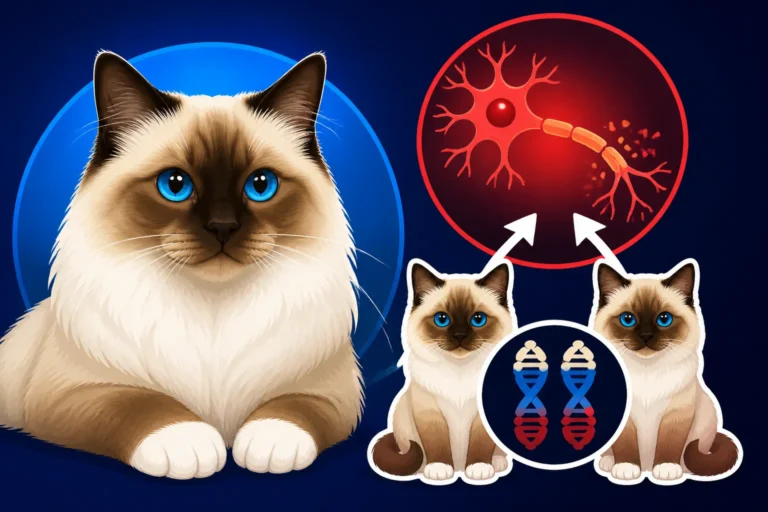
Recessive genetic inheritance in Birman cats explains why diseases like Birman Hypotrichosis manifest only when kittens inherit two mutated alleles.
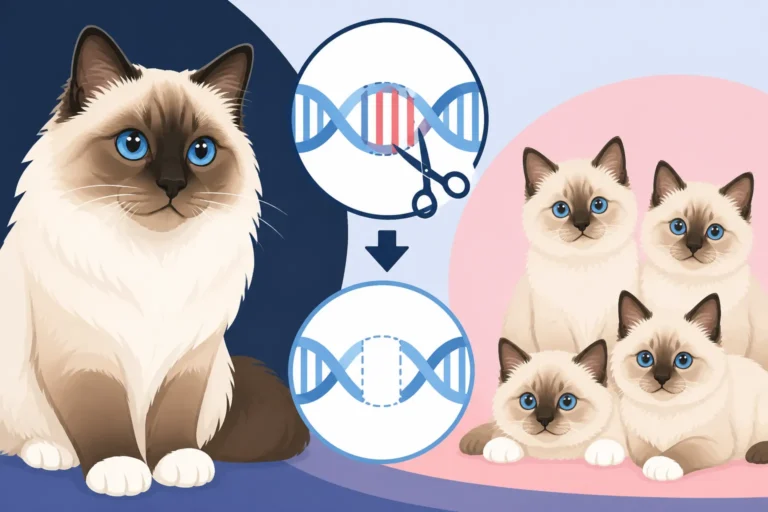
The FOXN1 gene deletion causes thymic aplasia in Birman litters because kittens inherit two copies of the mutated recessive gene.
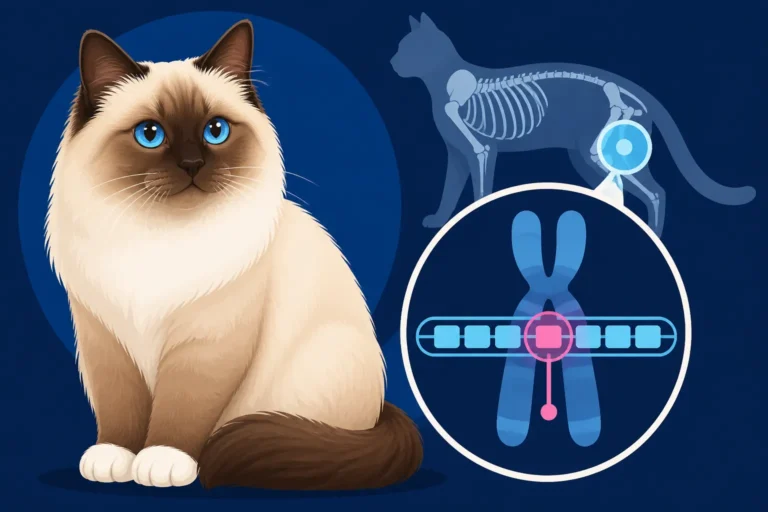
The FOXN1 deletion location on chromosome B1 in Birman cats, explaining how DNA testing identifies carriers of the severe immunodeficiency disorder.
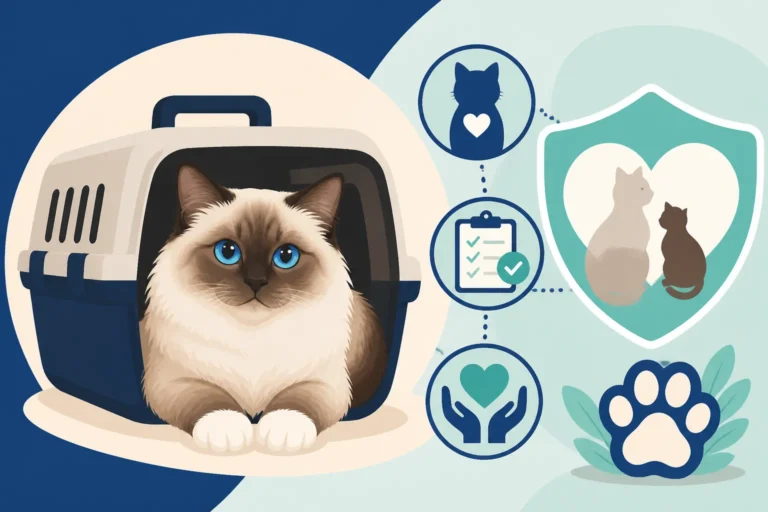
Birman cat carriers of recessive genetic conditions can be bred safely by avoiding pairings with other carriers and testing kittens.
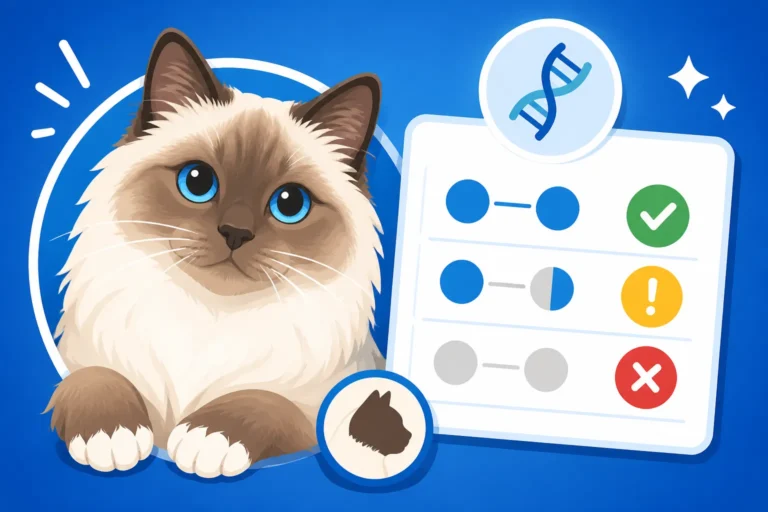
Birman carrier results explain gene mutations for conditions like Feline Hypotrichosis, helping owners interpret lab reports.

Birman cheek swab DNA testing identifies the recessive FOXN1 genetic mutation causing feline hypotrichosis and thymic aplasia.
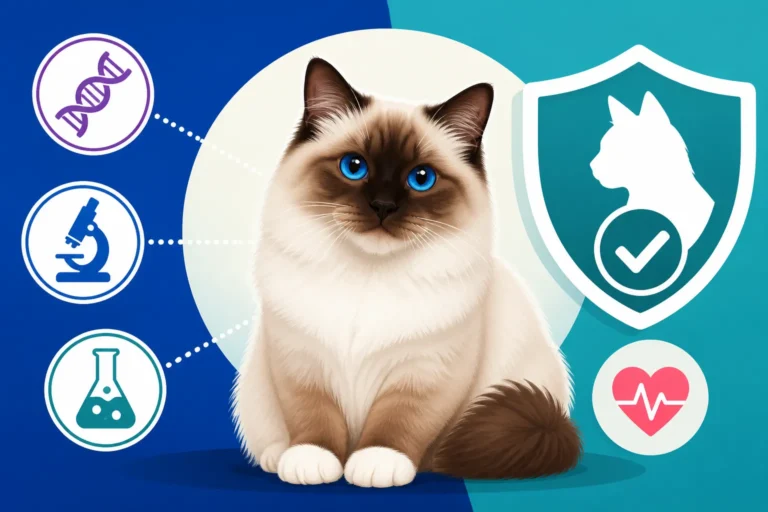
Health tests for Birman cats identify genetic conditions caused by the narrow founder base of only two cats after World War II.
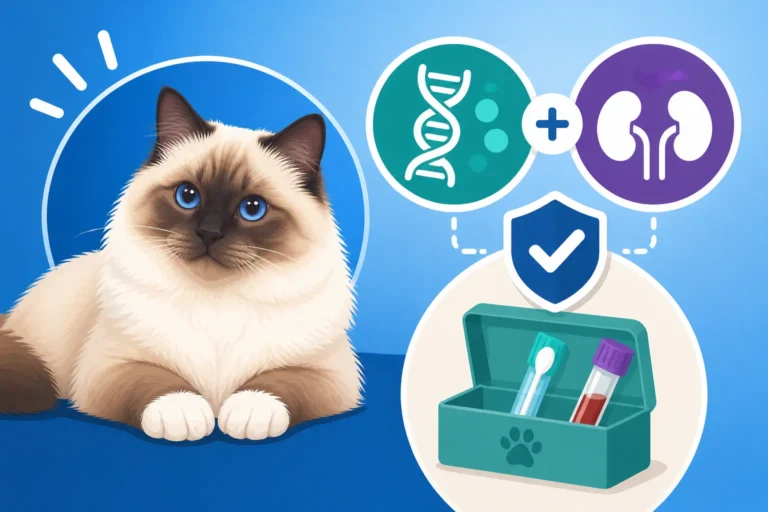
Genetic testing expenses for Birman cats regarding FOXN1 and PKD1 conditions help owners prevent kidney failure and fatal infections.
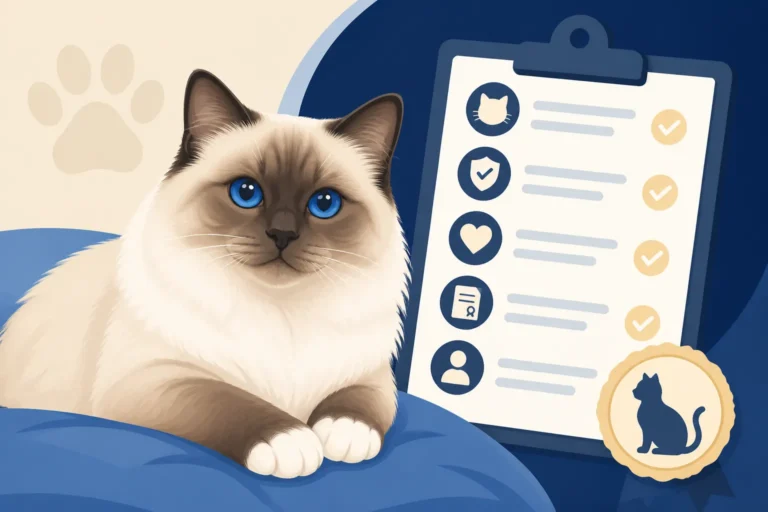
Written health documentation from a Birman cat breeder includes parent test results for FOXN1 and PKD1 genes and cardiac screenings.
Founder cats Orloff and Xenia de Kaabaa saved the Birman breed from near extinction after World War Two, shaping its genetic history.