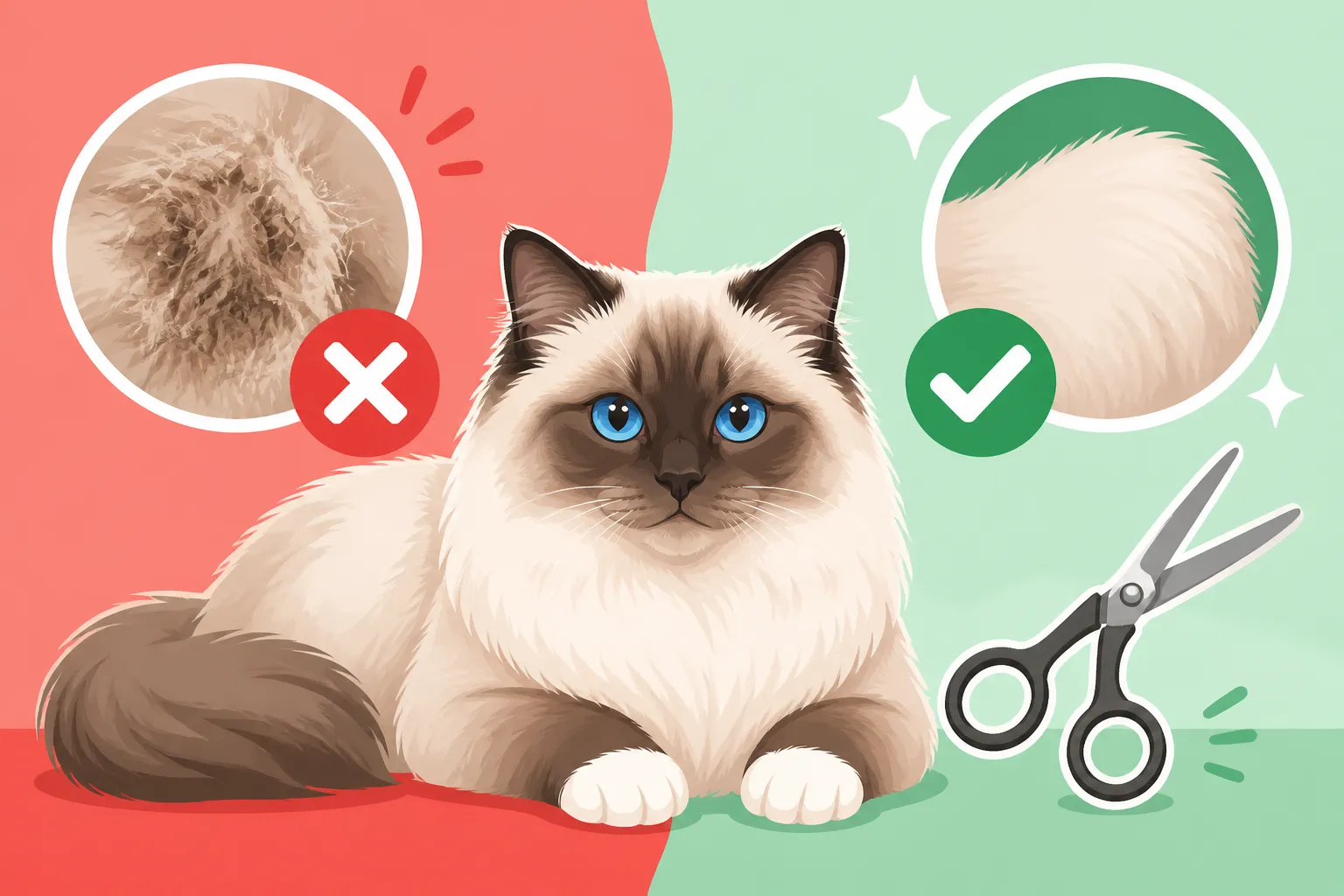
Whether to Cut a Mat Out of a Birman
It's a familiar scenario for many Birman parents: you're enjoying a quiet moment with your beloved feline, stroking their incredibly soft, silky fur, only to suddenly hit a snag. A mat. And often, the first, most tempting thought is to just grab a pair of scissors and snip it right out. This guide is here to tell you why that's almost never the best course of action for your Birman, highlighting the real risks involved and offering gentler, safer, and ultimately more effective ways to deal with those pesky tangles.
The Unique Nature of the Birman Coat and Why It Mats
Birmans are famous for their stunning, flowing coats, which somehow manage to look incredibly luxurious without being prone to the severe matting issues of some other long-haired breeds. But even with their "easy-care" reputation, mats can, and do, happen. Understanding the specific qualities of your Birman's fur is key to preventing and dealing with these tangles.
Understanding the Single Coat Advantage and Disadvantage
One of the greatest joys of owning a Birman is undoubtedly their coat. Unlike many other long-haired cats, Birmans possess a single coat, meaning they lack the dense, woolly undercoat that other breeds, like Persians, are known for. This single-layer structure is exactly No Undercoat Is What Makes a Birman Easy to Groom. It's why their fur feels so exquisitely soft and doesn't tend to clump into tight, painful knots as readily as a double-coated cat's might. You can literally run your fingers through it, and it feels like silk.
However, this "advantage" isn't a magic shield against all tangles. While it mats far less frequently, when a Birman's coat does mat, it's often due to neglect or specific circumstances rather than the inherent structure of the fur itself. The finer texture can still get tangled, especially if it's exposed to moisture, friction, or simply not being brushed regularly enough. Think of it like a very fine human hair: it's less prone to full-on dreadlocks, but a good gust of wind or a careless sleep can still leave it in a mess. This is why, despite their easy-care nature, Why a Birman Mats Far Less Than It Looks Like It Should.
Common Areas Where Mats Form on a Birman
Even the most fastidious Birman can develop a mat, especially in certain high-friction areas. Knowing these hot spots can help you focus your grooming efforts and catch tangles before they become major problems. One of the most common places you’ll find a mat is behind the ears, where the fur is often finer and gets ruffled during head rubs and cleaning. The ruff, that magnificent mane around their neck, is another prime candidate. It's often the longest fur on their body, and constant movement, napping, or even collar wear can cause it to tangle.
Another frequent trouble spot is under the "armpits" (the chest and front legs) and along their flanks, especially where their legs rub against their body when they walk or stretch. The britches, the long fur on their hind legs, also collect debris and can become tangled, particularly if your Birman enjoys rolling around or has any digestive issues that soil the fur. Finally, the tail plume, while beautiful, is a long, flowing target for tangles and can gather stray litter or dirt. These are the areas you should pay extra attention to during your regular grooming sessions, gently separating the fur and feeling for any early signs of knotting.
Why Cutting a Birman's Mats Is Risky (and Often Unnecessary)
The thought of cutting a mat out of your Birman's beautiful coat might seem like a quick fix, a way to instantly resolve the tangle and restore their pristine appearance. However, this seemingly simple solution carries significant risks that many pet parents don't fully consider. It's an impulse born of frustration, but one that can lead to more serious problems for your beloved companion.
The Dangers of Using Scissors on a Cat's Skin
This is the absolute biggest reason to put down those scissors. A cat's skin, especially a Birman's, is incredibly thin, loose, and pliable. When a mat forms, it pulls the skin taut and often traps it within the tangle itself, making it incredibly difficult to tell where the mat ends and the skin begins. Trying to cut a mat out, particularly one that is tight against the body, is fraught with danger. It's alarmingly easy to accidentally snip a piece of skin, leading to a painful wound that will likely require veterinary attention, sutures, and potentially antibiotics. Imagine trying to cut a piece of string that's been woven into a tight knot against your own skin – that's essentially what you're asking for.
Furthermore, cats are rarely cooperative patients when it comes to sharp objects near their skin, especially if they're already uncomfortable or wary. Even the most placid Birman might react unpredictably to the sensation of scissors pulling at their fur, potentially jerking away at precisely the wrong moment. The risk of injury to yourself, from a scratch or bite, is also very real. It's a high-stakes gamble with your cat's safety and your own, and honestly, it's one that's just not worth taking.
The Aesthetic Impact of Chopping Out Mats
Beyond the immediate safety concerns, consider the long-term aesthetic impact of cutting out mats. Birmans are admired for their flowing, uniform coats. Chopping out mats with scissors leaves behind unsightly bald spots, uneven patches, and choppy edges that can take weeks or even months to grow back in. Your cat won't care about their appearance, of course, but it can make future grooming more challenging as the new, shorter fur struggles to blend with the longer surrounding coat.
These uneven patches can also become new points for future mats, as the shorter hairs tangle more easily with the longer ones around them. It disrupts the natural flow of the coat, making it harder to comb smoothly. What might seem like a small snip can quickly detract from your Birman's regal appearance and create a cycle of patchy fur. The goal of grooming is to maintain a healthy, beautiful coat, and cutting large sections out works directly against that.
When a Vet or Professional Groomer Might Consider Clipping
While cutting mats with household scissors is almost always a bad idea, there are specific circumstances where a professional might use clippers to remove severe matting. This isn't the same as you trying to snip it out; it's a controlled procedure performed by someone with specialized tools and training. A veterinarian, for example, might elect to shave a matted area if the matting is so severe that it's causing skin irritation, preventing proper air circulation, or hindering the cat's movement. They have professional clippers designed for animal fur, which are less likely to "nick" the skin, and they often perform this under sedation if the matting is extensive or the cat is stressed.
Similarly, a professional cat groomer who is experienced with Birmans might use clippers, but they will do so with immense care and often only after exhausting all other detangling methods. They understand the nuances of a cat's skin and coat, and they have specialized techniques to get under mats safely. They also have a range of tools, from fine-toothed combs to specific dematting rakes, that can often work wonders on tangles that seem impossible to tackle at home. If you're faced with a mat that feels utterly hopeless, your vet or a professional groomer is the safest, most effective resource, not your kitchen scissors.
Gentle and Effective Strategies for Mat Removal
So, if cutting isn't the answer, what should you do when you discover a mat in your Birman's glorious coat? The key is patience, the right tools, and a gentle approach. Remember, your Birman trusts you, and making the grooming experience as positive as possible will pay dividends in the long run.
The Right Tools for the Job
Before you even think about tackling a mat, you need to gather the correct supplies. Using the wrong tools can be ineffective, painful for your cat, and even damaging to their coat. For a Birman's fine, silky fur, you'll want to focus on gentle detangling.
Here’s what you’ll need:
- A Steel Comb with Wide and Fine Teeth: This is your primary weapon. Start with the wide-toothed side to gently work through the outer layers of the mat, then move to the finer side for more intricate detangling. A good quality, durable metal comb will last years. You can find excellent options on Amazon or Chewy.
- A Pin Brush or Slicker Brush (Optional, for general grooming): While not ideal for removing mats, these brushes are great for daily maintenance to prevent them. A pin brush with rounded tips glides through the Birman's single coat without pulling, and Which Comb Gets Through a Birman's Ruff Without Pulling.
- Detangling Spray: These sprays can make an enormous difference by lubricating the fur, allowing tangles to loosen more easily. Look for cat-specific, non-toxic formulas. Some even have anti-static properties which can help.
- Cornstarch or Talc-Free Baby Powder: For particularly greasy or tight mats, a small sprinkle can help absorb oils and give you a better grip, making the fur less slippery.
- Treats: Lots of them! Positive reinforcement is crucial for keeping your Birman calm and cooperative.
- Patience and a Calm Demeanor: This isn't a tool you buy, but it's perhaps the most important one. Rushing or becoming frustrated will only make your cat more anxious.
Step-by-Step Mat Detangling Process
Once you have your tools ready, it's time to approach the mat. Remember, slow and steady wins the race here. The goal is to separate the tangled hairs without causing pain or stress to your Birman. This process is designed to mimic How to Get a Mat Out of a Birman's Coat effectively.
- Assess the Mat: Gently feel the mat to determine its size, tightness, and how close it is to the skin. If it feels extremely tight or is causing visible discomfort, it might be a job for a professional.
- Position Your Birman: Find a comfortable, well-lit spot where your cat feels secure. You might want to hold them gently on your lap or have a helper, if your cat is comfortable with it. Offer a treat immediately.
- Isolate the Mat: Use your fingers to gently separate the mat from the surrounding healthy fur. This prevents the tangle from spreading and helps you focus on the problem area.
- Apply Detangling Spray/Powder: Spray a little detangling solution directly onto the mat, working it into the fur. If using cornstarch, sprinkle a small amount and gently rub it in. Let it sit for a minute or two to work its magic.
- Work from the Edges Out: This is the golden rule of detangling. Start at the very edge of the mat, closest to the healthy fur, using the wide-toothed side of your comb. Gently tease out just a few strands at a time. Do not pull hard. If you hit resistance, stop, reposition, and try again. Think of it like unwinding a tiny, knotted thread.
- "Pick" at the Mat: Instead of pulling the comb through the mat, use a picking motion. Insert a tooth of the comb into the mat, parallel to the skin, and gently lift and separate a few hairs. Repeat, moving slowly around the mat. You are essentially dismantling the mat, hair by hair.
- Support the Skin: Always place your finger between the mat and your cat's skin while you are combing to prevent painful tugging. This is especially important for tight mats.
- Take Breaks: If your Birman becomes restless or shows signs of irritation (tail twitching, ears flattening, low growl), stop. Offer more treats, give them a cuddle, and resume later. Short, frequent sessions are far better than one long, stressful one.
- Reward Heavily: Each time you successfully get a piece of the mat out, or even just after a few minutes of good behavior, give your Birman a treat and praise. You want them to associate grooming with positive experiences.
Prevention Is Always Better: Daily Grooming Habits
The absolute best way to deal with mats is to prevent them from forming in the first place. For a Birman, this means establishing a consistent, gentle grooming routine. Their single coat, while low-maintenance compared to some, still benefits immensely from regular attention. Regular grooming ensures that How Many Minutes a Week a Birman's Coat Takes is minimal and enjoyable for both of you.
Aim for Combing a Birman Three Times a Week as a general guideline. These don't need to be hour-long sessions; even a quick 5-10 minute brush-through can make a huge difference. Focus on those high-friction areas we discussed earlier—behind the ears, the ruff, under the armpits, and the britches. Make it a bonding experience rather than a chore. Start by simply stroking them and introducing the comb for a few gentle passes. How to Get a Birman Used to a Comb from a young age is crucial; early positive experiences lay the groundwork for a lifetime of stress-free grooming.
Consider using a soft, flexible brush or a wide-toothed comb to gently run through their fur every other day. This helps remove loose hair, distribute natural oils, and, most importantly, catches any tiny tangles before they have a chance to solidify into full-blown mats. Regular brushing also reduces shedding, meaning less fur around your home, and fewer hairballs for your Birman! Remember, consistency is key, and it’s always easier to prevent a mat than to detangle one. After all, Why Early Grooming Habits Decide a Birman's Life when it comes to coat care.
When to Seek Professional Help for Severe Matting
Sometimes, despite our best efforts, a mat can become too large, too tight, or too close to the skin for home remedies. It's okay to admit when a situation is beyond your comfort or skill level. Recognizing when to call in the professionals is a sign of responsible pet ownership, prioritizing your Birman's well-being and comfort above all else.
Recognizing When It's Beyond Home Care
How do you know when a mat is too much to handle yourself? There are several red flags. If a mat is causing your Birman visible pain or discomfort when you try to touch it, that's a clear sign. Cats are masters at hiding pain, so if they're reacting, it's serious. If the mat is extremely tight against the skin, feels hard like felt, or covers a large area of their body, it's probably time for professional intervention. You might also notice skin irritation, redness, or even open sores underneath the mat, which can be easily overlooked until it's too late.
Mats can restrict movement, causing your cat to walk stiffly or refuse to jump. If the mat is in a sensitive area like around the genitals or anus, attempting to remove it yourself could cause further trauma or pain, and these areas are particularly prone to infection. If your Birman becomes unusually aggressive or fearful during grooming attempts, or if they just seem generally unwell, these are all indicators that the matting is probably severe enough to warrant a vet or professional groomer. Don't let guilt or embarrassment stop you; your cat's health comes first.
What a Professional Groomer or Vet Can Do
When you bring your severely matted Birman to a professional, you're tapping into their expertise, specialized equipment, and understanding of feline anatomy and behavior. A professional cat groomer, particularly one experienced with Birmans and long-haired breeds, will first assess the extent of the matting. They have specialized tools, including various types of dematting rakes, combs, and professional clippers, which are designed to safely remove mats without cutting the skin. They're often skilled at working around sensitive areas and can sometimes save more of the coat than you might think possible.
For very severe or painful mats, a veterinarian is your best bet. They can offer sedation to ensure your Birman remains calm and still during the grooming process, which drastically reduces the risk of injury. Under sedation, they can safely shave off even the tightest, most extensive mats, examining the skin underneath for any hidden sores or infections that might require treatment. While a shaved Birman might look a little different for a while, it’s a temporary sacrifice for their comfort and health. They can also address any underlying health issues that might have contributed to the matting, such as arthritis that prevents self-grooming or skin conditions.
The Cost and Comfort Considerations
Of course, seeking professional help comes with a cost. The price for dematting services can vary widely depending on the severity of the matting, whether sedation is required, and your location. However, consider this an investment in your cat's health and comfort. A single trip to the emergency vet for a self-inflicted scissor wound could easily cost more than a professional grooming session. Think of it as preventative care to avoid more expensive medical problems down the line.
Ultimately, the comfort and well-being of your Birman should be the primary consideration. While it might be tempting to save money by doing it yourself, the emotional distress and potential physical harm to your cat from a botched home attempt are simply not worth it. A professional can quickly and safely resolve the issue, allowing your Birman to return to their happy, comfortable self, free from the pain and irritation of severe mats. Sometimes, paying for expertise is the kindest thing you can do for your furry family member.
Disclaimer
This article is for general informational purposes only and does not constitute professional advice. Laws, prices and regulations vary by location and change over time. Consult a qualified professional for guidance on your specific situation.