Why a Birman Almost Never Needs Clipping
One common concern I hear from new Birman parents is whether they'll need to deal with complicated grooming routines, especially clipping. It's a valid worry, given how luxurious and long their coats appear! But here's the good news: unlike some other longhaired breeds, a Birman cat almost never needs clipping. This guide will walk you through exactly why that is, the rare instances where a trim might be considered, and how to maintain that glorious coat with minimal fuss.
Understanding the Birman Coat: The Secret to Less Clipping
When you first lay eyes on a Birman, with that flowing ruff, plumed tail, and silken body fur, you might assume a professional groomer will become your new best friend. It’s easy to look at all that magnificent fluff and imagine hours of brushing and battling mats, possibly ending in a shave-down. However, the Birman coat has a unique structure that sets it apart, making it surprisingly low-maintenance in comparison to many other long-haired breeds. This fundamental difference is the key to why clipping is almost entirely unnecessary for these beautiful felines.
The Birman's Single Layer vs. Double Coats
The most crucial distinction of the Birman coat is its single-layer construction. Many long-haired cats, like the Persian, possess a dense double coat. This means they have a top layer of guard hairs and a thick, woolly undercoat. It’s this undercoat that is often the culprit behind severe matting and knotting, especially if not groomed diligently every single day. The undercoat easily traps loose hairs, dirt, and moisture, quickly forming felt-like clumps close to the skin. Dealing with such a coat often requires professional intervention, and in severe cases, a full shave becomes the most humane option to relieve the cat.
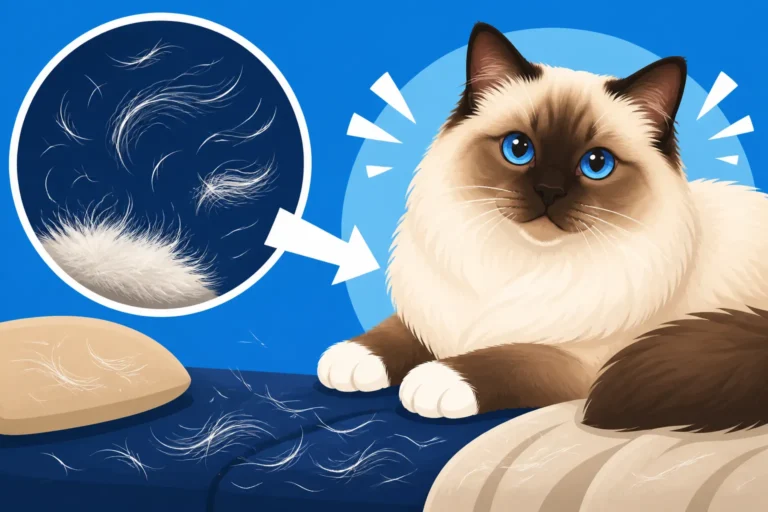
In contrast, the Birman lacks this woolly undercoat. Their fur consists solely of long, silky guard hairs that lie smoothly against the body. These hairs are fine and incredibly soft to the touch, feeling more like a delicate silk scarf than a thick woolen blanket. Because there isn't that dense, insulating layer underneath, the hairs don't get tangled against each other nearly as easily. It's one of the breed's most cherished traits, and a significant reason why No Undercoat Is What Makes a Birman Easy to Groom. You'll notice a remarkable difference in the amount of loose hair you encounter compared to a double-coated breed, and the quality of the hair itself resists the tight, painful matting that other cats suffer from.
How Coat Texture Impacts Matting and Clipping Needs
Beyond the single-layer structure, the very texture of the Birman's fur plays a huge role in its low-maintenance nature. It’s often described as "silky" or "flowing," and that's not just poetic language – it's a practical descriptor of how the hair behaves. Each strand is fine and smooth, allowing individual hairs to slide past each other rather than locking together. This characteristic dramatically reduces the likelihood of mats forming.
Think of it like this: imagine trying to knot a handful of silk threads versus a handful of wool fibers. The silk would be much harder to tangle into a stubborn knot because of its smooth surface and lack of 'grip'. The Birman's coat behaves similarly. While any long-haired cat can develop a mat if completely neglected, a Birman’s mats are typically much looser and easier to brush out than those found in breeds with a denser, cottony, or woolly texture. You won't often find those hard, pelt-like mats clinging to their skin that require scissors or clippers to remove. Why a Birman Mats Far Less Than It Looks Like It Should is a testament to this unique coat quality. The natural oiliness and texture of their fur also contribute to this anti-matting property, acting almost like a built-in conditioner that helps keep the strands separated and free-flowing.
When Clipping Might Be Considered (and Why It's Still Rare)
While it's true that a Birman almost never needs clipping in the conventional sense, there are very specific, usually preventable, scenarios where a small, targeted trim might be considered. These are exceptions, not the rule, and often stem from neglect or particular health challenges, rather than being a regular part of their grooming routine. Even in these situations, a full "lion cut" or extensive clipping is genuinely uncommon and usually avoidable with proper care.
Addressing Mats Without Resorting to a Lion Cut
Despite their incredibly easy-care coat, a Birman can still develop mats, especially if they’ve been overlooked for an extended period, perhaps due to an owner's illness, travel, or simply not understanding the minimal grooming required. These mats typically form in high-friction areas: behind the ears, under the "armpits" (front legs), in the "britches" (hind leg fluff), or on the belly, where movement or lying down can cause friction. When a mat does form, the instinct might be to reach for scissors or consider a partial shave.
However, for a Birman, most mats can be gently worked out. It might take patience and the right tools, like a good quality metal comb with both wide and narrow teeth. Start by gently separating the mat with your fingers, then use the wide-toothed side of the comb, working from the outer edges of the mat inwards, bit by bit. Sometimes a sprinkle of cornstarch or a pet-safe detangling spray can help lubricate the hairs. Only as a very last resort, and if the mat is tight against the skin and causing discomfort, would a very small, careful snip with blunt-nosed scissors be considered – and even then, extreme caution is needed to avoid cutting the skin. A professional groomer or vet tech can safely shave a small, stubborn mat if you're uncomfortable doing it yourself. The key takeaway is that even a significant mat is rarely a reason to resort to a full body clipping for a Birman. Knowing How to Get a Mat Out of a Birman's Coat can save you and your cat a lot of stress.
Hygiene Trims for Senior or Less Mobile Birmans
As Birmans age, they can sometimes face challenges that make self-grooming difficult. Arthritis, dental issues, or simply a general slowing down can prevent them from reaching certain areas, particularly around their hindquarters. This can lead to a build-up of waste product or urine staining in their britches, which is not only unpleasant but can also lead to skin irritation or infection. In such cases, a very small, targeted hygiene trim is a practical solution.
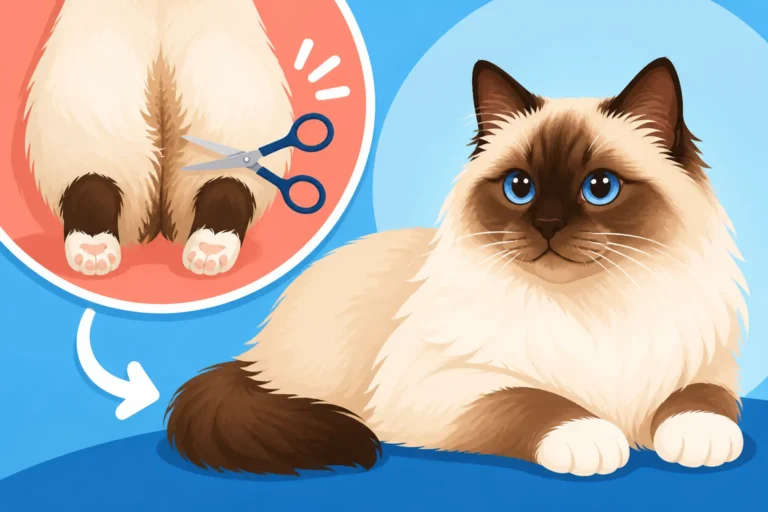
This isn't a full body clip, but rather a strategic trim of the longer fur around their sanitary areas. It's a bit like giving them a neat "panties" or "skirt" trim to keep things tidy. This helps to prevent fecal matter from clinging to their fur, makes cleaning easier for you, and keeps them more comfortable. Similarly, if an older Birman struggles to keep their beautiful white gloves pristine and they frequently get soiled from the litter box, a very slight trim of the fur between their paw pads might be helpful. These are minor, functional trims aimed at maintaining cleanliness and comfort, not altering their overall appearance. It’s part of Caring for an Old Birman That Cannot Reach Its Back and ensuring their dignity and health in their golden years. This kind of thoughtful adjustment to grooming is a loving act, not a defeat of their natural coat.
The Risks and Realities of Clipping a Birman
While the idea of clipping a Birman might seem like a quick fix for perceived grooming challenges, it’s rarely necessary and comes with its own set of potential drawbacks. Understanding these realities can help you make an informed decision and reinforce why regular, gentle maintenance is almost always the superior approach for this breed.
Impact on Coat Regrowth and Texture
One of the most significant concerns with clipping a Birman is the potential negative impact on the regrowth of their unique coat. The Birman's fur is designed to be silky and free-flowing. When shaved, particularly close to the skin, there's a risk that the new growth might come back differently. While not a guarantee, some owners report that the regrown hair can be coarser, less silky, or even develop a somewhat "cottony" texture. This can be quite disheartening if you cherish the signature feel and look of your Birman's coat.
Moreover, the coat might not grow back evenly or as quickly as expected. The beauty of a Birman's long, lustrous fur lies in its natural drape and flow. A clip disrupts this natural pattern, and it can take many months, sometimes even a year or more, for the coat to fully return to its original length and texture. During this regrowth period, your cat might look a bit scraggly or uneven. This change in coat quality, even if temporary, defeats the purpose of maintaining their breed-specific beauty. It's a factor that makes Why a Lion Cut Is Rarely Needed on a Birman a clear guideline for most Birman owners and breeders.
Behavioral Reactions to Clipping
Cats are creatures of habit and sensitive to changes in their environment and body. Being clipped can be a surprisingly stressful experience for a Birman, who are generally known for their placid and gentle temperaments. The noise and vibration of clippers, the unfamiliar sensation of being handled in such a way, and the sudden loss of their protective fur can cause significant anxiety.
After a clip, some Birmans might exhibit behavioral changes. They could become withdrawn, hide more often, or even seem confused by their altered body sensation. Their fur provides a sense of security and warmth, and its absence can leave them feeling vulnerable or exposed. In colder climates or during winter months, a clipped Birman might also feel uncomfortably chilly and seek out warmer spots more frequently, potentially leading to new behavioral patterns as they try to regulate their body temperature. Furthermore, the handling required for clipping, especially if the cat is not accustomed to it, can create negative associations with grooming in general, making future brushing sessions more challenging. This kind of stress is something we want to avoid for our companions.
Maintaining a Birman's Coat: The Proactive Approach
The absolute best way to ensure your Birman never needs clipping is through consistent, proactive grooming and a healthy lifestyle. Their coat is remarkably forgiving, but a little regular attention goes a long way in keeping it pristine, silky, and mat-free. This approach embraces their natural coat type and maintains their comfort and beauty without resorting to drastic measures.
Daily and Weekly Grooming Rituals
For a Birman, grooming is far from an onerous chore; it's a delightful opportunity for bonding and a simple routine that pays huge dividends. While you don't need to devote hours daily, consistent, short sessions are key. Aim for two to three times a week with a good quality comb. A wide-toothed metal comb is perfect for gliding through their silky fur without pulling. Start at their head and work your way back, paying special attention to areas prone to friction like behind the ears, armpits, and britches. These quick sessions prevent any small tangles from escalating into larger mats. Combing a Birman Three Times a Week is usually all it takes to keep their coat in top condition.
I personally find that a dedicated grooming session on the sofa with my Birman, while watching a show, turns it into a relaxed ritual rather than a wrestling match. My Birman, Luna, actually comes to me when I pick up her comb. It’s also a great opportunity to check for any skin issues, bumps, or parasites. Remember, the goal isn't to remove vast amounts of fur, but to ensure the individual strands remain separated and flowing. You can find excellent cat-specific combs and brushes on sites like Chewy or Amazon, making it easy to stock up on the right tools.
Dietary Support for a Healthy Coat
What goes into your Birman's bowl has a direct impact on the health and quality of their coat. A well-nourished Birman will have a coat that is naturally more resistant to matting, shiny, and less prone to breakage. Conversely, a poor diet can lead to dull, brittle fur that tangles more easily.
Focus on a high-quality, protein-rich diet, as protein is the building block of hair. Look for foods with real meat as the first ingredient. Essential fatty acids, particularly Omega-3 and Omega-6, are also crucial for coat health, contributing to that desired silky texture and reducing shedding. Many premium cat foods incorporate these beneficial oils. You might also consider adding a small amount of a vet-approved omega supplement, such as salmon oil, to their food if your vet recommends it. Hydration is another unsung hero of coat health; ensure your Birman has access to plenty of fresh water, perhaps even considering a cat fountain, as good hydration contributes to supple skin and healthy fur. A diet rich in nutrients supports not just their coat, but their overall well-being, which in turn reflects in their magnificent appearance. Feeding a Birman That Will Never Beg for It means being mindful of what you offer.
Disclaimer
This article is for general informational purposes only and does not constitute professional advice. Laws, prices and regulations vary by location and change over time. Consult a qualified professional for guidance on your specific situation.