Sita, Poupee and the Founding of the Birman in France
It’s easy to get lost in the romantic notions surrounding the Birman cat, often called the "Sacred Cat of Burma," and the many beautiful legends that speak of their ancient origins in far-off temples. While these tales are incredibly captivating, they sometimes overshadow the equally fascinating, albeit more historically verifiable, story of how this beloved breed was actually founded and meticulously established in France. This guide will peel back the layers of myth to explore the actual, challenging, and deeply human journey of the Birman's beginnings in Europe, focusing on the pivotal feline figures like Sita and Poupee, and the dedicated individuals who championed them through hardship.
The Romantic Veil: Separating Birman Legend from Historical Fact
When you first hear about the Birman cat, it's almost impossible to escape the mystical aura that surrounds its origins. We're often told stories of ancient Burmese temples, revered priests, and divine intervention that bestowed upon these cats their striking blue eyes and pristine white 'gloves'. It’s a narrative steeped in exoticism and wonder, painting a picture of a cat with a lineage as spiritual as it is beautiful. And honestly, who wouldn’t want to believe that their beloved companion has such an enchanting backstory?
The Allure of the Sacred Temple Cat
The legend of the Birman cat, often cited as originating from the Temple of Lao-Tsun, is genuinely captivating. It speaks of a golden-eyed goddess, Tsim-Kyan-Kse, and a revered priest, Mun-Ha, whose soul was said to have passed into his temple cat, Sinh, transforming his eyes to sapphire blue and his paws to pure white in a moment of spiritual transcendence. This narrative, passed down through generations of cat lovers and breeders, certainly adds a profound mystique to the breed. It elevates the Birman from a mere pet to a living piece of ancient, sacred history, offering owners a deeper connection to their feline companions.
This poetic origin story isn't just a pretty tale; it's a powerful marketing tool that has helped define the Birman's public image. It taps into a desire for something extraordinary, something more than just typical domestic cat genetics. This allure creates an immediate emotional connection for prospective owners, drawing them in with the promise of owning a piece of this mystical heritage. It's a testament to the power of storytelling that even today, the legend informs many people's initial interest and love for the breed, often overshadowing the more mundane, yet equally heroic, true history. Indeed, the legend itself offers a beautiful, albeit romanticized, explanation for one of the breed's most defining features: Why the Birman Legend Explains the White Gloves.
The Challenge of Verifying Early Accounts
While the legends are beautiful, the actual historical records for many early cat breeds, including the Birman, are often fragmented or non-existent, especially before the early 20th century. This lack of definitive documentation makes it incredibly difficult to separate genuine historical events from romantic embellishments that may have been added over time. Early cat fancy was not always as rigorous with record-keeping as it is today, and many stories were passed down orally or in less formal publications, ripe for poetic license.
The void left by scarce documentation often allowed anecdotal evidence and word-of-mouth stories to take root and flourish, gradually morphing into accepted "history." When you don't have birth certificates or meticulously kept studbooks from ancient times, it's easy for tales of exotic origins and dramatic journeys to fill the gaps. These narratives, while charming, can make it challenging for those of us trying to understand the factual lineage of our feline friends. Today, thankfully, with advances in genetic testing and more stringent registry practices, we can often trace breed lines with greater accuracy, a stark contrast to the misty beginnings of breeds like the Birman.
The First French Footprints: From Alleged Burma to European Shores
Moving past the enchanting legends, the documented history of the Birman cat largely begins in France, a testament to the dedication of European fanciers. While the tales of a direct lineage from Burmese temples are romantic, the actual story of their establishment on European soil involves a perilous journey, a tragic loss, and the critical survival of one extraordinary queen. It's a narrative that underscores the fragility of early breed development and the immense importance of just a few key individuals.
Unpacking the Auguste Pavie Narrative
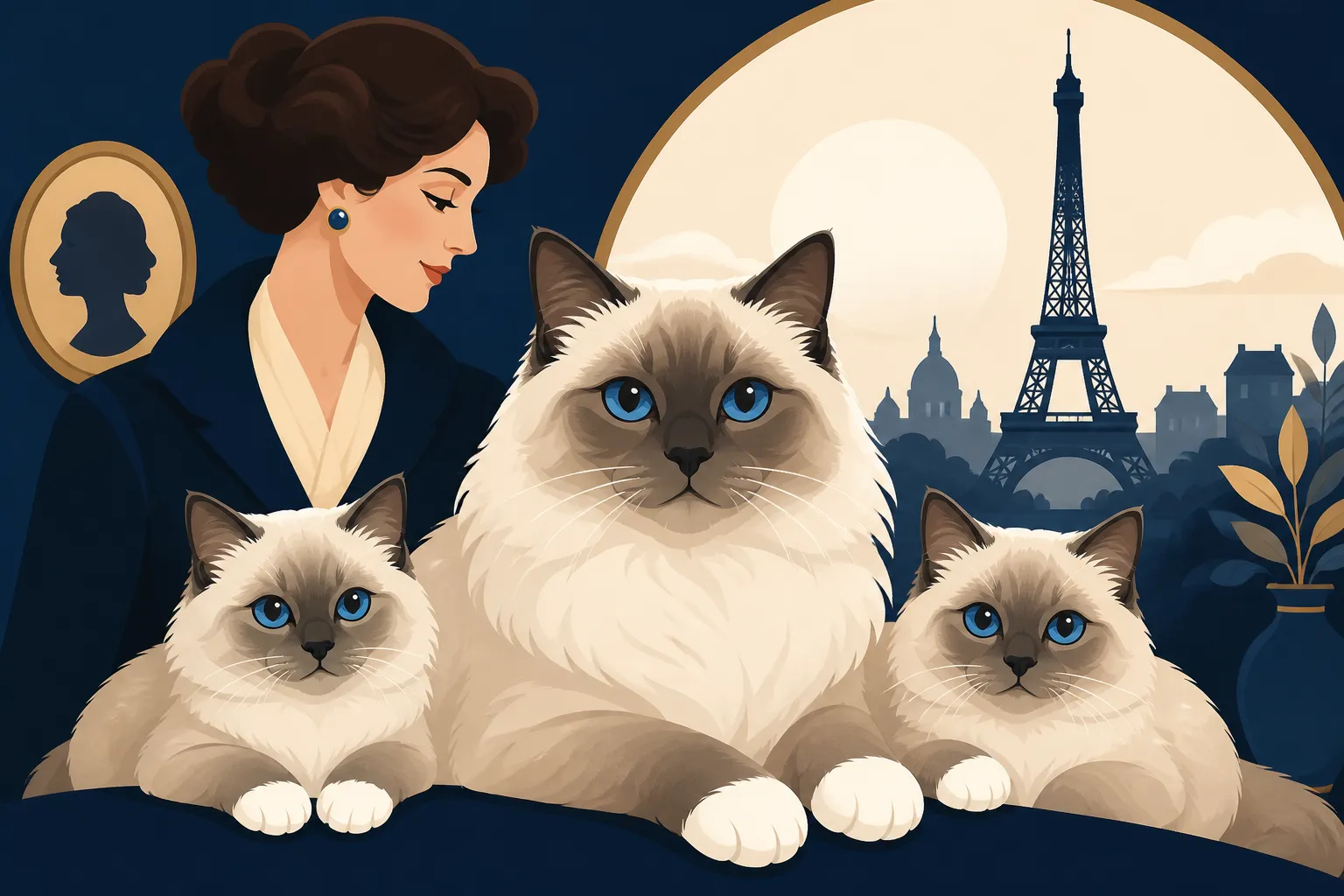
One of the most widely circulated stories about the Birman's arrival in the West centers around Auguste Pavie, a French diplomat. The tale suggests that Pavie, or one of his associates, brought a pair of temple cats out of Burma in 1919 as a reward for helping defend a temple. This dramatic account details a long, arduous sea voyage during which the male cat, named Maldapour, tragically died. His pregnant companion, Sita, however, is said to have survived, carrying the future of the breed with her. It’s a narrative that appeals to our sense of adventure and resilience.
While Auguste Pavie was indeed a real and influential figure in French colonial history in Indochina, directly linking him to the importation of these specific cats for breeding purposes lacks definitive historical proof. Many historians of cat breeds view this specific detail as another romantic embellishment. It’s certainly plausible that cats from the region made their way to Europe through various channels, given the extensive colonial presence. However, pinpointing the exact person and circumstances remains elusive. Ultimately, the emphasis shifts from who precisely brought them to that they arrived and survived, as Who Shipped the First Birmans to France remains a subject of intriguing historical speculation rather than documented fact.
Sita's Crucial Survival and Arrival in Nice
Regardless of the specifics of her journey, Sita, the pregnant female cat, is a pivotal figure in the Birman's European founding story. Her survival after what was undoubtedly a challenging journey, whether by ship or another means, was nothing short of miraculous and absolutely crucial for the breed's future. Had she perished like her alleged male companion, the Birman as we know it might never have come to be. She carried not just a litter, but the entire genetic blueprint for a new lineage that would capture hearts worldwide.
Upon her successful arrival, reportedly in Nice, France, Sita gave birth to her kittens. This event marked the true beginning of the Birman's establishment in Europe. Her litter provided the foundational stock from which early French breeders could begin to work. It was in these first litters that the distinctive traits of the Birman—the pointed coloration, the semi-long hair, and crucially, the unique white 'gloves' and 'laces'—began to be observed and cultivated. The precariousness of this moment cannot be overstated; the entire breed hung by a thread, contingent on the health and successful breeding of a single survivor. Why Only One of the First Two Birmans Survived highlights just how close the breed came to never existing at all.
Poupee de Madalpour: A Matriarch Takes Centre Stage
As the Birman breed began to take its first tentative steps in France, one name emerged as an undeniably critical matriarch: Poupee de Madalpour. While the exact details of her parentage are still debated among breed historians—was she a direct daughter of Sita, or a later, equally influential descendant?—her genetic contribution to establishing the Birman's distinctive appearance is beyond question. She was a cat whose traits became so central that they are literally etched into the breed standard we know today.
Identifying Poupee's Lineage and Appearance
Poupee de Madalpour was a cat of immense importance, often credited with solidifying the Birman's defining characteristics. She was described as a beautiful seal point, with the striking blue eyes and rich body color common to the breed, but most importantly, she possessed the characteristic pure white 'gloves' on her front paws and the distinctive 'laces' running up the back of her hind legs. These markings, which are now a hallmark of the Birman, were not easy to consistently reproduce in early litters. Poupee, through her consistent transmission of these traits, became an invaluable asset.
Her lineage, though subject to historical nuance, positioned her as a central figure in the early French breeding programs. Whether she was directly from Sita’s first litter or an early descendant of that line, her genetic influence was profound. Early breeders recognized her unique ability to pass on the desired gloving pattern, and her offspring became highly sought after. She essentially provided a genetic anchor for the emerging breed, helping to stabilize the desired look and ensuring that future generations would carry these iconic markings. The name Who Poupee de Madalpour Was is etched into Birman history for good reason.
Poupee's Enduring Genetic Contribution to the Birman Standard
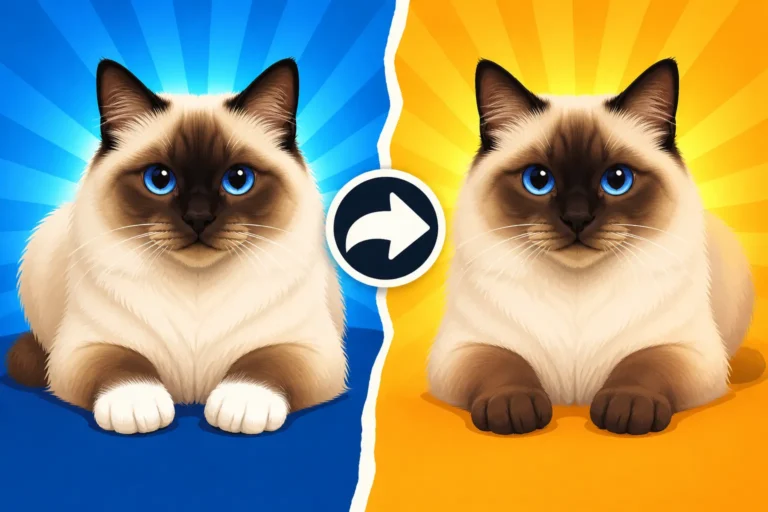
Poupee de Madalpour's most significant legacy is undoubtedly her contribution to the Birman's unique genetic makeup, especially concerning the white 'gloving gene'. This particular gene, responsible for the breed's signature white feet, is now understood to be fixed within the Birman population, meaning every Birman carries two copies of it. This isn't just a coincidence; it's a direct result of meticulous selection and careful breeding around foundational cats like Poupee who consistently exhibited and passed on this trait.
The challenges for early breeders were immense. They weren't just breeding for pretty cats; they were trying to establish a consistent, recognizable type from a very limited genetic pool. Poupee provided that stability. Her ability to reliably produce offspring with the desired white gloves and laces meant that her progeny became the backbone of the French Birman breeding program. Her genes quite literally laid the groundwork for the future Birman standard. It’s incredible to think that a single cat’s genetic code could have such a pervasive and lasting impact, a testament to the power of selective breeding and the importance of those foundational animals. Today, every Birman carries this unique genetic signature, a direct link back to its early matriarchs. The Gloving Gene Every Birman Carries Two Copies Of is one of the most defining characteristics of the breed, thanks in large part to cats like Poupee.
Formalizing the Breed: The French Registry and Beyond
With foundational cats like Sita and Poupee establishing a nascent genetic line, the next crucial step in the Birman's journey was formal recognition. This wasn't merely about having beautiful cats; it was about defining a breed, setting standards, and creating a framework for its future. The efforts of dedicated French breeders transformed the emerging type into an officially recognized entity, securing its place in the feline world.
The Official Recognition: Sacre de Birmanie
The period after Sita and Poupee was crucial for the Birman. It was a time of intense dedication from a small group of French breeders who saw the potential in these unique cats. Their work wasn't just about mating animals; it was about understanding genetics, painstakingly selecting for desired traits, and consistently producing litters that conformed to an evolving ideal. This was the era where the Birman's characteristics, beyond just the gloving, truly started to solidify – its medium-long silky coat, its robust yet elegant body, and its distinctive Roman nose.
The culmination of these early efforts arrived in 1925, a landmark year for the Birman. It was then that the breed received its official recognition from the Feline Federation of France, under the enchanting name "Sacre de Birmanie." This wasn't just a casual nod; it was a formal declaration that the Birman was now a distinct and legitimate breed. This recognition provided the essential framework for consistent breeding practices, allowing breeders across France to work towards a unified standard rather than individual preferences, ensuring the Birman's unique look and temperament would be preserved and enhanced. When France Registered the Sacre de Birmanie was the moment the Birman truly stepped onto the world stage.
Early Birman Breeding Goals and Challenges
Once officially recognized, early Birman breeders had clear goals in mind. They were striving for not just the iconic white gloves and pointed coloration, but also a specific body type – sturdy yet elegant – and the characteristic gentle, docile temperament that Birmans are known for today. The coat was also a major focus; they aimed for a single, silky coat that wouldn't mat easily, distinguishing it from the dense, woolly coats of some other longhaired breeds.
However, the path was fraught with challenges. Genetic consistency was difficult to achieve, especially with a relatively limited gene pool. Ensuring health while trying to perfect markings and type required immense skill and often, a bit of luck. Breeders had to navigate issues like varying glove patterns, occasional mismarkings, and the general complexities of establishing a new breed from a small founding stock. It was a painstaking process of trial and error, requiring meticulous record-keeping and a profound understanding of feline genetics—something far more involved than simply ordering supplies from Chewy today; these were true pioneers shaping the very definition of a cat breed. Their dedication during those formative years truly laid the groundwork for the Birman we cherish now.
Survival Through Adversity: The World War II Bottleneck
Just as the Birman breed was gaining a foothold and establishing its identity in Europe, a global catastrophe loomed that would threaten its very existence. The tumultuous years of World War II proved to be a devastating period for many purebred animals, and the Birman was no exception. What had been a slow, careful process of cultivation almost came to a complete, tragic halt.
The Near Extinction of the Birman Breed
The onset and duration of World War II brought unimaginable hardship across Europe, and the world of cat fancy was deeply affected. Catteries, once sanctuaries for meticulous breeding programs, struggled to survive. Resources like food and medical care became scarce, and many breeders were displaced or unable to continue their work. The Birman, still a relatively young and fragile breed with a limited number of individuals, suffered immensely. Breeding programs collapsed, and the meticulous records that had been so carefully kept were often lost or destroyed.
This period led to a catastrophic genetic bottleneck. The Birman population, never vast to begin with, was decimated to a critical point where only a handful of individuals were known to survive the war years. Imagine the despair of breeders who had poured their lives into these magnificent cats, only to see their numbers dwindle to near zero. It was a stark reality that the breed, so carefully cultivated and recognized just years before, was now teetering on the brink of complete extinction. The question wasn't about perfection anymore; it was purely about survival. The dramatic numbers highlighted in How Many Birmans Survived the Second World War paint a clear picture of just how dire the situation truly was.
The Desperate Need for Outcrossing
Facing the grim reality of near-extinction, Birman breeders were confronted with an agonizing decision: let the breed vanish forever, or introduce "foreign" blood to widen the gene pool and ensure its survival. This was not a choice made lightly; introducing other breeds risked diluting the very characteristics they had worked so hard to establish. However, the alternative was an unbearable silence where the Birman once thrived. This pragmatic choice, born of sheer desperation, ultimately meant crossing the surviving Birmans with other longhaired breeds, most notably Persians, and potentially even Siamese cats.
This outcrossing wasn't about seeking "improvement" in the way we might think of it today. It was purely a rescue mission. The goal was to inject enough genetic diversity back into the population to allow for healthy, viable breeding programs to resume. While this decision saved the breed, it also profoundly shaped the modern Birman, introducing new genetic variations and necessitating careful, long-term breeding to "breed back" to the desired Birman type. The post-war outcrossing was an unavoidable, critical turning point, a stark reminder of the sacrifices needed to preserve a living legacy. The necessity of this decision is further explored in Why Post War Outcrossing Was Unavoidable for the Birman.
Rebuilding, Expansion, and Enduring Legacy
From the ashes of near extinction, the Birman cat breed began its slow, painstaking journey of rebirth. It was a testament to the unwavering dedication of a few key individuals and, crucially, a handful of specific cats who carried the hopes of the entire breed on their delicate paws. This era saw the Birman not only recover but also begin its expansion beyond the borders of France, captivating cat lovers around the globe.
Orloff and Xenia de Kaabaa: The Foundation of the New Birman
In the desperate aftermath of World War II, the future of the Birman cat hinged on two truly remarkable individuals: Orloff and Xenia de Kaabaa. These two cats are legendary figures in Birman history, considered the foundation of the breed's revival. Their progeny formed the core of the rebuilding efforts, carrying the essential genetic material needed to restart what had been almost lost. Breeders meticulously planned matings, focusing on retaining the distinctive Birman type – the pointed coloration, the silky coat, the blue eyes, and critically, those iconic white gloves.
The process was far from simple. It involved careful selection over multiple generations to re-establish the breed's characteristic look and temperament, while simultaneously managing the genetic contributions from the necessary outcrosses. Breeders had to make difficult decisions, always with an eye towards preserving the Birman's unique qualities. It was a slow, deliberate act of creation, painstakingly guided by a deep love for the breed. Without the genetic continuity provided by Orloff and Xenia, the Birman story would likely have ended tragically. Their incredible importance is why Which Two Cats Every Birman Descends From is such a profound statement about the breed’s current existence.
The Birman's Journey Beyond French Borders
As the Birman population slowly but surely recovered in France, its unique beauty and gentle temperament began to capture the attention of cat fanciers in neighboring countries. The breed's popularity started to spread, first to Germany and then to Britain, where dedicated breeders eagerly imported the precious few available cats to establish their own Birman lines. This gradual expansion was vital for the breed's long-term health, broadening its genetic base and ensuring its survival wasn't dependent on a single geographical location.
The journey across the Atlantic followed, with the Birman making its way to North America, often through the efforts of passionate individuals who had fallen in love with the breed's charm. This transatlantic migration was a significant milestone, opening new chapters for the Birman. The breed was eventually recognized by major cat registries in the United States, such as the Cat Fanciers' Association (CFA), solidifying its international presence and ensuring its future. The hard work of these pioneers truly established the Birman as a globally cherished breed, with its journey vividly detailed in resources such as How the Birman Reached Germany and Britain From France and the definitive recognition of The Year CFA Accepted the Birman for Championship.
The Modern Birman: A Tapestry of History and Genetics
Today, the Birman cat stands as a testament to resilience, meticulous breeding, and the enduring power of its captivating beauty. Every Birman living in homes around the world carries within its DNA the echoes of this rich history – from the mystical legends to the harrowing wartime bottleneck and the careful rebuilding efforts. Understanding this past isn't just a historical exercise; it offers crucial insights into the breed's present and future.
The Echoes of a Small Founder Base
The Birman's dramatic past, particularly the severe genetic bottleneck during World War II and the subsequent outcrossing to save the breed, has left an indelible mark on its genetic makeup. While this intervention was absolutely necessary for survival, it resulted in a relatively "narrow founder base." This means that all modern Birmans descend from a comparatively small group of ancestors, which can have implications for genetic diversity. Responsible breeders today are acutely aware of this, carefully managing pedigrees to avoid excessive inbreeding and maintain genetic health.
This historical reality underscores the importance of ongoing health screening and genetic testing. Modern breeders diligently test for potential inherited conditions to ensure the continued robustness of the breed. It’s a crucial part of responsible breeding, allowing them to make informed decisions and prevent the proliferation of genetic issues that might otherwise arise from a limited gene pool. Thankfully, with the availability of quality food, supplements, and other health supplies, easily accessible from trusted retailers like Chewy, modern owners are well-equipped to support their Birman's long-term health, building on the foundation laid by these dedicated historical efforts. The lasting impact of this period is a vital topic, further explored in What a Narrow Founder Base Left in the Birman.
The Enduring Appeal of a Gentle Giant
Despite the complexities of its origins and the challenges it has faced, the Birman cat continues to capture hearts worldwide. Its striking appearance—the deep blue eyes, the elegant pointed coat, and those distinctive white gloves—is undeniably beautiful. But it's often their temperament that truly seals the deal for owners. Birmans are known for being incredibly gentle, docile, and affectionate, often described as a "middle-of-the-road" cat in terms of energy and vocalization. They love to be near their human companions without being overly demanding, making them ideal family pets.
The blend of romantic legend and documented tenacity woven into the Birman's history only adds to its unique appeal. Owners aren't just getting a beautiful cat; they're welcoming a living piece of history into their homes, a creature whose very existence tells a story of survival, dedication, and grace. Every Birman is a testament to the passionate individuals who preserved the breed against all odds. To support their gentle, playful nature and ensure they thrive, finding the right interactive toys, comfortable beds, or scratching posts on platforms like Chewy can significantly enrich their lives. It's a journey from ancient legend to modern companion, proving that some stories, and some cats, are truly timeless.
Disclaimer
This article is for general informational purposes only and does not constitute professional advice. Laws, prices and regulations vary by location and change over time. Consult a qualified professional for guidance on your specific situation.