Which Cats the First French Birmans Were Crossed With
It's incredibly frustrating when you're trying to learn the true origins of a beloved cat breed, only to find yourself swimming through a murky mix of captivating legends and scarce historical records. For the Birman, this is especially true; its mystical "Sacred Cat of Burma" story, while beautiful, doesn't quite explain the intricate journey of its early development. This guide aims to pull back the curtain on that early French history, specifically shedding light on the crucial outcrosses that helped forge the Birman we cherish today.
The Journey from Legend to European Breeding Ground
The Birman's story often begins with the evocative legend of the Temple of Lao-Tsun, a tale of a white temple cat named Sinh whose eyes turned sapphire and fur transformed to gold after his master's death, leaving his paws pure white as a symbol of purity. It's a truly enchanting narrative that gives the breed a profound spiritual connection. However, when we step away from myth and delve into the historical records, the path of the Birman's establishment in Europe, particularly in France, paints a rather different picture – one of intentional and sometimes desperate breeding efforts.
The Legend's Appeal and Historical Ambiguity
There’s no denying the power of the Birman legend. It explains the striking blue eyes and the unique white 'gloves' so perfectly that you almost want to believe it wholeheartedly. The narrative posits a spontaneous transformation, a divine intervention that created the breed's signature look. While this origin story adds an undeniable mystique to the Birman, captivating hearts for generations, it doesn't offer any practical insights into how these cats were actually bred and propagated. As charming as the tale of Sinh is, it's largely considered a romanticized account written down in France, serving to create a compelling identity for the emerging breed rather than a factual historical record. Why the Birman Legend Was Written Down in France confirms that the detailed legend emerged long after the cats themselves began appearing in Europe.
The First Documented Arrivals in France
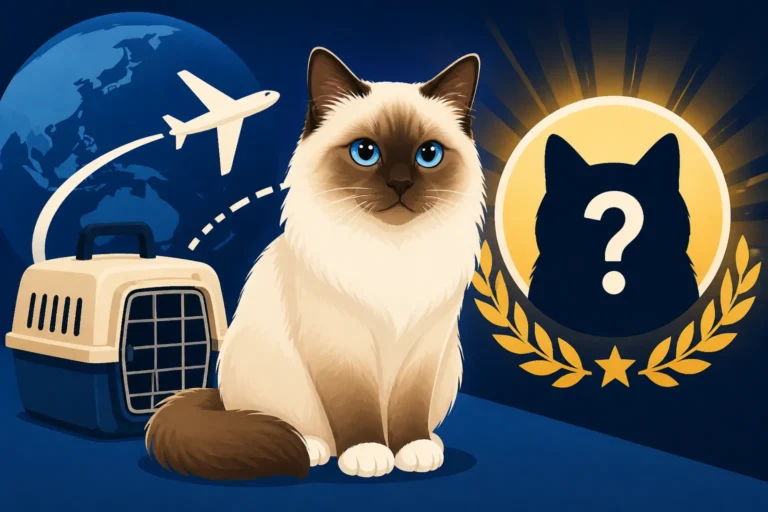
The actual arrival of Birmans in Europe is less dramatic but far more significant for understanding their breeding history. It's widely believed that the first Birmans reached France around 1919. Stories often credit figures like Auguste Pavie and a Major Gordon Russell, or perhaps an American millionaire named Thadde Haddisch, with bringing a pair of cats from what was then Burma. Sadly, it's said that the male cat, named Maldapour, perished during the arduous sea journey, leaving only a pregnant female, Sita, to carry on the line. How a Pair of Birmans Left Burma in 1919 delves into this perilous journey.
Sita supposedly gave birth to kittens in France, including a female named Poupee de Madalpour, who is often cited as a crucial early matriarch. However, establishing a breed from such a tiny genetic pool – perhaps just one surviving pregnant queen – is incredibly challenging. Imagine trying to ensure genetic health and variety from such a narrow base! This immediately created a need for thoughtful and strategic outcrossing with other breeds available in France at the time to prevent inbreeding depression and to fix desirable traits. This foundational period laid the groundwork for everything that followed, long before the convenience of having everything you need for your cats delivered from a place like Chewy.
The Critical Role of Early Outcrossing in France
The term "outcrossing" might sound a bit clinical, but in the early days of the Birman in France, it was absolutely vital for the breed's very existence. With an incredibly small founding population, perhaps even just one or two cats that made it to Europe, breeders faced a stark reality: either introduce new bloodlines or risk the breed fading into genetic obscurity. This wasn't about changing the Birman's essence, but rather about strengthening it, ensuring health, and solidifying the striking characteristics that make the Birman so unique.
The Immediate Need for Genetic Infusion
Think about it: if you only have one or two cats to start a whole new breed, every single kitten carries an immense genetic responsibility. This situation is what breeders refer to as a "genetic bottleneck." Without introducing new, unrelated genes, successive generations would quickly become highly inbred, leading to a host of health problems, reduced fertility, and a general weakening of the breed's vigor. The goal of those early French breeders was to establish a healthy, robust, and consistent Birman type. To achieve this, they meticulously selected other breeds that possessed some of the desired traits – or at least compatible ones – to judiciously cross with their precious few Birmans. Sita, Poupee and the Founding of the Birman in France highlights the extreme efforts involved in these early stages.
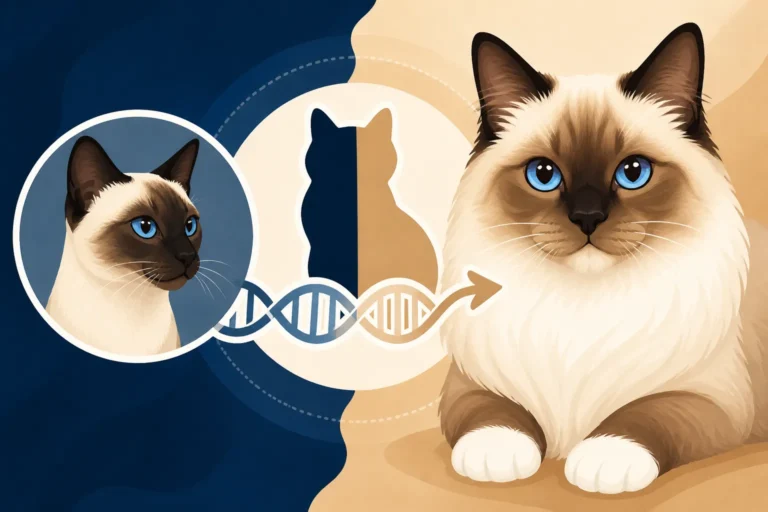
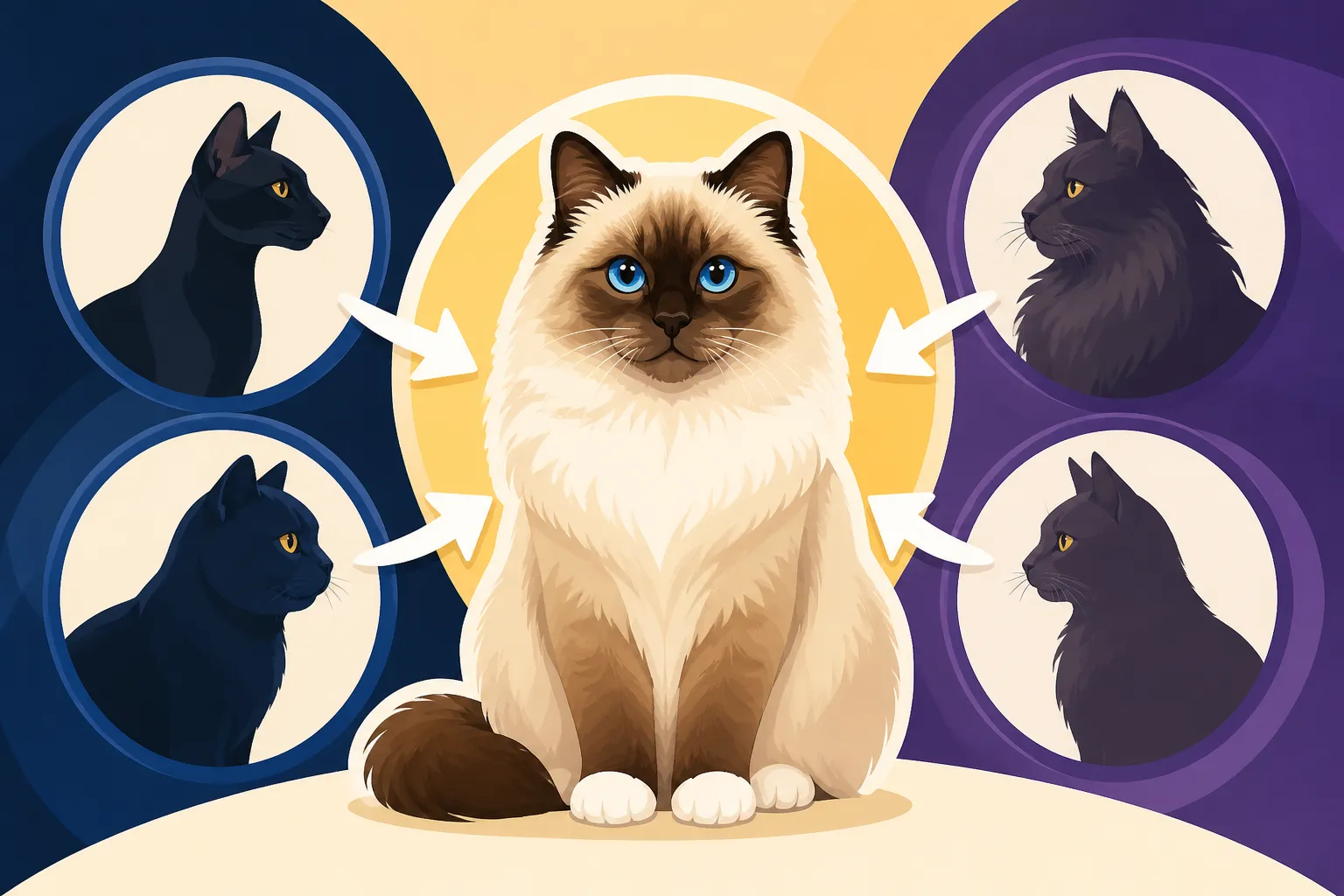
It's widely accepted that the primary "which cats the first French Birmans were crossed with" were the Siamese and the Persian. These two breeds, both established and recognizable in the early 20th century, offered distinct characteristics that French breeders sought to blend and refine into the emerging Birman standard. It was a careful balancing act, aiming to gain genetic strength and specific traits without losing the unique qualities of the original cats.
Siamese Contribution
The Siamese cat, with its striking "pointed" coloration (darker extremities: face, ears, paws, and tail) and piercing blue eyes, was a natural choice for early Birman breeders. The original Birmans also displayed this colorpoint pattern, so the Siamese helped reinforce this trait genetically. What Siamese Blood Brought Into the Birman explains this in more detail. The Siamese's fine, short coat and more slender, "foreign" body type were less desirable for the Birman, but its dominant colorpoint gene and intense blue eye color were invaluable.
By introducing Siamese blood, breeders could ensure a strong expression of the pointed pattern across future Birman generations. This meant kittens would continue to be born white and gradually develop their distinctive color on their points as they matured. While Birmans are known for their much softer, less vocal temperament compared to the often boisterous Siamese, the point coloration was a critical inheritance that continues to define the breed.
Persian Contribution
Equally, if not more, crucial to the Birman's development was the Persian cat. The Persian offered the long, luxuriant coat, the rounder head, and the placid, gentle temperament that became hallmarks of the Birman. Early Birmans likely had a semi-long coat, but the Persian's genes would have helped to solidify and enhance the length and silkiness without the dense, matting undercoat often associated with Persians. What Persian Blood Brought Into the Birman delves into the specific traits inherited.
The Persian's cobby, robust body type and calm demeanor contributed significantly to the Birman's distinctive, balanced appearance—neither as svelte as a Siamese nor as extreme in facial structure as some modern Persians. It’s important to acknowledge that introducing Persian lines also meant a careful watch for inherited health conditions, like Polycystic Kidney Disease (PKD), which was prevalent in some Persian lines. However, the benefits in terms of coat, body structure, and temperament were seen as essential for developing the breed, and breeders would have carefully selected healthy Persian individuals.
Rebuilding After the World Wars
The early outcrossing was certainly foundational, but the Birman breed faced an even more severe crisis that necessitated further, urgent outcrossing. The devastating impact of the Second World War on cat breeding in Europe cannot be overstated. Many catteries were destroyed, breeding programs ceased, and dedicated breeders often struggled just to survive, let alone maintain their cat populations. This period dealt a brutal blow to many purebred lines, and the Birman was no exception.
The Post-War Bottleneck
As the dust settled after World War II, Birman breeders in France and beyond discovered their beloved breed was on the brink of extinction. Records indicate that only a tiny handful of Birmans, perhaps as few as two individuals, had survived the war years. The Birman Came Out of the War With Two Cats Left and How Many Birmans Survived the Second World War really drive home the perilous state of the breed. Imagine facing that reality: years of careful breeding, almost wiped out overnight, with the entire future of a breed resting on just a couple of cats. This created another, even tighter genetic bottleneck than the initial importation.
The remaining Birmans, most famously a pair named Orloff and Xenia de Kaabaa, were the entire foundation for the breed's recovery. To say breeders faced an uphill battle is an understatement. Without immediate and strategic intervention, the Birman would almost certainly have vanished from history.
Renewed Outcrossing for Survival
To save the Birman from extinction, breeders had no choice but to initiate another round of outcrossing. The necessity was stark: broaden the gene pool dramatically to ensure viability. Once again, the answer to "which cats the first French Birmans were crossed with" became primarily the Siamese and Persian, along with other domestic longhairs that might have carried suitable traits. Which Longhairs Rebuilt the Birman After 1945 explores this period of intense reconstruction. The aim was to rapidly increase the population and reintroduce genetic diversity, then carefully breed back to the desired Birman type over several generations. This meant that the Birman, as we know it today, is a testament not just to its initial founders, but to the resilience and dedication of post-war breeders who refused to let the breed disappear.
This phase of outcrossing was perhaps even more critical than the first, as it quite literally pulled the Birman back from the brink. The infusion of new genes helped rebuild numbers, restore genetic health, and ensure that the distinct Birman characteristics could be preserved and stabilized. It wasn’t a quick fix, but a multi-generational project of careful selection and breeding, ensuring that each kitten born brought the breed closer to a stable, healthy future. It highlights the immense dedication of those who cared for these animals, in a world far removed from the modern ease of ordering specialized food and health supplements from a trusted retailer like Chewy.
The Enduring Legacy of Early Outcrosses on the Modern Birman
The historical outcrossing, both in the early days of its establishment and critically after World War II, had a profound and lasting impact on the Birman breed. It's truly incredible to think that the beautiful, gentle cats we share our homes with today are the direct result of these deliberate and sometimes challenging breeding decisions made generations ago. These historical crosses aren't just footnotes in a dusty archive; they are woven into the very fabric of the modern Birman, shaping its appearance, temperament, and even its genetic predispositions.
Shaping the Birman's Distinctive Look and Temperament
The judicious use of Siamese and Persian bloodlines was instrumental in cementing the Birman's iconic characteristics. From the Siamese, the Birman inherited the stunning point coloration and the brilliant blue eyes that gaze out with such gentle intensity. The Persian contributed the luxuriously silky, semi-long coat that is surprisingly easy to maintain thanks to its lack of a dense undercoat, as well as the robust, well-boned body, and a characteristically rounded head. Crucially, the Persian also brought a significant influence on the Birman's famously placid, affectionate, and serene temperament, making it one of the most beloved companion cats.
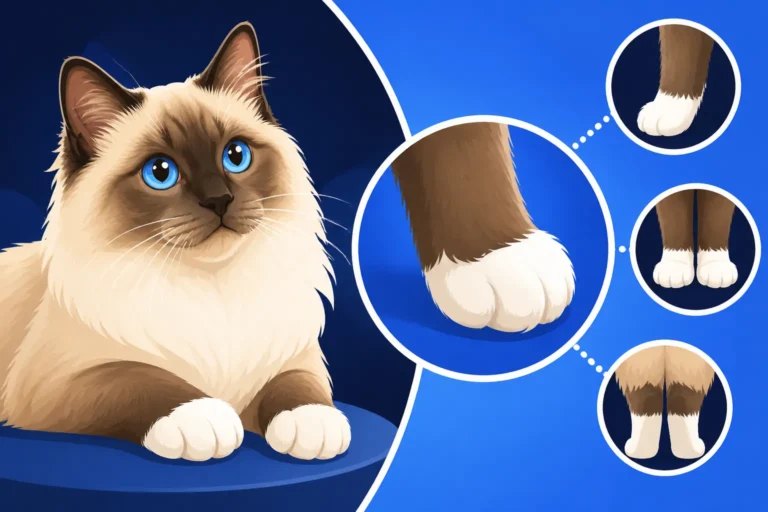
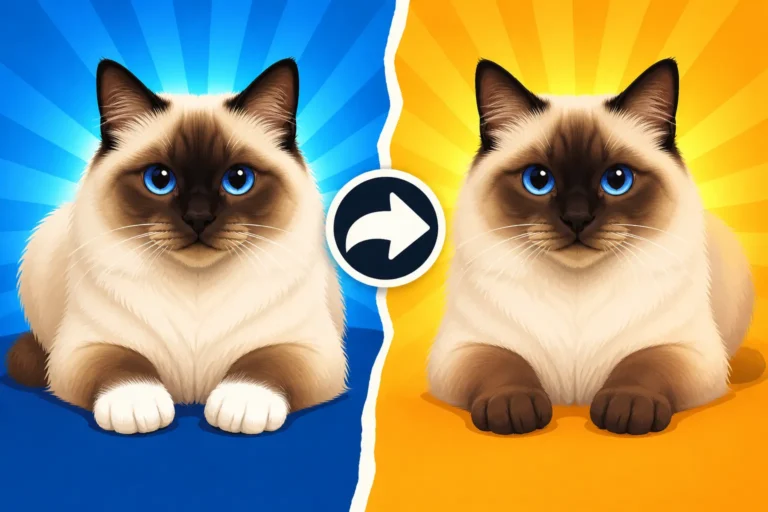
Even the Birman's unique white 'gloves' and 'laces' – the distinct white markings on its paws – were refined and stabilized through careful selection, even though the genetic mechanism for gloving is distinct. The overall 'look' of the Birman, a perfect blend of elegance and robustness, gentle nature, and striking beauty, is a direct testament to the careful choices of those early breeders who combined these diverse influences. When you observe a Birman following you quietly from room to room or settling contentedly nearby, you're seeing the living legacy of those early breeding programs. The Birman Sits Between the Siamese and the Persian truly encapsulates this blend.
Managing Genetic Diversity and Health
While outcrossing was absolutely necessary for the Birman's survival and development, it also meant introducing the potential for certain genetic traits and health issues from the contributing breeds. For instance, the Persian contribution, while vital for the coat and body type, also brought with it the possibility of conditions like Polycystic Kidney Disease (PKD), which breeders now meticulously test for. Similarly, the very narrow post-war founder base left the breed vulnerable to specific genetic predispositions, a factor that contemporary breeders must always be mindful of. What a Narrow Founder Base Left in the Birman discusses these challenges.
Today, reputable Birman breeders utilize genetic testing for conditions such as PKD1 and FOXN1 (hypotrichosis with thymic aplasia) and conduct regular echocardiograms to screen for Hypertrophic Cardiomyopathy (HCM). These efforts ensure that the breed maintains the health and vitality that those early outcrosses aimed to secure. Modern breeders continue the work of their predecessors, carefully selecting breeding pairs, maintaining detailed records, and making responsible decisions to safeguard the Birman's future, a far cry from the haphazard nature of its earliest days.
It’s a powerful reminder that every purebred cat has a complex history, and the Birman's journey from legend to loyal companion is particularly rich with both myth and the real, arduous work of dedicated breeders. Their choices, made decades ago with the limited resources and knowledge of their time, resonate deeply in the health and characteristics of every Birman you see today.
| Contributing Breed | Primary Contributions to Birman | Key Traits Reinforced/Introduced |
|---|---|---|
| Siamese | Pointed coloration, blue eye color | Genetic reinforcement of colorpoint pattern, intense eye hue |
| Persian | Long, silky coat, placid temperament, robust body type | Full, flowing coat without dense undercoat, gentle disposition, sturdy build, rounded head shape |
| Domestic Longhairs | General genetic diversity (post-war) | Broadened gene pool for survival, contributed to coat length/texture |
This careful blending of characteristics allowed the Birman to emerge as a distinct and cherished breed. Understanding these early decisions helps us appreciate the complexity and fragility of breed development, and the enduring dedication required to maintain a healthy and vibrant cat population. When you're looking for quality food or toys for your Birman, knowing their history helps you understand why specific care is so important, and resources like Chewy make it easier than ever to provide it.
Disclaimer
This article is for general informational purposes only and does not constitute professional advice. Laws, prices and regulations vary by location and change over time. Consult a qualified professional for guidance on your specific situation.