Which American Cattery Imported the First Birmans
The first Birman cats to reach the United States are commonly associated with the Purr-Puss cattery, which helped introduce the breed to American fanciers. The history can be confusing because accounts sometimes blur together the first imported cats, the first American breeding program, and the breed’s later recognition by cat registries. Here’s how to separate those milestones and understand what the early import meant.
The American cattery linked to the first Birmans
Why Purr-Puss is named in the story
Purr-Puss is the American cattery most often credited with bringing the earliest Birmans to the United States. That makes it an important name in the breed’s American history, even though the Birman’s roots and earliest development were in Europe. The cats brought over were part of an established breed history by then, rather than the beginning of the breed itself.
Historical accounts do not always distinguish clearly between the cattery that received imported cats, the person who arranged the import, and the breeder who later developed a line from them. That can make a simple question—“Which cattery imported the first Birmans?”—harder to answer than it sounds. Purr-Puss is the name generally attached to the early American arrival, but it is worth treating that as a cattery milestone rather than assuming every detail of the import is documented in the same way.
It also helps to keep this event separate from the postwar rebuilding of the breed in Europe. The Birman population had been severely reduced during the Second World War, and breeders had to rebuild it from very few surviving cats. The story of Which Two Cats Rebuilt the Birman and the outcrosses described in Which Longhairs Rebuilt the Birman After 1945 belong to that earlier European chapter. The American import came later, after Birmans had been re-established as a breed.
What “the first import” means
When people say that Purr-Puss imported the first Birmans, they usually mean the first cats brought to the United States for the early American breed scene. They do not mean that Purr-Puss created the Birman, or that the breed had never existed outside America before then. The cats were arriving from an established European population, with a history that included early French registration and later expansion to other countries.
There are several possible “firsts” in any breed’s history: the first individual cat to arrive, the first pair intended for breeding, the first litter born in the country, the first cattery to build a sustained program, and the first formal recognition by a registry. Those events may happen at different times and involve different people. When a brief account says “the first Birmans came to America,” it may be compressing several of those steps into one sentence.
That distinction is useful when comparing breed histories. The Birman’s journey from Europe to America was part of a wider spread beyond France, including the earlier route described in How the Birman Reached Germany and Britain From France. The story of an American cattery therefore fits into a larger timeline: a breed developed and rebuilt in Europe, then introduced to new breeding communities overseas.
How the Birman reached American breeders
From European breed history to an American program
The Birman’s European history is often told alongside a legend about sacred temple cats in Burma. The legend is meaningful to the breed’s identity, but it is not the same as a documented account of how the modern show breed was developed. The historical record points to a breed established in Europe, with its early development and registration taking place there. For more context, see Whether the Birman Was Bred in Europe From the Start and When the Birman Was First Registered in France.
By the time Birmans began appearing in the United States, the breed had already survived a fragile period. The war had interrupted breeding and left European breeders with very few cats. Carefully managed outcrossing helped rebuild the population before the breed could be bred true again. This is why the American arrival matters: it extended the reach of a breed whose survival had recently depended on a small number of cats and committed breeders.
The history also explains why early imported cats could be so significant to American fanciers. A small number of arrivals can provide the foundation for a country’s first breeding program, but they do not instantly create a large or genetically broad population. Breeders need time, suitable pairings, healthy litters, and cooperation with others to establish a sustainable community. The story of the first cattery is therefore about more than a shipment; it marks the beginning of a new chapter in the breed’s distribution.
Why registry recognition came later
Importing cats and earning formal recognition for a breed are separate achievements. A cattery can own and breed cats before a registry accepts the breed for competition or maintains a recognized standard. American fanciers had to build interest, produce generations of cats, and work through the relevant registry processes before the Birman became established in the show world.
That timeline matters because “the first Birman in America” and “the first recognized Birman in America” are not interchangeable claims. One refers to an animal’s arrival; the other refers to institutional recognition. The breed’s later American milestone is covered in The Year CFA Accepted the Birman for Championship. That recognition followed the import era rather than occurring at the moment the first cats arrived.
A useful way to keep the milestones straight is to read them as a sequence rather than as competing answers. The table below separates the kinds of events that tend to get mixed together in short breed histories.
| Milestone | What it describes | Why it matters |
|---|---|---|
| European development | The breed’s early formation and breeding history | Establishes that the Birman existed before its American arrival |
| Postwar rebuilding | The recovery of the breed after its population was reduced | Explains why the early surviving lines were especially important |
| Early American import | The arrival associated with Purr-Puss | Marks the beginning of the Birman’s American chapter |
| American breeding program | The development of cats and litters in the United States | Turns an import into a continuing local population |
| Registry recognition | Formal acceptance for registration or competition | Gives the breed a place in organized American cat shows |
What the early import meant for the breed
A starting point, not a complete population
A few imported cats can introduce a breed to a country, but they cannot by themselves guarantee a healthy, lasting population. Breeders need enough suitable cats and careful records to plan matings responsibly over time. The Birman’s postwar history makes this point especially clear: survival and recovery depended on a wider breeding effort, not simply on one celebrated cat or one cattery.
For anyone reading a pedigree or researching a breeder today, the Purr-Puss connection is a historical clue, not a shortcut to judging a modern line. A cattery’s place in breed history does not by itself tell you whether a particular cat has appropriate health screening, sound temperament, or well-documented ancestry. Those questions need current records and direct conversations with the breeder.
The same principle applies to the breed’s origin story. The Birman is often called the Sacred Cat of Burma, but that traditional name should not be mistaken for proof that the modern breed was developed in Burma. The distinction is explored in Why the Birman Is Called the Sacred Cat of Burma. Separating legend, documented European history, and American import history makes the overall account much easier to follow.
What prospective owners can take from the history
For a future owner, the early import story is interesting background, but it should not replace practical checks when choosing a kitten. Ask about the parents, the breeder’s health practices, the kitten’s veterinary care, and the paperwork that will come with the cat. Breed history can help you understand how the Birman became established; it cannot confirm the quality or suitability of an individual kitten.
A Birman’s needs are also shaped by its everyday life, not just its pedigree. Plan for regular grooming, preventive veterinary care, suitable food, and steady company. If you are building a starter kit, compare basic grooming tools and food options through a local pet shop or retailers such as Chewy, while choosing products that suit your own cat rather than assuming that one brand or item is right for every Birman.
The history can still be useful in a very practical way: it reminds us that responsible breeding depends on long-term care and thoughtful record-keeping. If you are comparing breeders, pay attention to how openly they discuss their lines and answer questions. You might use Chewy to browse everyday supplies, but a retailer cannot replace a breeder’s records or your veterinarian’s advice about your cat’s health. For the wider context of how registries handle the breed, see Which Registries Recognize the Birman Today.
Reading the history without mixing up the names
Questions worth asking when you see a different account
If another history names an individual importer instead of Purr-Puss, check what the account means by “importer.” It might be naming the person who arranged travel, the owner who received the cats, or the cattery that later bred them. Those roles can overlap, but they are not necessarily identical. A short article may mention only one name even when several people contributed to the event.
Also check whether the account is discussing the first imported cats, the first American-born litter, or the start of a recognized breeding program. These are different milestones. Comparing like with like is the best way to make sense of apparently conflicting versions without assuming that every difference means one account is wrong.
Finally, notice whether the account gives a timeline or simply repeats a claim. A timeline that connects European development, postwar recovery, American importation, and later registry recognition is generally more informative than a sentence that names a cattery without explaining its place in the story. The related article Which Cats the First French Birmans Were Crossed With provides another useful piece of the breed’s earlier European background.
The clearest answer
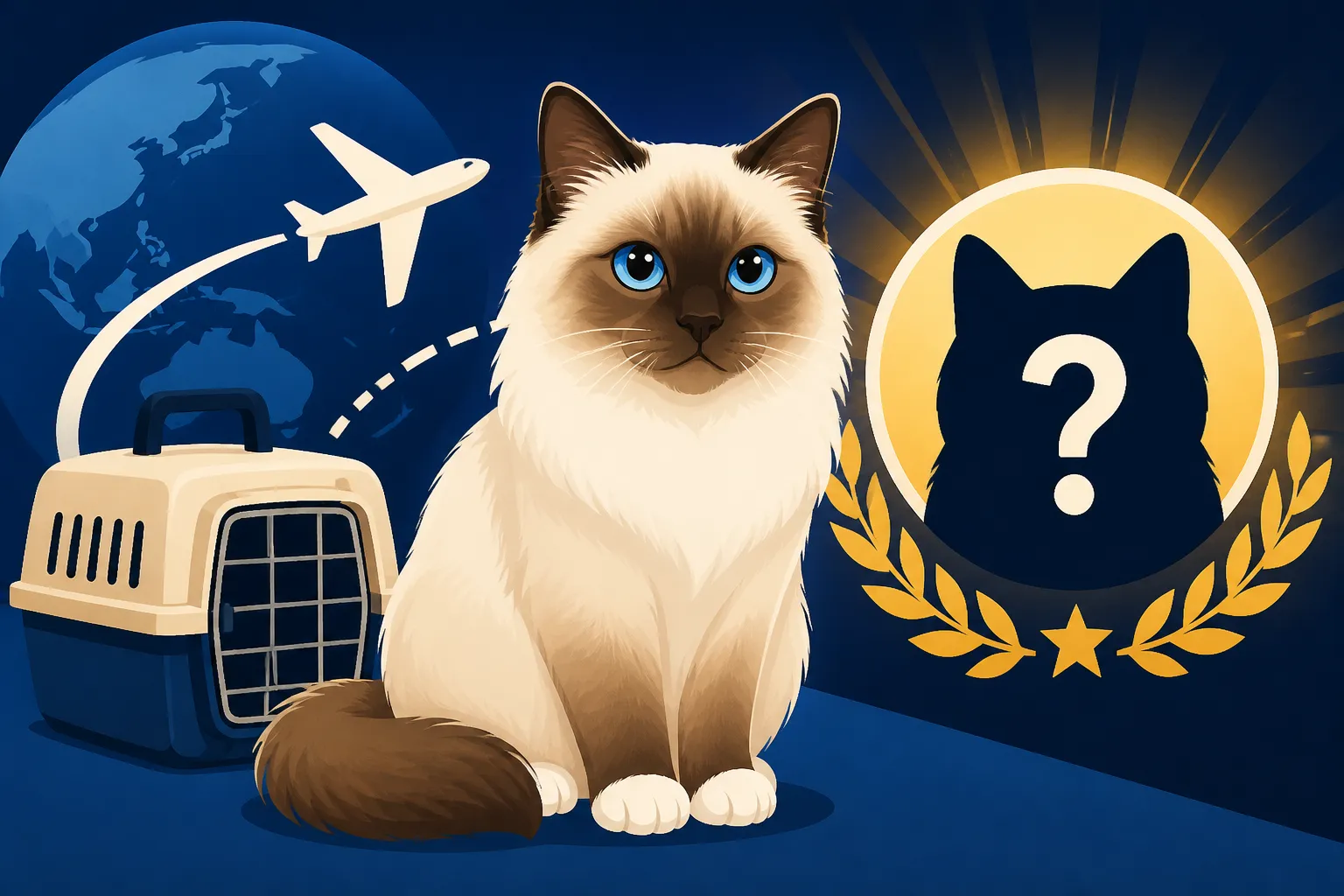
For the question “Which American cattery imported the first Birmans?”, Purr-Puss is the cattery most commonly credited. The answer is best understood as a reference to the earliest American import chapter, not as a claim that the cattery originated the breed or single-handedly established every later American Birman line.
The broader story runs from the breed’s European development, through its postwar rebuilding, to the arrival of early cats in the United States and subsequent registry recognition. Keeping those stages separate makes the Purr-Puss connection easier to place—and keeps a fascinating cattery milestone from being mistaken for the whole history of the Birman.
Disclaimer
This article is for general informational purposes only and does not constitute professional advice. Laws, prices and regulations vary by location and change over time. Consult a qualified professional for guidance on your specific situation.