Whether a Tabby Point Birman Is Priced Apart
It’s perfectly natural when you’re falling in love with the idea of bringing a Birman cat into your home to start exploring all the stunning variations they come in. While most people are familiar with the classic seal point or blue point, the mention of a "tabby point" often sparks curiosity. Many prospective owners wonder if this unique striped pattern means a significantly different price tag. This guide will walk you through the nuances of how tabby point Birmans are priced, alongside all the other crucial factors that contribute to the overall cost of these magnificent, gentle companions.
Understanding Birman Point Colors and Patterns
Before we dive into the specifics of tabby points, it’s helpful to understand the general landscape of Birman coat patterns and colors. Birmans are a pointed breed, meaning their color is concentrated on the cooler parts of their body: ears, face mask, paws, and tail. The rest of their body is typically a lighter, creamier shade.
The Classic Birman Point Colors
Traditionally, Birmans are known for a beautiful array of solid point colors. You’ll commonly see seal point Birmans, with their rich, dark brown points, or elegant blue points, sporting slate grey markings. Chocolate points offer a warmer brown hue, while lilac points present a softer, almost dove-grey. Beyond these, you might encounter red points, cream points, and even tortie points, which feature patches of red or cream within another point color. Each of these has its own unique charm, and sometimes, the perceived rarity or popularity of a particular shade can influence its price. However, as we'll discuss, the point color itself often isn't the primary driver of cost.
Introducing the Tabby Point Pattern
The tabby point Birman takes the standard point coloring and adds a delightful twist: classic tabby stripes within the colored points. Instead of solid blocks of color on the ears or tail, you’ll see distinct M-shaped markings on the forehead, fine pencil lines on the face, and rings on the tail. These stripes are a charming genetic addition, creating a "pointed tabby" effect. It's like having the elegance of a Birman combined with the wild beauty of a tabby cat, all in one package. When a tabby point Birman is a seal tabby point, for instance, its stripes will be a dark brown, whereas a blue tabby point will have grey stripes.
The Genetics Behind Pointing and Tabby Marking
The science behind these patterns is fascinating and important for breeders. The "point" pattern itself is a form of temperature-sensitive albinism, where the color pigment only develops in cooler areas of the body. This is why all Birman kittens are born almost pure white, and their points gradually emerge as they grow and are exposed to cooler temperatures. You can even read more about Why an Old Birman's Points Look Almost Black as they age and their body temperature fluctuates. The tabby pattern is controlled by a separate set of genes. When a cat inherits both the pointing gene and the tabby gene, the tabby stripes become visible within the colored points, creating the distinctive tabby point Birman. It’s a beautiful combination that adds another layer of visual interest to an already stunning breed.
The Specifics of the Tabby Point Birman
So, does this lovely striped addition mean you'll be paying a premium? Let's get into the specifics of how tabby points fit into the Birman pricing structure.
What a Tabby Point Birman Looks Like
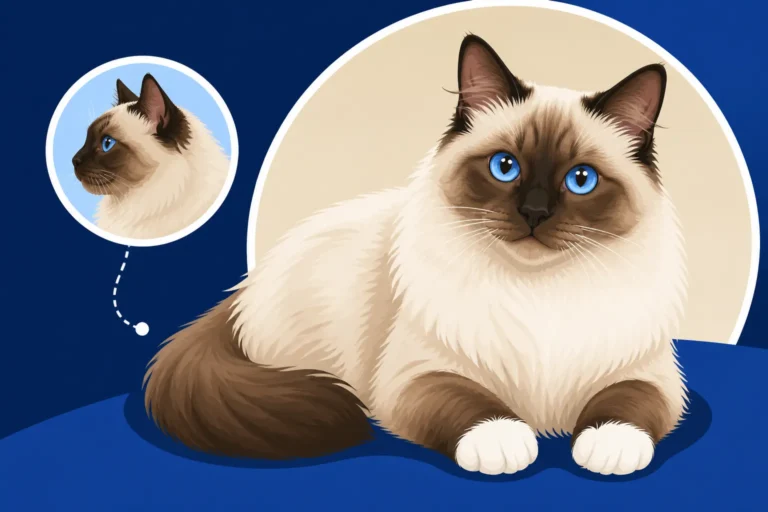
A tabby point Birman is a feast for the eyes, often appearing quite striking. Imagine the deep blue eyes characteristic of the breed, set against a creamy body, but then look closer at their points. Instead of a solid color, their ears will have intricate stripes, and their mask will show "eyeliner" markings and the distinctive M on the forehead. Their legs will have faint barring, and their tail will be ringed, much like a raccoon's tail. The contrast between the clear body color and the striped points is truly captivating. These unique markings set them apart from their solid-pointed siblings, offering a slightly wilder, yet still unmistakably gentle, aesthetic.
Is the Tabby Point a "Rare" Color?
The term "rare" in cat breeding can be a bit misleading when it comes to pricing. While tabby points might be less common than, say, a seal point or blue point in some lines or regions, they are a fully recognized and accepted point pattern within the Birman breed standard. They aren't an anomaly or a "mismark." Their existence simply means a breeder has chosen to incorporate the tabby gene into their breeding program. Therefore, you shouldn't necessarily expect a drastic price increase simply because it's a tabby point. Their perceived rarity can be more about current breeding trends or the specific focus of a cattery rather than an inherent genetic rarity that commands a higher price tag. The real price differentiators usually lie elsewhere.
How Breeders Approach Pricing Tabby Points
Most reputable Birman breeders price their kittens based on a combination of factors, with the overall quality of the individual kitten and the breeder's investment in their lines being paramount. A tabby point Birman, all else being equal, generally falls within the same price range as a solid point Birman of similar quality. The pattern itself, while beautiful and distinctive, doesn't typically command a separate "rare color" premium.
What does influence the price significantly are factors like:
- Markings: This is huge for Birmans. The pristine white "gloves" on their front paws and "laces" (matching white points extending up the back of their hind legs) are a hallmark of the breed. Perfect, symmetrical gloves and laces are incredibly difficult to achieve and can dramatically increase a kitten's price. A tabby point with exquisite glove markings will be priced higher than a solid point with messy gloves.
- Show Potential: A kitten with flawless markings and conformation suitable for the show ring will always be at the top end of the price scale, regardless of its point color or pattern.
- Breeder Reputation & Health Testing: Breeders who invest heavily in health testing their breeding cats for genetic diseases like HCM and PKD, and provide excellent care, will naturally have higher prices.
So, while a tabby point is certainly eye-catching, its price is more likely determined by its overall adherence to the Birman standard and the breeder's dedication to health and quality, rather than the tabby pattern alone. You can learn more about how The Gloves Decide What a Birman Kitten Costs.
How Point Color and Markings Influence Birman Pricing
When it comes to the Birman, the story of its cost is intricately woven with the perfection of its unique white markings and, to a lesser extent, the specific shade of its points. It's not just about being a certain color; it's about how that color is presented, especially in relation to the white feet.
The Importance of Glove Markings
For a Birman, those pristine white "gloves" on the front paws and the "laces" on the back are absolutely critical. These are the defining features that distinguish a Birman from other pointed breeds like the Himalayan or Ragdoll. A Birman's gloves should be symmetrical, ending in a straight line across the paw, and the laces on the hind legs should ideally come to a precise "V" shape, reaching no higher than the hock.
The closer a kitten's markings are to this ideal, the higher its price. This is where a significant chunk of the price variation in a litter comes from. A kitten with perfectly matched gloves and laces that could compete in the show ring will command a top price, regardless of whether it's a seal point or a tabby point. Conversely, a kitten with "mismarks" – uneven gloves, splashes of color on the white, or laces that are too high or low – will often be sold at a "pet price," meaning it’s a wonderful companion but not suitable for showing or breeding. You can definitely dive deeper into Why a Mismarked Birman Is a Pet Price Cat if you're curious about what these distinctions truly entail.
Rarity vs. Demand in Pricing
It’s easy to assume that "rare" colors automatically mean higher prices, but this isn't always the case, especially with Birmans. While certain point colors like red, cream, or tortie points might be less common than seal or blue points in some catteries, their price is primarily driven by demand and the quality of the individual kitten. If a "rare" color is also exceptionally well-marked and comes from strong, healthy lines, then yes, it might be at the higher end of the scale. However, a common color with impeccable markings and fantastic health clearances will often be priced higher than a "rare" color with less-than-perfect gloves or a less established pedigree. It boils down to overall quality and desirability within the breed standard. This is also why Why Birman Point Color Affects Price is a nuanced discussion, often intertwined with marking quality.
Show Quality vs. Pet Quality Pricing
This is perhaps the biggest differentiator in Birman kitten pricing. Breeders categorize their kittens based on how closely they adhere to the breed standard, particularly regarding their point color, pattern, and crucial white markings.
- Show Quality: These kittens are considered ideal examples of the breed. They have excellent conformation, temperament, and, most importantly, near-perfect white gloves and laces. They are often sold with breeding rights (at an even higher premium) or to show homes. They represent the breeder's success in achieving the breed standard and come with the highest price tag.
- Pet Quality: These kittens are equally healthy, loving, and wonderful companions, but they might have minor flaws in their markings (e.g., uneven gloves, a small spot of color on a white paw, or an irregular lace pattern). They are typically sold on a spay/neuter contract, meaning they are not intended for breeding or showing. They are usually more affordably priced, making them a fantastic option for families looking for a beloved pet without the show ring aspirations. It's important to remember that a pet quality Birman is still a purebred Birman, just one whose aesthetic might not be absolutely perfect according to the strict show standards.
Beyond Color: Other Factors Affecting Birman Kitten Cost
While point color and those gorgeous white gloves play a significant role, many other elements contribute to the initial investment you'll make in a Birman kitten. These factors speak to the breeder's dedication and the overall health and well-being of the kittens.
Breeder Reputation and Health Testing
This is arguably the most crucial factor. A reputable breeder isn't just selling kittens; they're upholding the integrity of the breed. This means they are actively involved in health testing their breeding cats for known genetic conditions common in Birmans, such as Hypertrophic Cardiomyopathy (HCM) and Polycystic Kidney Disease (PKD). While HCM doesn't have a DNA test, screening requires regular echocardiograms, and you can learn more about HCM in a Birman Has No DNA Test, Only an Echo. Similarly, Why a Birman Breeder Still Tests for PKD despite it becoming rarer in the breed, shows their commitment.
Breeders committed to health testing, providing excellent nutrition, early socialization, and a clean, stimulating environment for their kittens will naturally have higher prices. They invest significant time, money, and effort to ensure their kittens are healthy, well-adjusted, and genetically sound. Kittens from such breeders come with health guarantees, proper vaccination records, and typically, registration papers. Opting for a cheaper kitten from a breeder who skips these essential steps is a false economy; you could face significant veterinary bills down the line.
Location and Demand
Just like real estate, the cost of a Birman kitten can vary depending on where you live. In areas with a high demand for Birmans and fewer reputable breeders, prices might be higher. Conversely, in regions with a more saturated market, prices might be a little more competitive. Travel costs to pick up your kitten can also add to the overall expense, especially if you're traveling a significant distance for a specific kitten or breeder. Some breeders might offer transportation, but this will be an additional fee. This is less about the color and more about the simple economics of supply and demand in a particular geographical area.
Age of the Kitten
Most Birman kittens are ready to go to their new homes between 12 and 16 weeks of age. By this time, they have received their initial vaccinations, been dewormed, and are fully weaned and socialized. Sometimes, a breeder might have an older kitten – perhaps one they initially held back for evaluation for their breeding program but decided not to keep, or one that was simply not chosen by a family. These older kittens might occasionally be offered at a slightly reduced price, as breeders prefer to place them in loving homes rather than keep them indefinitely. They’ve already received all their initial vet care, including microchipping, and are often litterbox trained and well-adjusted. Knowing What a Birman Kitten Has Had Done by Thirteen Weeks can help you understand the value already invested.
What to Expect When Budgeting for a Birman
Bringing a Birman home isn't just about the initial purchase price; it's about a commitment to their well-being for their entire lifespan. Planning for ongoing expenses is crucial to ensure your Birman lives a happy, healthy, and long life.
Initial Purchase Price vs. Lifetime Costs
The initial price of a Birman kitten from a reputable breeder typically ranges. However, this is just the tip of the iceberg. A Birman's lifespan can be The Twelve to Sixteen Years a Birman Usually Gets, and sometimes even longer, which means a significant financial commitment over time. Many owners, after experiencing the joy of one Birman, often find themselves welcoming a second, as Why One Birman Usually Becomes Two is a common sentiment for these companionable cats.
When budgeting, consider that the kitten price is a one-time fee, but the cost of food, litter, toys, grooming supplies, and veterinary care will be recurring for well over a decade. It's essential to look at the bigger picture and understand that the "cost" of a Birman is a long-term investment in a family member's health and happiness.
Ongoing Care and Supplies
Your Birman will need high-quality food to maintain its silky coat and overall health. With brands like Chewy offering a vast selection, it’s easy to find premium options that cater to your Birman's specific needs, whether it's grain-free or formulated for long-haired breeds. Expect to spend monthly on quality kibble and wet food. Don't forget treats!
Grooming, while relatively easy for a Birman due to its lack of an undercoat, still requires specific tools. A good quality metal comb, like those found on Chewy, is essential for keeping their beautiful coat free of tangles. You can estimate What Grooming a Birman Costs in Tools. And let's not forget litter. With those pristine white gloves, you'll want a low-dust, non-staining litter. Plus, a litter box large enough to accommodate their long, elegant bodies. These seemingly small expenses add up over a year.
Here's a simplified breakdown of typical Birman costs:
| Category | Initial (Kitten) Cost | Annual Recurring Costs (Estimate) | Notes |
|---|---|---|---|
| Kitten Purchase | Varies by quality/markings | $0 (one-time) | Pet vs. Show quality, breeder reputation, health testing are key. |
| Food & Treats | $0 (initial purchase) | Moderate to High | High-quality kibble, wet food, and occasional treats. Premium food can also be considered. |
| Litter & Boxes | Low (initial boxes) | Moderate | Low-dust, non-staining litter preferred for white gloves. |
| Grooming Supplies | Low (initial comb, clippers) | Low | Metal comb, nail clippers, occasional pet shampoo. |
| Toys & Enrichment | Low | Low to Moderate | Replace worn toys, puzzle feeders. |
| Initial Vet Visit | Low | $0 (covered by kitten price) | Post-purchase check-up. |
| Annual Vet Checks | $0 | Moderate | Vaccinations, check-ups. Older Birmans may need more. |
| Health Screening | $0 | High (for breeding cats) | Echo scans for HCM, DNA tests for PKD/FOXN1. Pet owners may opt for yearly health checks. |
| Pet Insurance | $0 | Moderate | Can significantly offset unexpected vet bills. |
| Miscellaneous | $0 | Low | Carrier, bed, scratch posts. |
This table is a general guide; individual costs can vary widely.
Veterinary Care and Insurance
Regular veterinary care is vital for your Birman's long-term health. Beyond annual check-ups and vaccinations, Birmans can be prone to certain genetic conditions. Regular heart scans for HCM are crucial, especially as they get older. You might find that What an Ageing Birman Slows Down From can sometimes be related to underlying conditions, so proactive vet care is key.
Pet insurance is highly recommended to help manage unexpected veterinary expenses, which can quickly become substantial if your cat develops a serious illness or has an accident. Providers like Healthy Paws offer various plans that can cover everything from accidents and illnesses to emergency care. While premiums are an ongoing cost, the peace of mind they offer is invaluable. Even with the best breeding, cats can face health challenges, and having insurance means you can make decisions based on what’s best for your Birman, rather than solely on your wallet. Don't forget to factor in What Keeping a Birman Costs Every Year and What a Birman's First Year Costs Beyond the Kitten Price which gives a good indication of lifetime costs.
Disclaimer
This article is for general informational purposes only and does not constitute professional advice. Laws, prices and regulations vary by location and change over time. Consult a qualified professional for guidance on your specific situation.