Why a Gloveless Birman Kitten Cannot Be Registered
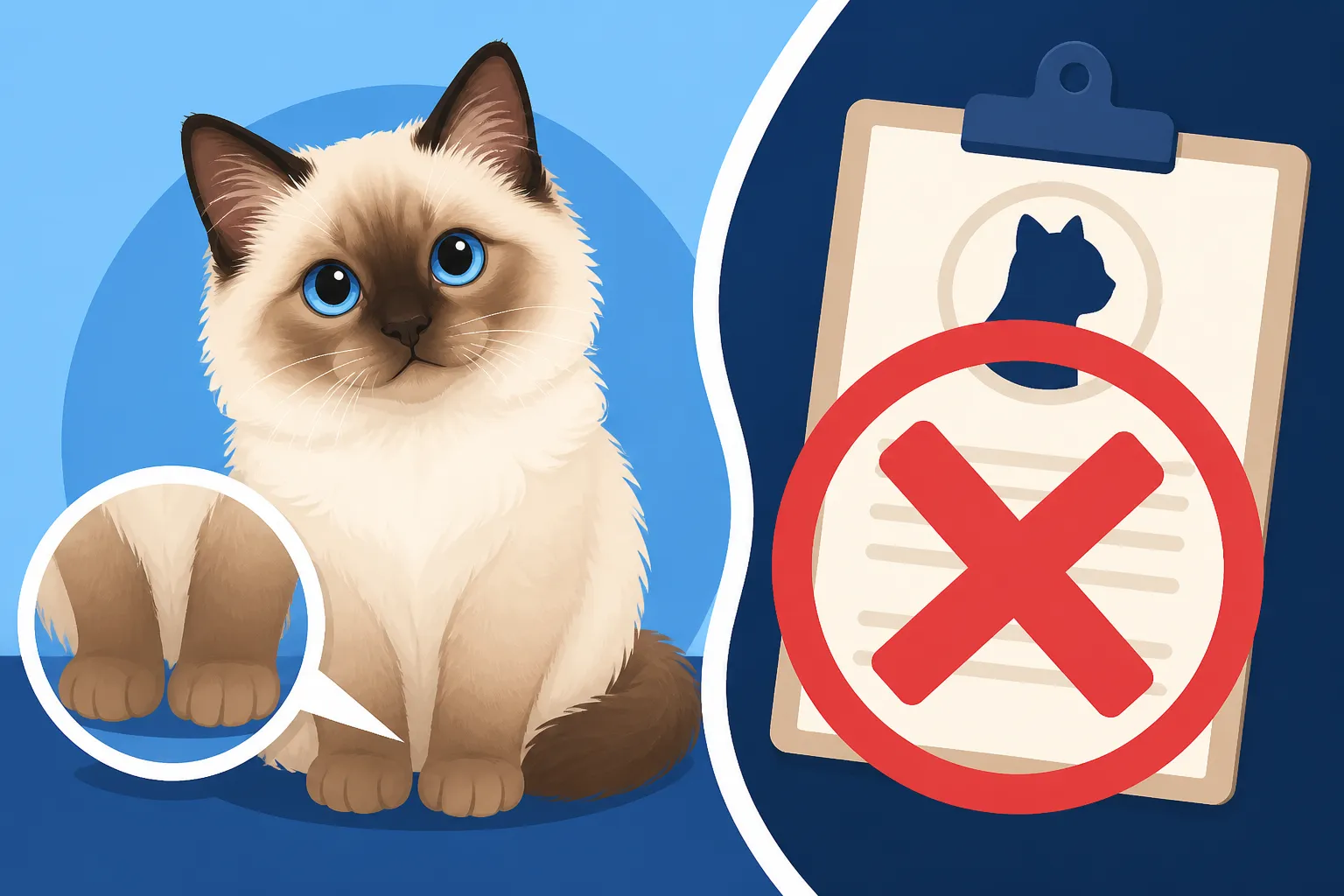
It’s a truly unique experience, bringing home a Birman kitten. You dream of those striking blue eyes, the luxurious silken coat, and of course, those famous white “gloves” and "laces" on their paws. But what happens if, for some rare reason, a kitten in a litter doesn't develop those iconic white markings? It can be a perplexing situation, especially if you had plans for showing or breeding. The truth is, a Birman kitten born without its distinctive white gloves cannot be registered with traditional cat fancy associations, fundamentally altering its path from the start. This guide will walk you through why those gloves are so crucial to the breed's identity and registration, and what this means for a kitten that doesn't conform.
The Birman Standard: A Foundation Built on Gloves
When you talk about a Birman cat, you're not just describing a long-haired, blue-eyed beauty; you're talking about a cat defined by a very specific set of characteristics, and at the absolute top of that list are its white "gloves" and "laces." These aren't just pretty markings; they are the breed's signature, its very identity in the eyes of cat fanciers and breeders worldwide. Without them, a cat, while perhaps beautiful and loving in every other way, simply doesn't fit the mold established by the breed's founding visionaries.
The Distinctive White Markings
Let's break down what those gloves and laces actually entail. On the front paws, a Birman should have pure white "gloves" that end in a perfectly even line across the paw, like a neatly dipped paw. No streaks, no uneven edges, just a clean, symmetrical band of white. On the back paws, the white extends further up the leg, forming "laces" that ideally taper to a point on the back of the hock. The goal is for these markings to be as symmetrical as possible, front to back and side to side. It’s an incredibly precise standard, and it's what makes a perfectly marked Birman truly breathtaking. What Judges Look For on a Birman's Paws First covers this in more detail, highlighting the incredible attention to detail required.
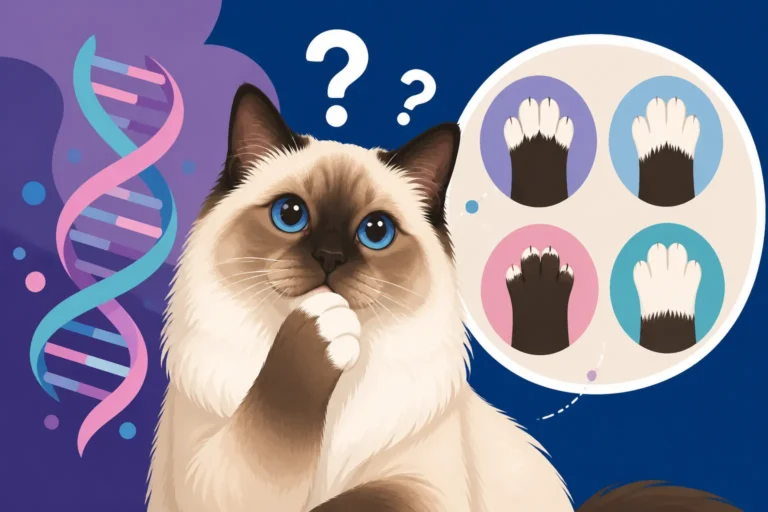
The challenge, and the beauty, lies in the fact that these markings are incredibly difficult to breed for consistently. While the underlying gene is always present, modifier genes can influence the extent and symmetry of the white. This means even from excellent parents, variations can occur within a single litter, leading to kittens with mismarked gloves or, in very rare cases, almost no white at all. A breeder spends years striving for these ideal markings, and evaluating them in young kittens is a crucial part of the process, often not final until several weeks into their development. How a Breeder Judges a Birman Kitten's Gloves explains the intricate process of assessing these unique features.
Historical Significance of the Gloves
The white gloves aren't merely an aesthetic preference; they are steeped in the Birman's origin story, tied to the legend of the Temple of Lao-Tsun. According to this beautiful myth, the Birman cats were once solid colored, but after their beloved priest was killed, the goddess Tsen-Kyan-Kse transformed them. Her golden eyes imbued the cats with sapphire eyes, their fur turned golden, and their faces, ears, legs, and tails darkened to reflect the earth, but their paws, which had rested upon their deceased master, remained pure white as a symbol of his purity and the sacred bond.
This powerful legend isn't just a charming tale; it's the very foundation of the breed standard. The white gloves are a direct, physical representation of this sacred ancestry. To have a "Birman" without these gloves would be, in the eyes of many traditionalists, to lose the very essence of what makes the breed sacred and distinct. This historical and cultural weight elevates the gloves beyond mere markings; they are a vital piece of the Birman's identity.
The Genetics Behind Birman Gloves: Why They're Expected
The existence of those beautiful white gloves isn't a random occurrence; it's a specific genetic trait that is fixed within the Birman breed. Every Birman cat carries the necessary genetic information for these markings, which makes the rare instance of a kitten without them a truly unusual and often puzzling event for breeders. Understanding this genetic foundation helps us grasp why the absence of gloves is such a significant deviation from the breed's established norms.
The KIT Gloving Variant
The genetic secret to the Birman's gloves lies in what's known as the KIT gene, specifically a variant often referred to as the "gloving gene." Unlike many other white spotting genes that can produce a wide range of white markings, from tiny lockets to full piebald patterns, the Birman's gloving variant is unique. It's considered a recessive trait, meaning a cat needs two copies of the gene to express the gloving pattern. All registered Birmans carry two copies of this specific genetic marker. The Gloving Gene Every Birman Carries Two Copies Of delves into this fascinating aspect of Birman genetics. This gene is consistently present in the breed, and tests can even identify its specific location on the genome. Where the KIT Gloving Variant Sits in the Genome offers more technical details on this.
Because all Birmans carry two copies of this specific variant, it's highly predictable that their offspring will also express the gloving. It’s not like breeding for a specific coat color where different parents can produce a range of outcomes. The gloving is supposed to be a constant. When a kitten doesn't show gloves, it indicates either a highly unusual genetic mutation, or, more commonly, that the kitten isn't truly a purebred Birman, perhaps having an ancestor that wasn't a Birman at all somewhere in its lineage. These rare occurrences often spark conversations among breeders about the nuances of recessive genes and how they sometimes present.
When Gloves Don't Appear
While the genetic predisposition for gloving is fixed, the expression of these gloves can still be influenced by other genes, often called modifier genes. These modifiers can affect the extent and symmetry of the white areas, leading to what breeders call "mismarks." This is why you see Birmans with uneven gloves, or laces that run too high or too low. However, a kitten with no white markings at all is a different category altogether. This isn't just a mismark; it's a complete absence of the defining trait.
Such occurrences are extremely rare in genuinely purebred Birman lines, especially from two parents who themselves display correct gloving. If a Birman kitten is born without any white on its paws, it typically suggests one of a few possibilities: either an extremely rare spontaneous mutation in the gloving gene, the presence of an unknown non-Birman ancestor in the pedigree that didn't carry the fixed gloving gene, or a misidentification of the parentage. While genetic tests can confirm the presence of the KIT gloving variant, the visual manifestation is paramount for registration. Whether Two Birmans Can Produce an Ungloved Kitten explores the very specific circumstances under which such a situation might theoretically arise. It's a testament to the consistency of Birman genetics that these cases are so few and far between.
Registration and Breed Standards: The Rules of the Game
For any recognized purebred cat, registration with a major cat fancy association is akin to having a birth certificate and a family tree all rolled into one. It's the official acknowledgment that your cat meets the specific, often rigorous, criteria set forth for its breed. For Birmans, those pristine white gloves are not just a nice-to-have feature; they are a mandatory checkbox on the registration form. Without them, the path to official recognition closes, regardless of how otherwise perfect the cat may be.
The Role of Breed Registries
Organizations like the Cat Fanciers' Association (CFA), The International Cat Association (TICA), or Governing Council of the Cat Fancy (GCCF) in the UK exist to maintain breed standards, track pedigrees, and ensure the integrity of purebred lines. When a breeder submits a litter for registration, they're essentially attesting that these kittens meet all the phenotypic (observable) and genotypic (genetic) requirements for the breed. For a Birman, this includes eye color, coat texture, body type, and, unequivocally, the white gloves. Which Registry Body Issues a Birman's Papers provides insight into how these organizations operate and the meticulous record-keeping involved.
If a kitten lacks the gloves, it fails a fundamental criterion. It would be like trying to register a Siamese without point coloration or a Sphynx with a full coat. The defining characteristic is missing. While some registries might have provisions for "non-standard" colors or patterns in certain breeds, a complete absence of the Birman's signature gloving is generally considered a disqualifying fault for registration as a full-fledged Birman, meaning it cannot be listed as a show cat or have its progeny registered as Birmans. This isn't about cruelty; it's about preserving the distinct traits that define the breed as a whole.
Impact on Breeding and Showing
The inability to register a gloveless Birman kitten has significant implications, especially for breeders. A non-registered cat cannot be shown in competitive cat shows, which are a cornerstone of breed promotion and evaluation. Furthermore, it cannot be used in a registered breeding program, as its offspring would also be ineligible for registration, effectively halting the advancement of the purebred line through that particular cat. This is why breeders are so meticulous in their selection process and so dedicated to upholding the standard.
For a breeder, finding a gloveless kitten in a litter, while rare, is a serious matter. It means that kitten cannot contribute to the future of the breed through showing or registered breeding. Instead, it will be placed as a beloved pet, often under a neuter contract to prevent any unregistered breeding. These kittens are still cherished and often go to homes at a “pet price,” reflecting the fact that they don't meet the stringent show or breeding standards. Why a Mismarked Birman Is a Pet Price Cat explains this pricing structure in detail. A reputable breeder will always be transparent about any deviations from the standard, ensuring prospective owners understand the kitten's status. They will also want their pet-only kittens on high-quality food, ensuring they get the best start in life regardless of their show prospects.
Living with a Gloveless Birman: Pet vs. Show
Discovering that a Birman kitten, otherwise perfect in every way, lacks its distinctive white gloves can be a bittersweet moment for both breeders and potential owners. While it closes the door on show ring dreams and registered breeding, it certainly doesn't diminish the cat's inherent value as a loving companion. The emphasis shifts entirely from breed conformity to the simple joy of pet ownership.
A Perfectly Healthy, Lovable Pet
Let's be absolutely clear: a Birman kitten born without white gloves is, in almost all cases, a perfectly healthy, charming, and wonderful cat. The absence of these markings is a cosmetic deviation, not a health defect. It will still possess the gentle, placid temperament Birmans are famous for, their striking blue eyes, and that luxurious, silky coat that requires regular, albeit easy, grooming. What a Birman Would Look Like Without Its Gloves helps visualize such a cat – still beautiful, just non-standard.
These kittens make incredible pets, bringing all the joy and companionship associated with the breed. They thrive on human interaction and are known for their quiet, affectionate nature. For families simply seeking a furry friend to share their home, a gloveless Birman is an excellent choice. They will still want to follow you from room to room, curl up nearby, and offer quiet comfort. Providing them with a balanced diet from reputable sources like Chewy ensures they remain healthy and happy for their long lifespan.
Ethical Breeding Practices and Transparency
Responsible Birman breeders are committed to transparency and ethical practices. If a kitten is born without gloves or with significant mismarks that preclude registration, they will openly communicate this to prospective buyers. These kittens are typically sold as "pet only" and come with a spay/neuter contract to ensure they are not used for unregistered breeding, which could perpetuate non-standard traits or mislead future owners. This approach protects the integrity of the breed standard while ensuring these beautiful cats find loving homes.
A good breeder will also provide all relevant health certifications for the parents and the litter, regardless of the kitten's marking status. They will ensure the kitten has had its initial vaccinations, deworming, and a full vet check-up. They understand that while the gloves are crucial for show, the overall health and well-being of every kitten are paramount. You can discuss the kitten's health history and potential for future costs, and they might even suggest looking into pet insurance from providers like Healthy Paws to help manage unexpected veterinary expenses down the line, ensuring a long and happy life for your unique Birman.
Here’s a quick overview of how a gloveless Birman kitten compares to the breed standard:
| Feature | Birman Breed Standard | Gloveless Birman Kitten (Pet Quality) |
|---|---|---|
| Paws | Pure white "gloves" on front, "laces" on back | No white markings on paws or negligible white spots |
| Registration | Eligible for registration with cat fancy associations | Not eligible for registration as a purebred Birman |
| Show Status | Eligible for show competition | Not eligible for show competition |
| Breeding | Can be used in registered breeding programs | Cannot be used in registered breeding programs |
| Temperament | Gentle, placid, affectionate | Gentle, placid, affectionate (identical) |
| Health | No specific health issues due to markings | No specific health issues due to lack of markings |
| Pet Quality | Excellent family pet | Excellent family pet (identical) |
In the end, while the journey for a gloveless Birman kitten might not include championship titles or a place in a breeding program, it still leads to a lifetime of love and companionship in a devoted home. These cats remind us that beauty comes in many forms, and a loving heart is the most important standard of all.
Disclaimer
This article is for general informational purposes only and does not constitute professional advice. Laws, prices and regulations vary by location and change over time. Consult a qualified professional for guidance on your specific situation.