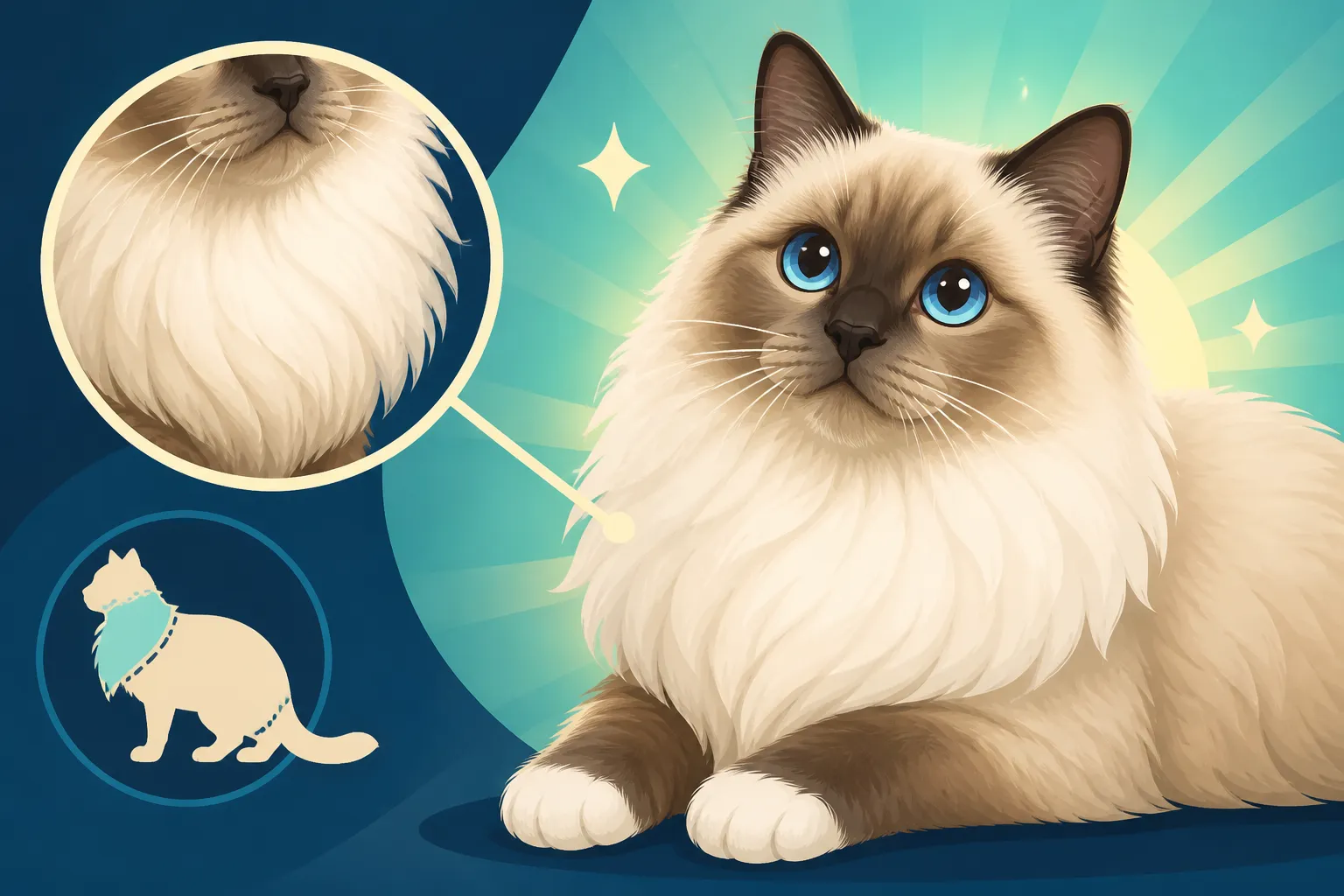
Why a Birman’s Ruff Is Its Longest Fur
One of the first things you notice about a Birman, beyond those striking blue eyes and pristine white gloves, is that magnificent mane around their neck. It's truly a showstopper, giving them a regal, almost lion-like appearance that sets them apart from so many other long-haired breeds. But many new Birman parents, or even seasoned cat lovers, often wonder why this particular area of their beautiful cat's fur seems to grow so much longer and more luxuriously than the rest of their coat. It's not just a happy accident; it’s a fascinating combination of genetics, evolutionary purpose, and environmental factors that creates this signature look, and understanding it helps you care for it best.
The Unique Structure of the Birman Coat
When you run your hand through a Birman's fur, you immediately notice its distinctive texture. Unlike some other long-haired breeds that boast a thick, often dense double coat, the Birman's coat feels incredibly silky and fine. This isn't just a tactile difference; it's a fundamental structural characteristic that plays a huge role in why their ruff stands out so much.
Understanding the Single Coat Advantage
The Birman is known for having what's often described as a single coat, meaning it primarily consists of guard hairs with a minimal, almost non-existent, undercoat. This is a significant departure from breeds like the Maine Coon or Persian, which are famous for their dense, woolly undercoats that provide insulation. For a Birman owner, this single coat is often a huge relief, translating to far less matting and a much easier grooming routine than many might expect from such a glamorous cat. It’s why you'll often hear that No Undercoat Is What Makes a Birman Easy to Groom.
This lack of a dense undercoat means that while the guard hairs grow long and flow beautifully, they don't form the same kind of dense, felted matting that can plague double-coated cats. Instead, the fur tends to part and fall cleanly. This makes routine combing a genuinely pleasant experience for both you and your Birman, rather than a wrestling match with knots and tangles. It's a huge benefit that contributes to the breed's reputation for being relatively low-maintenance on the grooming front.
Where the Coat Length Varies on a Birman
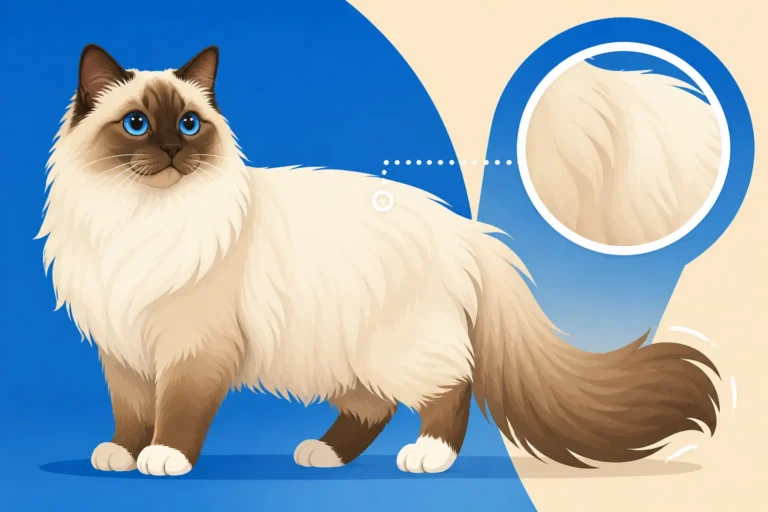
While the overall impression of a Birman is one of glorious long hair, the truth is that the fur isn't uniformly long across their entire body. In fact, there's a distinct pattern to where the longest and shortest hairs are found. The fur on their face is quite short, gradually lengthening as you move towards the back of their head and down their spine. Their legs also tend to have shorter, denser fur, especially on their pristine white "gloves."
The real length and flow come into their own along the sides of their body, over the back, and especially on that iconic tail plume, which can be remarkably bushy. However, the undisputed champion of length and volume is, without a doubt, the ruff. This mane of fur around their neck and chest can achieve impressive dimensions, sometimes flowing all the way down to their front legs, creating that distinguished and majestic appearance that is so characteristic of the breed.
The Majestic Ruff: Why It Grows So Long
So, why this particular area? Why does the ruff seem to get preferential treatment in the length department? It's a blend of genetics and natural design, giving the Birman its distinctive silhouette. This feature isn't just for looks; it subtly serves a purpose in the cat's natural environment, even if modern Birmans live a pampered indoor life.
Genetic Predisposition for Ruff Length
The specific genes responsible for coat length in cats are complex, but in the Birman, there's a clear genetic program that dictates the growth pattern of their fur, particularly favoring the ruff. The breeders, through careful selection over generations, have certainly played a role in enhancing this trait. They recognized the beauty and appeal of a well-developed ruff and bred cats that naturally exhibited this characteristic. It's part of the overall breed standard, a feature that judges look for in the show ring, emphasizing its importance to the Birman's identity.
This genetic blueprint means that regardless of diet or environment, a healthy Birman is predisposed to growing a prominent ruff. It’s part of what makes a Birman a Birman, as intrinsically linked to their identity as their blue eyes or The Gloving Gene Every Birman Carries Two Copies Of. Understanding this helps us appreciate that while we can support healthy coat growth through care, the fundamental pattern is hardwired into their DNA.
The Purpose of a Natural Ruff
Historically, a ruff in many animals serves a protective purpose. While our pampered indoor Birmans might not be braving harsh wilderness, in their ancestral context, a thicker, longer mane around the neck could have offered a degree of protection. It might have shielded their neck and throat from minor scrapes while navigating dense undergrowth, or perhaps even offered a slight insulation against cooler temperatures. The hair would also create a visual impression of a larger, more formidable animal, which could be a deterrent in nature.
Even today, in a domestic setting, the ruff adds a layer of cushioning during playful roughhousing with other pets or family members. It’s a beautifully evolved feature that, while now primarily aesthetic, still whispers of its past utility. It's also part of their charm and contributes to that "middle cat" persona, as discussed in The Birman Sits Between the Siamese and the Persian, where they often combine the best traits of both.
Caring for the Birman Ruff: Grooming Essentials
That glorious ruff, while stunning, does require a bit of attention to keep it looking its best. The good news is, thanks to the Birman's single coat, it's usually much less work than you might imagine. Regular, gentle grooming is key to preventing mats and maintaining its silky texture.
Choosing the Right Grooming Tools
When it comes to combing your Birman's ruff, the right tools make all the difference. Forget those harsh slicker brushes designed for thick, shedding undercoats; they'll only pull and damage your Birman's delicate guard hairs. Instead, you want a comb that glides through their fur without snagging. A metal comb with both wide and fine teeth is usually ideal. Start with the wider teeth to gently work through the bulk of the ruff, then follow up with the finer teeth to ensure every strand is smooth.
Many Birman owners swear by combs with rotating teeth, as these can be even gentler on tangles. Remember, the goal is to remove any loose hairs and prevent the tiny knots that can accumulate, especially behind the ears and under the chin where the ruff meets the shorter fur. Regularly checking these areas is crucial, as they are often Where a Birman's Few Mats Form. You can find excellent options on Chewy that cater specifically to long-haired cats with fine coats.
Preventing and Managing Mats in the Ruff
Even with a single coat, mats can occasionally form in the Birman's ruff, particularly if grooming is neglected for too long. The areas most prone to matting are often where the fur experiences friction – behind the ears, under the collar, or where they might rub against furniture. The best prevention is consistent, gentle combing, ideally a few times a week. Combing a Birman Three Times a Week is usually sufficient to keep the ruff in pristine condition.
If you do encounter a small mat, resist the urge to pull or yank at it. Instead, gently separate the mat with your fingers, working from the outside in. A little cornstarch or a dab of cat-safe detangling spray can help lubricate the hairs and make it easier to tease apart. For larger, stubborn mats that feel too tight, it's always best to consult your veterinarian or a professional groomer. They have the tools and expertise to safely remove mats without causing pain or injury to your beloved Birman.
Seasonal and Environmental Influences on Ruff Length
It's not just genetics that influence your Birman's ruff; the world around them plays a part too. You might notice subtle changes in the appearance and density of their ruff throughout the year, much like you might change your own wardrobe with the seasons.
How Temperatures Affect Coat Growth
Cats are incredibly sensitive to temperature fluctuations, and their coats often respond accordingly. In colder months, you might find that your Birman's ruff, along with the rest of their coat, appears even thicker and more luxurious. This is a natural, albeit subtle, adaptation to provide a little extra insulation against the chill. Even for an indoor cat, the slight drop in indoor temperatures during winter can signal to their body to grow a denser coat. This explains How Big a Birman's Ruff Gets in Winter.
Conversely, as the weather warms up in spring and summer, you might notice a slight reduction in the density of their ruff, and they may shed a bit more, as their body adjusts to dissipate heat more efficiently. This isn't usually a dramatic change like you'd see in a double-coated breed "blowing" its undercoat, but it's enough to feel a difference when you comb them. The change in How a Birman's Points Darken With Cold is another fascinating temperature-related phenomenon that affects their overall appearance.
Environmental Factors and Coat Health
Beyond temperature, other environmental factors can influence the health and appearance of your Birman's ruff. Humidity levels, for example, can impact the softness and manageability of their fur. In very dry environments, static electricity can make the fur flyaways, while in humid conditions, it might feel slightly heavier. The cleanliness of their living space also matters; a dusty home can mean a duller, dirtier coat.
Exposure to sunlight can also play a role, as it affects the condition of both fur and skin. Ensuring your Birman has access to clean, fresh water is paramount, as good hydration is essential for skin health, which in turn directly supports healthy fur growth. A stressed environment can also manifest in a duller coat, or even excessive shedding, reminding us that a happy Birman is usually a beautiful Birman.
Nutrition for a Glorious Ruff
A beautiful, flowing ruff isn't just about good genes and diligent grooming; it's also a reflection of your Birman's internal health. What you feed your cat directly impacts the luster, strength, and overall quality of their fur. Think of it as feeding their beauty from the inside out!
Essential Nutrients for Coat Health
The building blocks of healthy fur are primarily proteins and fats, along with a range of vitamins and minerals. High-quality animal protein is crucial for growing strong, resilient hair shafts. Look for cat foods where real meat (chicken, fish, turkey) is the first ingredient. Essential fatty acids, particularly Omega-3 and Omega-6, are absolute superstars for coat health. They contribute to that characteristic Birman silkiness and help maintain healthy skin, which is the foundation of a great coat.
Many premium cat foods are formulated with these needs in mind, providing balanced nutrition that supports not just a shiny coat, but overall vitality. You might also consider supplements like fish oil, but always discuss these with your vet first to ensure proper dosage and suitability for your individual cat. Remember, a thriving ruff requires What Protein Level a Birman's Ruff Needs to Stay Full.
The Role of Hydration and Diet Type
Water intake is just as critical as the food itself. Well-hydrated skin is supple and less prone to flaking, and it allows hair follicles to function optimally. While Birmans aren't always the most enthusiastic drinkers from a bowl, offering wet food can significantly boost their daily water intake. Many owners find that a diet rich in wet food helps maintain not only their coat but also supports their urinary and kidney health.
Choosing a high-quality, complete, and balanced cat food that meets all their nutritional requirements is the best strategy. Whether you opt for commercial kibble, wet food, or a combination, reading ingredient labels is key. Brands available on Amazon often list detailed nutritional information, helping you make an informed choice for your Birman's magnificent ruff.
The Ruff as a Health Indicator
Your Birman's ruff isn't just a beautiful feature; it can also serve as a subtle indicator of their overall health. Changes in its texture, appearance, or cleanliness can sometimes be the first clue that something isn't quite right.
Changes in Texture or Luster
A healthy Birman ruff should be silky, soft, and have a noticeable sheen. If you start to notice that your cat's ruff is looking dull, greasy, or feels coarse to the touch, it might be a sign of an underlying issue. A dull coat can sometimes indicate nutritional deficiencies, particularly a lack of essential fatty acids, or it could point to poor skin health. A greasy coat might suggest an issue with their skin's oil production, or that your cat isn't grooming themselves effectively.
These subtle changes are often easier to spot in the long, flowing ruff than in shorter fur. It's a reminder to pay attention to your cat's appearance during your regular combing sessions. If the change persists despite consistent grooming and a good diet, a vet visit is always a good idea to rule out any health concerns.
Grooming Habits and Ruff Condition
A healthy Birman is typically a fastidious groomer, keeping their coat, including their ruff, clean and tidy. However, if your Birman suddenly stops grooming their ruff or other parts of their body, or if you notice mats appearing rapidly, it's a red flag. Reduced grooming can be a sign of pain, discomfort, or general malaise. An older cat might struggle to reach certain areas, or an overweight Birman might find it difficult to groom their neck and back. This is why Caring for an Old Birman That Cannot Reach Its Back becomes so important.
Similarly, over-grooming their ruff or any other area can also indicate stress, allergies, or skin irritation. Any significant change in grooming habits warrants attention. Your vet can help determine if it's a behavioral issue, a pain issue like arthritis (which can make bending difficult), or something else entirely. Observing your Birman's grooming habits is just as important as the grooming you provide.
| Body Part | Typical Hair Length | Texture Description | Grooming Focus |
|---|---|---|---|
| Ruff (Neck/Chest) | Longest, dense | Silky, flowing | Daily combing, check for mats, detangling |
| Back/Sides | Long | Silky, smooth | Regular combing, gentle de-shedding (loose hair) |
| Tail Plume | Very long, bushy | Full, feathery | Gentle combing, prevent tangles, keep clean |
| Belly/Armpits | Medium to Long | Fine, prone to tangles | Careful combing, often forms mats if neglected |
| Legs | Shorter, denser | Soft, less prone to mats | General combing, check "gloves" for cleanliness |
| Face/Head | Short | Soft, fine | Minimal grooming needed, gentle wipes |
Disclaimer
This article is for general informational purposes only and does not constitute professional advice. Laws, prices and regulations vary by location and change over time. Consult a qualified professional for guidance on your specific situation.