How Long a Birman’s Tail Plume Is
If you're a proud Birman parent or considering bringing one of these magnificent cats into your home, you've probably already fallen in love with their stunning features – those piercing blue eyes, the silky coat, and of course, that glorious, plumed tail. But often, folks wonder, "just how long is that tail plume supposed to be?" It's a fantastic question, because the tail isn't just an afterthought; it's a key part of what makes a Birman so striking. This guide will dive deep into the Birman's tail plume, helping you understand its typical length, why it looks the way it does, how to care for it, and what to expect as your beloved Birman grows from a fluffy kitten into a distinguished adult.
The Birman's Tail: A Flag of Elegance and Balance
The Birman’s tail is far more than a simple appendage; it’s an integral part of their regal bearing and athletic grace. Often likened to a plume or a feather boa, it sweeps elegantly behind them, a beautiful counterpoint to their broad, cobby bodies and gentle nature. When you watch a Birman move, the tail moves with a fluidity and purpose that underscores their quiet confidence.
More Than Just Length: Function and Form
Think of your Birman’s tail as a natural balancing pole. When they navigate a narrow ledge – perhaps the back of your sofa, or a bookshelf – that tail shifts and sways, acting as a dynamic counterbalance that helps them maintain their equilibrium. This isn't just about high-wire acrobatics; it's crucial for their everyday movements, from a graceful jump onto a windowsill to a quick turn during a playful chase. Without this natural gyroscope, their movements would be far less precise and much more awkward. Beyond its practical function, the tail is also a vital communication tool. A Birman's tail can signal contentment with a slow, gentle sway, curiosity with a high, questioning arch, or even a hint of playful mischief with a quick twitch of the very tip. It's a silent language that, once you learn to read it, gives you even deeper insight into your cat's serene personality. It adds to that unique blend of grace and power that makes the Birman so captivating, a trait that sets it apart in the feline world. The Birman Sits Between the Siamese and the Persian, displaying an elegant balance that extends right through to its tail.
What Makes a Birman's Tail "Plumed"?
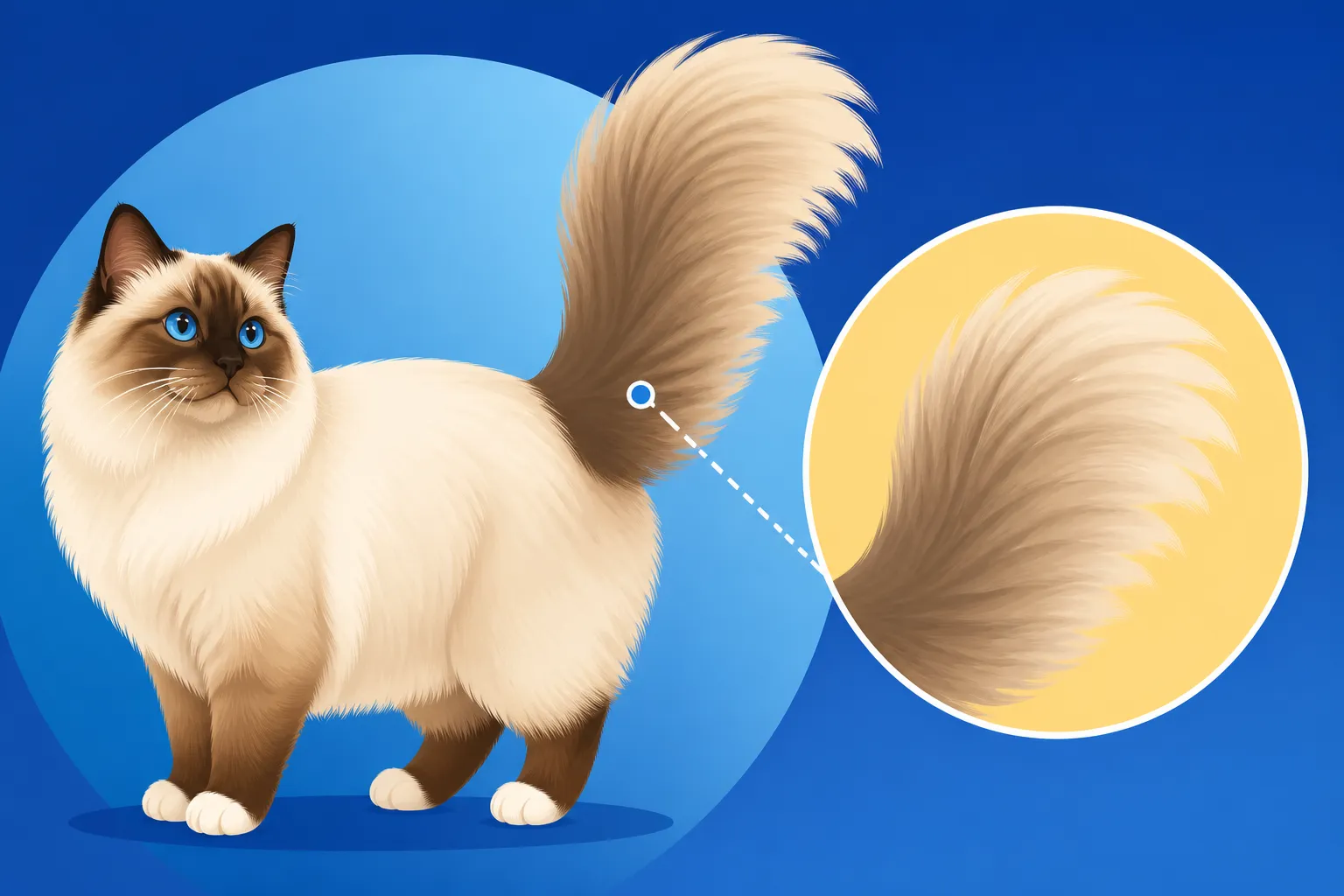
The term "plume" isn't just a fancy descriptor; it refers to the luxurious, flowing quality of the fur on a Birman's tail. Unlike some breeds where the tail fur might be dense and woolly, a Birman's tail boasts long, silky hairs that fan out, creating a magnificent, feathery effect. This isn't a fluffy puffball; it's a cascade of fine, soft fur that flows beautifully. This distinct characteristic is largely due to the Birman's coat type: they have a single coat, meaning they lack the dense, woolly undercoat found in many other longhaired breeds. This absence of an undercoat is precisely why their fur feels so fine and silken to the touch, and why their tail fur drapes so gracefully without clumping or knotting easily. You'll notice Why a Birman's Coat Runs Through Your Fingers – and the tail is no exception, often being the area where this silky texture is most pronounced. It's truly a sight to behold when they carry it high, a testament to the breed's unique beauty.
How Long Is That Magnificent Tail Plume, Really?
Now, for the burning question! When you envision a Birman, that long, flowing tail is often one of the first things that comes to mind. It's a defining feature, but its length isn't just about the bone structure; it's significantly enhanced by that lush, plumed fur.
Typical Measurements and Visual Impression
A typical adult Birman's tail, when measured from the base to the tip of the bone, will generally be quite substantial, often appearing to be about two-thirds the length of their body, excluding the head. This means the bone structure alone can be anywhere from 10 to 14 inches long in a fully grown cat. But that's just the skeletal part! What really creates the "plume" effect is the abundant, flowing fur that adds several more inches to the visual length and considerable volume. When your Birman is standing, a well-plumed tail should easily reach at least to their hocks (the 'elbows' of their back legs), and often sweeps gracefully along the ground or just above it. It's not uncommon for the tail to look like it's almost as long as the cat's entire body, simply because the hair itself is so long and lavish. The overall impression is one of elegance and balance, a soft, flowing appendage that truly completes the Birman's distinguished profile. It’s part of What a Birman's Coat Texture Should Be, reflecting the overall luxurious feel of their fur.
Factors Influencing Plume Length and Fullness
While genetics certainly lay the groundwork for a Birman's tail plume, several other factors can significantly influence its ultimate length and magnificent fullness.
- Genetics: This is perhaps the most critical factor. Like many physical traits, the potential for a long, dense tail plume is inherited. If your Birman comes from lines known for exceptional coats and tails, chances are your cat will also develop a beautiful plume. Breeders select for these traits, aiming for tails that meet or exceed breed standards.
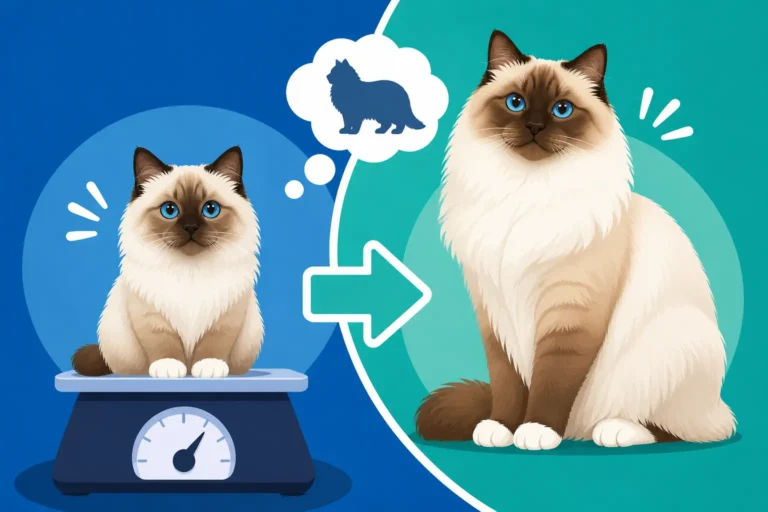
- Age: As with all long-haired cats, the plume takes time to fully develop. Kittens will have shorter, less dense tails, which will gradually grow in length and fullness, often reaching their prime between two and three years of age. An older Birman might see some subtle changes too, which we'll cover later.
- Nutrition: A healthy coat, including a full, luxurious tail plume, is a direct reflection of a cat's diet. A diet rich in high-quality proteins and essential fatty acids, particularly Omega-3 and Omega-6, is crucial. If your Birman isn't getting adequate nutrition, their coat might appear dull, brittle, and the tail plume could lose its characteristic fullness and silkiness. Consider looking into high-quality food options that focus on fresh, whole ingredients, which can really make a difference to coat health. Remember, How Many Calories a Birman Needs to Hold Its Coat is also key; too few, and the coat suffers, too many, and you risk obesity, which can also impact coat condition.
- Overall Health: Any underlying health issues can manifest in the coat. Conditions that lead to poor absorption of nutrients, hormonal imbalances, or chronic stress can cause a Birman's fur, including the tail plume, to become thin, sparse, or dull. Regular veterinary check-ups are essential to ensure your Birman is in peak condition, which will, in turn, support a beautiful, healthy plume.
The Birman Standard and the Ideal Tail Plume
Breed standards, set by organizations like the Cat Fanciers' Association (CFA) or The International Cat Association (TICA), describe the ideal characteristics of a Birman, and the tail is a significant part of that picture. While they don't typically specify an exact measurement in inches, they focus heavily on proportion, placement, and plume quality. The standard will often describe the tail as "medium long, in proportion to the body," "full and well-furnished," or "plumed." The emphasis is on how the tail complements the overall cat, providing balance and symmetry. It should be carried gracefully and should not be too short or whip-like, nor so long that it drags excessively or seems disproportionate. The fur should be long, silky, and flow beautifully. Judges look for that lush, feathery quality, the length of the fur, and how it drapes. A well-presented tail plume contributes significantly to the Birman's overall elegance and points in a show. It's part of the hundred points divided across various features, reflecting How the Birman Standard Divides Its Hundred Points. A truly magnificent tail plume is a hallmark of a well-bred Birman.
Keeping That Plume Pristine: Grooming and Care
A Birman's tail plume, while stunning, isn't entirely self-maintaining. Its length and silky texture mean it requires some regular attention to keep it looking its best, prevent mats, and ensure your cat's comfort.
Essential Grooming for a Healthy Plume
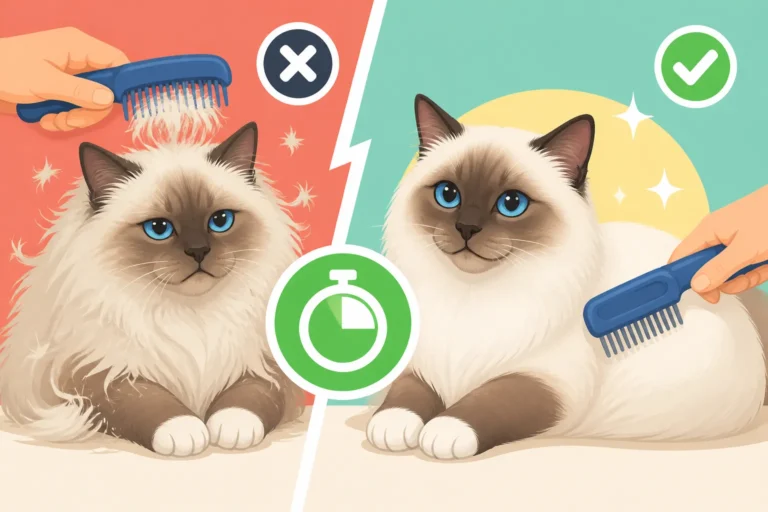
Fortunately, the Birman's single coat, while long, is generally less prone to severe matting than some other long-haired breeds. However, the tail, with its luxuriant length and constant movement, can still develop tangles if neglected. Regular combing is your best friend here. Aim for at least Combing a Birman Three Times a Week, and don't forget the tail!
Here's a gentle approach to grooming that plume:
- Gather Your Tools: You'll need a good quality, wide-toothed metal comb. Avoid slicker brushes on the tail, as they can pull and damage the delicate, silky fur. A comb designed for longhaired cats, readily available on Amazon or Chewy, will work wonders.
- Start Gentle: Begin by gently running your fingers through the tail fur to feel for any knots. If you find one, don't pull!
- Work in Sections: Hold the tail at its base, near your Birman's body, and start combing from the tip, working your way up gradually. This "line brushing" technique helps to detangle without causing pain. Take small sections at a time. This is similar to Working a Comb Through a Birman's Ruff in Sections, applying the same patience and technique to avoid discomfort.
- Be Patient with Tangles: If you encounter a knot, gently tease it apart with your fingers or the very tips of the comb teeth. You can also spray a little detangling spray specifically formulated for cats, or even a tiny bit of cornstarch, to help loosen stubborn tangles before combing.
- Check the Base: Don't forget the very base of the tail, where it meets the body. This area can be prone to matting because it sees a lot of friction and movement.
- Reward Time: Always end a grooming session with praise and a small treat to make it a positive experience for your Birman.
This routine, while simple, goes a long way in maintaining the health and beauty of that stunning plume.
Preventing Mats and Keeping It Clean
Beyond regular combing, there are a few proactive steps you can take to keep that tail plume looking its best and avoid common issues.
- Litter Choice Matters: Birman tails, particularly if they sweep low, can unfortunately become repositories for litter particles. Dusty or fine-grained litter can cling to the silky fur, leading to discoloration, irritation, and even mats. Opt for a low-dust, larger-granule, or pelleted litter. Many excellent options are available from retailers like Chewy that are designed to minimize tracking and stickiness. This is especially important if you have a Birman with lighter point colors or very white feet, as Why Litter Discolors a Birman's White Feet applies directly to the tail plume as well.
- Keep it Dry: If your Birman steps in something wet or damp, gently towel-dry their tail immediately. Damp fur is much more prone to matting, and can also lead to skin irritation.
- Monitor for 'Poop Boots': Sometimes, especially if a Birman has a looser stool or struggles with grooming their hindquarters, fecal matter can get stuck in the long tail fur near the rear. This is not only unsanitary but can quickly lead to painful mats and skin infections. If this happens, a gentle spot bath with warm water and a cat-specific shampoo is usually needed. You might even consider a very gentle trim of the fur directly around the anus by a vet or professional groomer if it becomes a persistent problem, though Birmans rarely need clipping.
- Environmental Factors: Consider your home environment. A very dusty house or areas with a lot of loose fibers can contribute to the plume getting dirty or tangled. Regular cleaning of their favorite sleeping spots can help.
When to Seek Veterinary Advice for Your Birman's Tail
While regular grooming will address most common tail issues, there are times when changes in your Birman's tail plume warrant a visit to the vet. As devoted Birman parents, it’s vital to be vigilant because Why a Quiet Birman Is Easy to Misread; they are stoic and can hide discomfort surprisingly well.
- Sudden Matting or Hair Loss: If your Birman's tail suddenly develops severe matting, or you notice significant hair loss from the plume, it could be a sign of an underlying health issue. This might include skin infections, parasites, allergies, or even a nutritional deficiency. Excessive self-grooming that leads to hair loss can also indicate stress or pain.
- Lumps, Bumps, or Sores: Any unusual lumps, bumps, redness, or open sores on the tail, especially near the base, should be examined by a vet. These could be anything from cysts to abscesses or even tumors.
- Pain or Sensitivity: If your Birman flinches, hisses, or shows any signs of pain when you touch their tail, or if they stop carrying it normally (e.g., holding it rigidly or tucked away), it's a clear signal that something is wrong. They might have an injury, such as a fracture or sprain, or nerve damage.
- Change in Tail Carriage: A sudden change in how your Birman holds their tail – for instance, if it used to be carried high and now drags, or if it appears limp – could indicate an injury or neurological problem.
- Foul Odor: A persistent foul odor emanating from the tail area, even after cleaning, often points to an infection or impacted anal glands, which would require veterinary attention.
Early intervention for any of these signs can prevent more serious issues and ensure your Birman remains comfortable and healthy.
The Plume's Journey: From Kitten Fluff to Senior Sweep
Like so many aspects of a Birman's development, their tail plume undergoes a beautiful transformation over their lifespan. It's a journey from soft, fluffy beginnings to a magnificent, mature sweep, and then, with age, some gentle shifts that remind us of their wisdom.
How the Tail Plume Develops in Kittens
When you first bring home a Birman kitten, their tail will be adorable, but it won't yet have that full, luxurious plume you see in adults. Kitten tails are generally shorter, with softer, less dense fur. They're still learning to coordinate their movements, and the tail is part of that growth. The fur on their tail, much like the rest of their coat, will be lighter in color initially, and will gradually deepen and darken as their points come in. It’s fascinating to watch this progression, much like How a Birman Kitten's Points Come In on their face and paws. Over the first year, you'll notice the tail gaining length and the fur beginning to fill out, becoming more silky and substantial. By the time they are around 12-18 months old, you'll start to see a good approximation of their adult plume, though it might still have a bit more growing and densifying to do. Regular, gentle grooming from a young age is crucial during this phase, not just for hygiene but also to get them accustomed to having their tail handled, making future grooming much easier.
Age-Related Changes in Plume Appearance
As your Birman transitions from a vibrant adult into their golden years, typically past the age of ten, you might notice some subtle changes in their tail plume. These are a normal part of the aging process, but they do require a little extra consideration and care.
- Thinning and Texture Changes: The fur on an older Birman's tail might become slightly thinner or less dense than it was in their prime. You might also notice a subtle change in texture; it might not feel quite as silky, perhaps a little coarser or finer depending on the individual cat. This is often due to changes in metabolism, hormone levels, and the natural aging of hair follicles.
- Increased Matting Risk: Older Birmans might not be as flexible as they once were, making it harder for them to reach and groom their tail effectively. This reduced self-grooming, combined with potential changes in fur texture, can lead to an increased risk of mats forming, particularly at the base of the tail or underneath. This is a common challenge, and Caring for an Old Birman That Cannot Reach Its Back often means taking over more grooming duties for areas like the tail.
- Darkening of Points: It's a known characteristic of Birmans that their point colors darken with age, and this applies to the fur on their tail as well. Why a Birman's Points Darken as It Ages is due to thermoregulation; the cooler parts of their body develop darker pigment. So, an older Birman's tail plume, especially the tip, might appear a significantly darker shade than it did when they were younger. This is a beautiful sign of their seasoned years!
- Mobility and Tail Carriage: In some very elderly Birmans, if they develop arthritis or other mobility issues, you might notice a slight change in how they carry their tail. It might not be held as high or with the same fluidity, reflecting their overall physical comfort.
Understanding these changes allows you to provide the best possible care for your aging Birman, ensuring their tail plume remains as comfortable and beautiful as possible throughout their long, cherished life.
| Aspect | Kitten (0-1 year) | Adult (1-10 years) | Senior (10+ years) |
|---|---|---|---|
| Length | Shorter, growing | Reaches hocks, often longer visually | Similar bone length, fur may appear less voluminous |
| Fullness/Density | Softer, less dense | Full, luxurious plume | Potentially thinner, less dense |
| Texture | Very soft, fine fluff | Silky, flowing, smooth | May become slightly coarser or finer |
| Color | Lighter, points developing | Point color fully established | Points may darken significantly |
| Matting Risk | Low, but establish grooming | Low with regular grooming | Higher due to reduced self-grooming |
| Care Focus | Habit building | Maintenance | Increased assistance with grooming |
Disclaimer
This article is for general informational purposes only and does not constitute professional advice. Laws, prices and regulations vary by location and change over time. Consult a qualified professional for guidance on your specific situation.