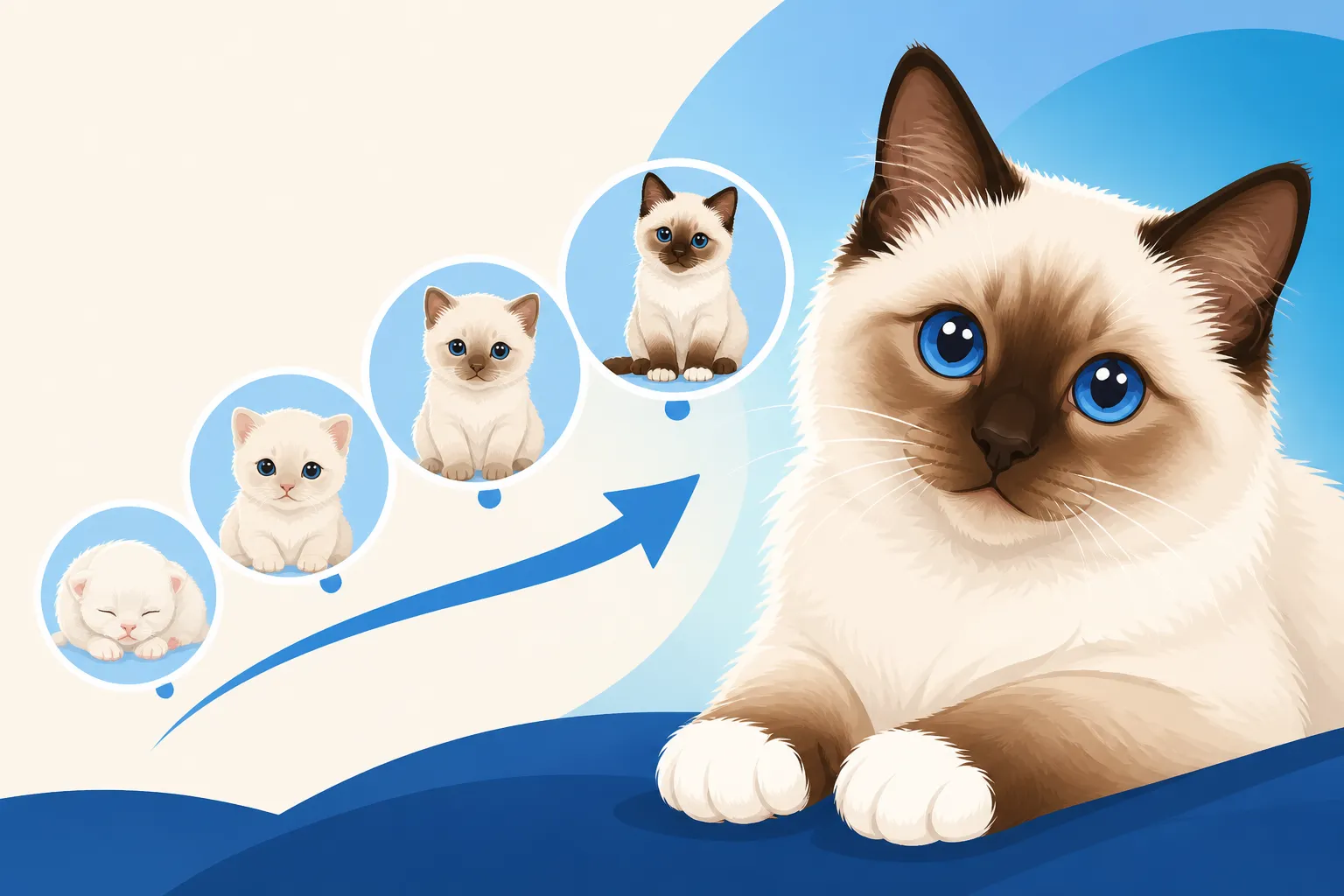
How a Birman Kitten’s Points Come In
Bringing home a Birman kitten is such an exciting time! You’ve probably seen pictures of those stunning adults with their rich, dark points, and you might be a little surprised when your precious new arrival is, well, almost entirely white. It’s completely normal to wonder if you got the right cat, or even if something’s wrong. But don’t worry, that pristine, creamy coat is exactly how they're meant to start! This guide will walk you through the magical process of how your Birman kitten's beautiful point coloration develops, explaining the science behind it and what to expect as your little one grows.
The Birman's Unique Temperature-Sensitive Genetics
The reason your Birman kitten starts off looking like a fluffy white cloud is all thanks to a fascinating genetic trait. It's a hallmark of the breed and what gives them their distinctive "pointed" pattern – those darker areas on their ears, face, paws, and tail. This isn't just a Birman thing; it's shared by other colorpoint breeds like the Siamese and Himalayan. Understanding this genetic quirk will help you appreciate the beautiful transformation your kitten will undergo.
Understanding the Colorpoint Gene
At the heart of the Birman's unique coloring is a specific gene, often referred to as the "colorpoint gene" or Himalayan gene. This gene is responsible for producing the enzyme tyrosinase, which is crucial for melanin (pigment) production. However, in Birmans, this enzyme is temperature-sensitive. This means it only functions effectively at cooler body temperatures, which are typically found in the extremities of the cat's body. The warmer core of their body inhibits the enzyme, preventing melanin from forming. This is Why a Birman is always pointed and never solid.
So, while your kitten carries the genetic information for its specific point color – be it seal, blue, chocolate, or lilac – that color won't express itself evenly across the entire body. It's a truly remarkable example of how genetics and environment interact to create such a visually striking animal. It's not a flaw; it's a feature that makes Birmans so distinct and beautiful.
The Role of Temperature in Pigment Expression
Think of your kitten's body as a little thermometer, influencing its own coat color. The extremities – the ears, nose, paws, and tail – are naturally a few degrees cooler than the main trunk of the body. This subtle temperature difference is just enough to activate the tyrosinase enzyme, allowing pigment to develop in these areas. It’s a delicate balance; if a part of the body is too warm, no color appears. If it’s cool enough, the color comes in.
This also explains why older Birmans, or those living in colder climates, often have darker, more extensive pointing. Their bodies simply maintain cooler surface temperatures overall. It’s a constant, gentle process happening beneath their soft fur, a beautiful natural phenomenon that sets them apart. You might even notice subtle changes in your cat's point color depending on the season or if they've had a patch of fur shaved for a medical procedure, as the new fur often grows back darker due to the sudden cooling of the skin.
Why Birman Kittens Are Born Pure White
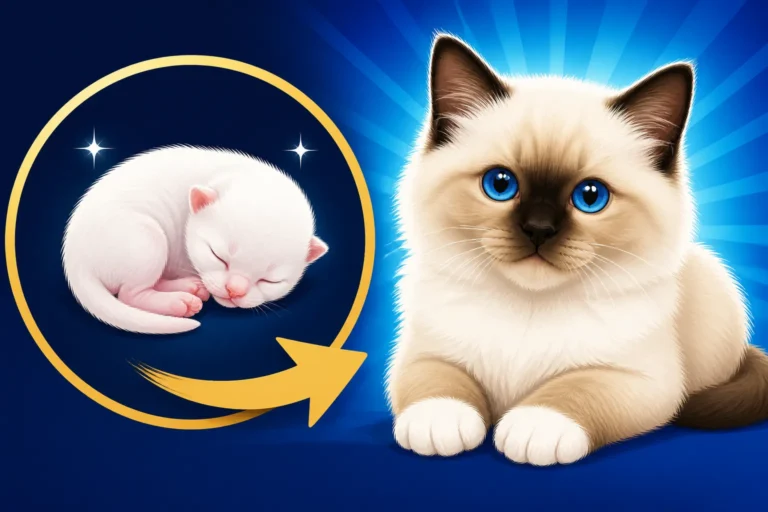
When Birman kittens are snuggled safely inside their mother's womb, they are kept at a uniformly warm, cozy temperature. This environment is perfect for their development but completely inhibits the colorpoint gene from doing its work. The enzyme responsible for creating pigment simply can't activate in such warmth. As a result, all Birman kittens, regardless of their eventual point color, are born appearing pure white or a very pale cream.
This can be quite a surprise for first-time Birman owners who might be expecting a tiny version of a fully colored adult cat. But rest assured, this ghostly white appearance is completely normal and a sign of a healthy, genetically typical Birman. It’s fascinating to think that these little bundles of white fluff hold the promise of such rich, deep colors, just waiting for the right temperature cues to emerge. It’s also Why every Birman kitten is born pure white.
The Journey of Color Development: Weeks and Months
Watching your Birman kitten develop its points is truly one of the joys of raising this breed. It’s like watching a living photograph slowly develop, revealing beautiful details day by day. This isn't an overnight transformation; it's a gradual process that unfolds over several weeks and months, with some colors appearing more quickly or intensely than others.
First Hints of Color: Nose and Paws
Typically, the very first places you’ll notice color starting to peek through are the coolest parts of your kitten's body: their tiny noses and their sweet little paw pads. This usually begins around 3 to 7 days after birth. You might see a faint smudge of grey or a slight darkening on the nose leather, or a subtle blush on the paw pads that wasn't there before. These initial whispers of color are often so faint you might second-guess yourself, wondering if you're really seeing it.
As the weeks progress, the color will become more pronounced. Around 2-3 weeks, you’ll start to see a definite, though still light, shade on the nose, and the individual paw pads will begin to clearly show their emerging color. This is the exciting start of their transformation, proof that their temperature-sensitive gene is indeed doing its job. It’s a lovely milestone to observe and a clear indicator of the beautiful adult cat they are destined to become. This is also when How early Birman kittens show their points.
Watching the Points Darken: Face, Ears, and Tail
After the initial subtle changes, the ears are usually the next area to start showing more distinct color, followed by the tail. By 4-6 weeks, the ears will have a noticeable point color, and the tail will begin to show signs of darkening from the tip. The face, particularly around the mask area, will also start to develop a soft shading, though it takes much longer to become fully defined.
By the time your Birman kitten is around 8-10 weeks old and getting ready to go to their new home, their points will be much more evident. The contrast between their developing points and their creamy body will be clearer. However, it's crucial to remember that this isn't their final color. The process is still very much underway. For example, if you have a seal point, their points might still look a bit like a blue point initially, before deepening into that rich, dark brown. Breeders often assess point quality around How a breeder prices a Birman at twelve weeks.
| Age of Kitten | Areas Showing Initial Color | Color Intensity | Notes |
|---|---|---|---|
| Birth | Entirely white/cream | None | Uniform warmth in utero inhibits pigment. |
| 1-2 Weeks | Nose leather, paw pads | Very faint | Subtle smudges begin to appear as extremities cool. |
| 3-4 Weeks | Ears, tail tip | Light | Ear edges and tail tips show distinct, but pale, color. |
| 6-8 Weeks | Face mask begins, full paws | Medium-light | Face mask starts to shade, paw pads solidify color. |
| 12-16 Weeks | All points defined | Medium | Clear distinction between body and point color, still lightening. |
| 6-12 Months | Points continue to deepen | Medium-dark | Color becomes richer and more intense. |
| 1-3 Years+ | Full maturity, extensive dark | Darkest/Richest | Body color may darken slightly; points reach full depth. |
Full Color Development: A Lifelong Process
While you'll see significant point development by the time your Birman kitten is a few months old, their coat color isn't truly "finished" for quite some time. Many Birmans continue to deepen in point color and even slightly darken their body color up until they are two or even three years old. This is part of the charm of the breed; their beauty is always evolving.
Even as adults, the point coloration can shift subtly throughout their lives. You might notice their points becoming noticeably darker as they age, especially if they live in a cooler climate or spend more time in cooler parts of your home. This is completely natural. How many years a Birman's points take to finish darkening can often be longer than you might expect, truly making them a living masterpiece that changes with time and temperature. It’s a wonderful journey to share with your feline companion, witnessing their unique beauty mature.
Factors Influencing Point Color Intensity
It's not just genetics at play; a whole host of factors can influence how deep and vibrant your Birman's point colors ultimately become. Understanding these can help you appreciate the subtle nuances in your cat's coat and avoid any unnecessary worries about their coloration. From where they live to what they eat, everything plays a small part.
Environmental Impact: Climate and Indoor Temperature
As we've touched upon, temperature is the primary environmental factor influencing point color. A Birman living in a generally cooler climate, or even just in a cooler room in the house, will tend to develop darker and more extensive points than one living in a consistently warm environment. Think of it this way: the more often their extremities are cool, the more active the pigment-producing enzyme will be. This means a Birman in, say, a colder northern state might have noticeably darker points than one living in the warmth of the sunbelt. This is especially true when considering Why a Birman living somewhere cold gets darker.
Even within your own home, if your Birman has a favorite sleeping spot near a drafty window in winter, you might observe that area of their fur becoming a little darker. Conversely, if they love to bask in a sunbeam or snuggle under a warm blanket, those areas might remain slightly lighter. It’s a continuous, dynamic process. This isn't something to try and manipulate, but rather to observe and appreciate as part of their unique charm.
Genetic Variations and Point Shades
While the temperature-sensitive gene dictates where the color appears, the specific shade of that color (seal, blue, chocolate, lilac, red, cream, or tortie/tabby variations) is determined by other genes inherited from their parents. For instance, a seal point Birman will have very dark, almost black-brown points, whereas a blue point will have softer, slate-grey points. These genetic predispositions are fixed from birth and won't change, even if the intensity varies with temperature.
Some Birman lines might also carry modifier genes that influence the depth or spread of the point color. This can lead to subtle differences in how a kitten's points come in, even among littermates with the same primary point color. This complexity is part of what makes breeding Birmans so fascinating and challenging, as breeders strive for consistency in color and marking according to breed standards. It's truly a rich tapestry of genetics that produces each unique, stunning Birman.
The Impact of Diet on Coat Health and Color
While diet won't change a blue point Birman into a seal point, proper nutrition plays a significant role in the overall health and vibrancy of your cat's coat, including its points. A high-quality diet, rich in essential fatty acids (like Omega-3 and Omega-6), vitamins, and minerals, ensures the fur is glossy, strong, and healthy. A dull, brittle coat, regardless of its color, won't look its best. Many premium cat food brands, available from retailers like Chewy or on Amazon, focus on formulations designed to support skin and coat health.
Specific nutrients, such as copper, can also play a role in pigment production, though deficiencies are rare in cats fed a complete and balanced diet. Some owners choose to supplement their Birman's diet with fish oils or other skin and coat supplements, sometimes recommended by their vet. Fresh, well-balanced cat food often contains ingredients that naturally support a healthy coat. While these won't drastically alter point color, they will contribute to a coat that is soft, silky, and presents its genetically determined color to its fullest potential. Remember, a healthy cat is a beautiful cat, and good nutrition is fundamental to that. You can also explore Feeding a Birman kitten while its points come in for more tailored advice during their growth stages.
Disclaimer
This article is for general informational purposes only and does not constitute professional advice. Laws, prices and regulations vary by location and change over time. Consult a qualified professional for guidance on your specific situation.