How to Get a Birman Used to a Comb
Oh, the battle of the comb! If you're a Birman parent, you know that even with their famously placid personalities and gorgeous, flowing coats, the idea of regular grooming can sometimes feel like you're heading into a wrestling match. Many cat owners dread the grooming routine, imagining a struggle of hissing, scratching, and hiding under the bed, especially when faced with the prospect of maintaining such a luxurious longhair. This guide is all about taking the stress out of that equation, showing you how to gently introduce your Birman to the comb and transform grooming into a calm, bonding experience, not a chore.
Understanding Your Birman's Unique Coat and Temperament for Grooming
Birmans truly are special cats, and understanding their physical and emotional makeup is the first step to a successful grooming routine. They aren't just any long-haired breed; they have specific characteristics that make grooming both a joy and a unique challenge.
The Birman's Single Coat: Why it's Different
One of the biggest advantages a Birman owner has is their cat's single coat. Unlike many other long-haired breeds, such as Persians, Birmans lack a dense, woolly undercoat. This is a game-changer when it comes to grooming. A cat with a thick undercoat can develop mats quickly and deeply, requiring intense, frequent brushing to prevent painful tangles. With a Birman, the coat is silky, flowing, and lies close to the body, making it significantly less prone to severe matting. You'll find that No Undercoat Is What Makes a Birman Easy to Groom.
This doesn't mean you can skip grooming entirely, of course. Even a single coat can pick up loose hairs, dust, and tiny bits of debris, especially around areas like the britches and the magnificent ruff. While a Birman mats far less, when they do, it's often in these areas where friction occurs, or where they might not reach themselves. The goal of regular combing isn't just to remove tangles, but to distribute natural oils, stimulate the skin, and keep that beautiful coat looking its best. Think of it as preventative care; a few minutes a few times a week is much easier than tackling a stubborn mat once it's formed.
Leveraging the Birman's Placid Nature
Birmans are renowned for their gentle, sweet, and tolerant dispositions. They're often described as "dog-like" in their devotion and their desire to be near their people. This temperament is your secret weapon when it comes to grooming. While any cat can be wary of new experiences, a Birman is generally more inclined to accept gentle handling if introduced correctly and patiently. They thrive on companionship and positive attention, which you can absolutely use to your advantage during grooming sessions.
However, "placid" doesn't mean "passive." A Birman still has boundaries, and if you rush them or use uncomfortable tools, even the most serene cat will object. They might not hiss and scratch immediately, but they'll start to associate the comb with negative experiences, leading to avoidance or even fear. The key is to respect their gentle nature by making every grooming encounter feel safe, comfortable, and rewarding. Understanding Why a Quiet Birman Is Easy to Misread is crucial here; their quiet objection might just be walking away, which is their way of saying "no, thank you."
Essential Tools for Stress-Free Birman Combing
Having the right tools is half the battle when it comes to grooming. Using an inappropriate comb can pull hair, scratch skin, and turn a potentially pleasant experience into a painful one. For a Birman's delicate, silky coat, precision matters.
Choosing the Right Comb for a Birman's Silky Fur
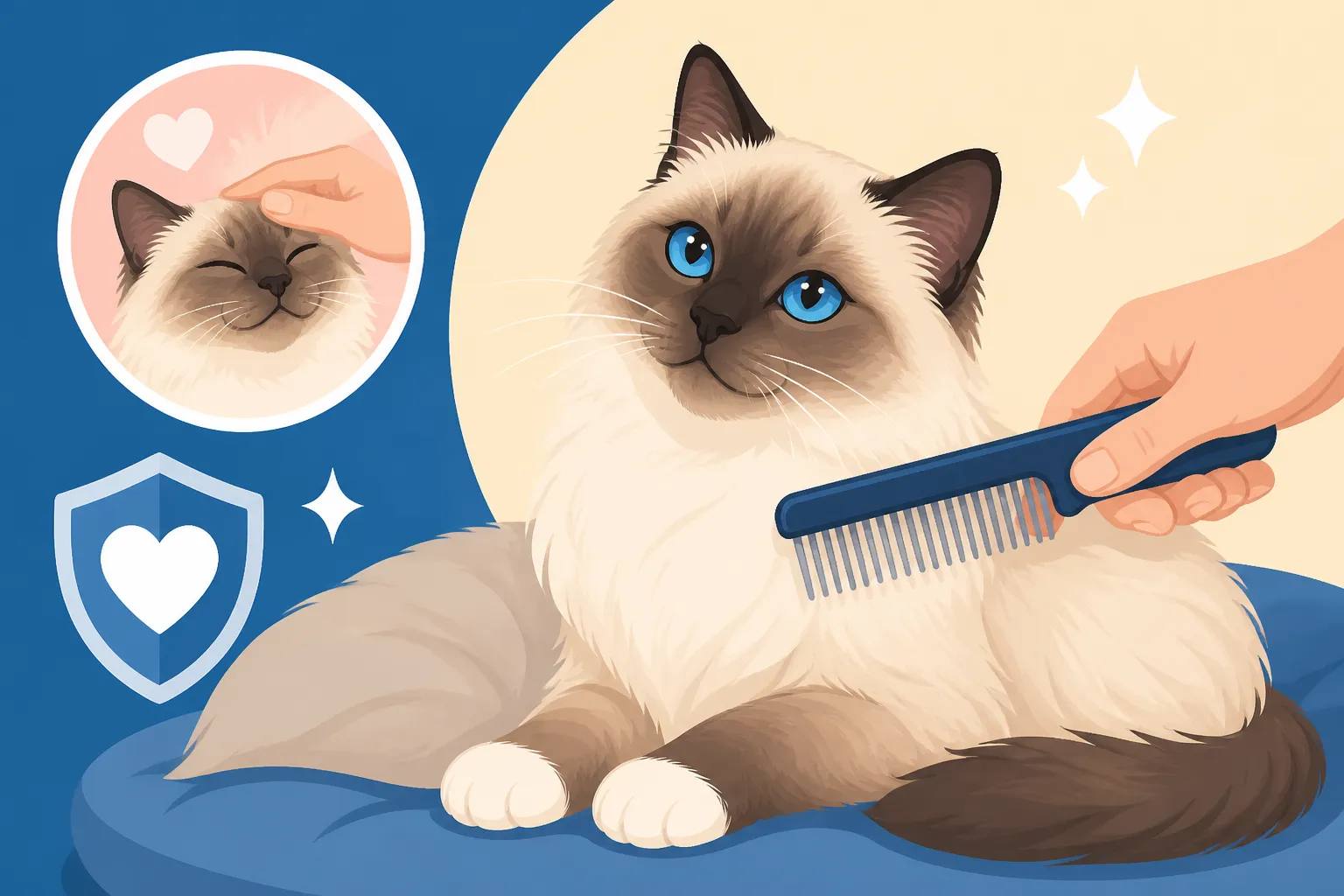
When you're outfitting your grooming kit, resist the urge to grab just any brush. Birmans need specific types of combs that won't damage their unique single coat. A metal comb, ideally with both fine and wide teeth, is usually the gold standard. The wider teeth are fantastic for initial passes, gently working through the outer layers and detecting any nascent tangles, especially on the ruff and tail plume. The finer teeth are then perfect for more detailed work on the body and for ensuring the coat is thoroughly smooth. You might find a wide variety of these combs readily available on Amazon, often with rounded tips to be gentle on the skin.
Avoid slicker brushes if possible, as their wire bristles can be too harsh for a Birman's delicate guard hairs, potentially causing breakage and discomfort. Similarly, de-shedding tools with sharp blades, while effective on some breeds, can strip the beautiful topcoat of a Birman. Instead, focus on tools that glide smoothly through the hair. Consider a good quality greyhound comb – these are typically all-metal with well-spaced teeth, perfect for a Birman's texture. For specific areas like the ruff, which has the longest fur, you'll need something that can get through without pulling, and Which Comb Gets Through a Birman's Ruff Without Pulling is a good topic to research.
Here's a quick overview of useful tools for your Birman:
| Tool Type | Best Use for Birman Coat | Avoid/Caution |
|---|---|---|
| Metal Comb | All-purpose, detangling, smoothing, checking for mats | Ensure rounded teeth, avoid sharp edges |
| Pin Brush | Gentle daily brush, good for distributing oils | Choose rubber-tipped pins, avoid wire brushes |
| Rubber Grooming Mitt | Loose hair removal, massage, good for sensitive cats | Not for detangling knots, primarily for surface |
| Dematting Comb | ONLY for existing, stubborn small mats, use with extreme care | Use sparingly, can pull hair, only for specific problems |
| Soft Bristle Brush | Finishing, adding shine, distributing natural oils | Not for detangling, primarily cosmetic |
Other Helpful Grooming Accessories
Beyond the main comb, a few other items can make your grooming sessions much smoother. A quiet grooming mitt, often made of rubber, can be wonderful for a quick run-over to pick up loose hairs and provide a gentle massage, which many Birmans adore. It's a great way to start a session before introducing the comb, building a positive association. You can also find these easily on Amazon, often with different textures.
Having a selection of tasty treats on hand is non-negotiable. These aren't just bribes; they're powerful positive reinforcement tools that teach your Birman that grooming means good things. Soft, small treats are ideal, as they can be given quickly without interrupting the flow of the session too much. A dedicated grooming area, perhaps a non-slip mat on a sturdy table, can also be beneficial, as it provides a consistent, elevated space that helps you reach all areas comfortably and safely. Why a Birman Behaves Better Combed on a Table is something many owners discover, as it creates a clear boundary for the activity.
Step-by-Step: Introducing the Comb and Building Positive Associations
The foundation of successful grooming lies in a patient, consistent, and positive introduction process. You're not just combing hair; you're building trust and creating a ritual your Birman can enjoy.
Starting Early and Making it a Positive Experience
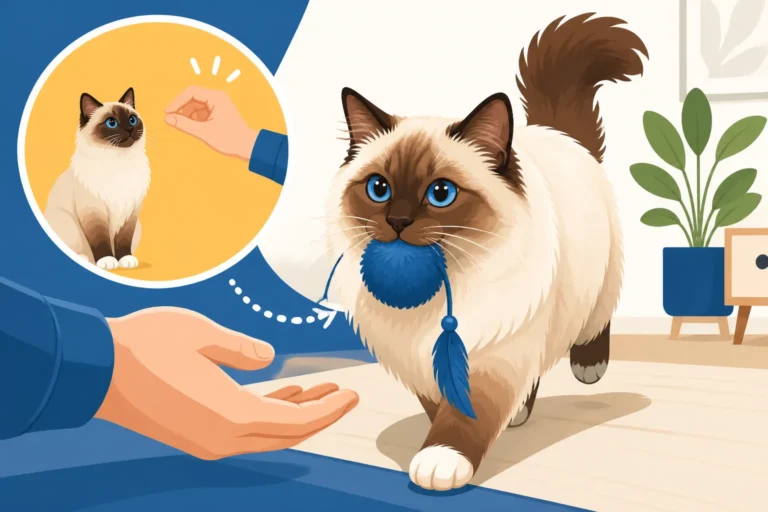
The absolute best time to introduce a comb to your Birman is when they are a kitten. Their minds are sponges, and positive early experiences will set them up for a lifetime of stress-free grooming. Even if they're not actively matting, gentle daily sessions will habituate them to the feel of the comb and your touch. Start by simply letting them sniff the comb. Place it on the floor, let them investigate, and offer a treat for curiosity. Then, gently touch their back or shoulder with the comb, following immediately with praise and a treat. Repeat this many times, gradually increasing the contact. This gentle approach is key, as How to Start Combing a Birman Kitten explains in more detail.
If you have an adult Birman who hasn't been routinely groomed, the process is similar but requires even more patience. They might have existing negative associations, so your goal is to overwrite those with positive ones. Always begin in a quiet, calm environment where your cat feels safe and relaxed. This isn't the time to chase them down or force them. Instead, wait until they are settled on your lap or next to you, perhaps during a petting session.
Gradual Introduction and Short, Sweet Sessions
Once your Birman is comfortable with the comb being near them, start with very short combing sessions – literally just a few strokes in an area they tolerate well, like their back or shoulders. Use a soft, wide-toothed comb for these initial passes. The moment you make a few strokes, stop, offer a treat, and lavish them with praise. The entire session might last only 30 seconds to a minute initially. The goal isn't to get the whole coat done; it's to end on a positive note before they show any signs of discomfort.
Over several days or weeks, gradually increase the duration and the areas you comb. Focus on areas where they are most relaxed first, like the back and sides. Save sensitive areas like the belly, legs, and tail for when they are more accustomed to the process. Consistency is more important than length. Regular, short sessions three times a week are far more effective than one long, infrequent battle. Remember, Combing a Birman Three Times a Week is generally enough to keep their coat in prime condition.
Handling Resistance and Trouble Spots
Inevitably, your Birman might show some resistance, especially when you encounter a particularly sensitive spot or a nascent tangle. The most important rule is: never force it. If your Birman starts to tense up, twitch their tail, flatten their ears, or try to walk away, stop immediately. Pushing past these signals will only reinforce negative associations. Instead, take a break, reassure them with gentle words, and try again later or the next day. Sometimes, simply changing your grip on the comb or using a different part of the comb (e.g., the wider teeth) can make a difference.
When you hit a stubborn spot or a potential mat, approach it with extreme care. Never yank or pull. Instead, use your fingers to gently try and tease apart the knot first. Then, using only the very tips of a wide-toothed metal comb, gently pick at the edges of the mat, working your way outwards. Hold the fur at the base with one hand to prevent pulling on the skin. For very tight mats, it's often better to stop and consult a professional groomer or your vet, as cutting them out yourself can be dangerous, and a Birman rarely needs a full clip unless severely matted. Knowing What to Do When a Birman Has Had Enough Combing is vital for maintaining trust. Always remember to reward heavily after successfully navigating a tricky spot. Your Birman will quickly learn What a Birman Will Work For During Grooming: praise, treats, and gentle handling.
Maintaining a Regular Grooming Routine for Lifelong Comfort
The goal isn't just to get your Birman used to the comb, but to integrate grooming seamlessly into their life, ensuring their comfort and well-being for years to come.
Establishing a Consistent Schedule
Once your Birman is comfortable, establishing a consistent grooming schedule is paramount. Three times a week for about ten to fifteen minutes per session is usually ample for a Birman, given their relatively low-maintenance coat. You can aim for specific days or times, or simply make it a part of your daily wind-down routine in the evening. The predictability of a routine can be very reassuring for cats, especially Birmans who appreciate a calm and ordered environment. If they know what to expect, they are much more likely to cooperate.
During these sessions, pay particular attention to areas where mats are more likely to form: behind the ears, under the "armpits" of the front legs, the ruff around the neck, and the britches (the long fur on the back of their hind legs). These areas experience more friction and can collect loose hair more easily. Regularly checking these spots can catch small tangles before they become major problems. Remember, consistency in How Many Minutes a Week a Birman's Coat Takes can prevent larger issues down the line.
When to Seek Professional Help (and why Birmans rarely need it)
For most Birmans, with a consistent and gentle home grooming routine, professional grooming appointments for clipping or extensive dematting are rarely necessary. Their single coat and easy-going temperament mean they typically don't develop the severe, pelting mats seen in some other longhair breeds. The occasional wash of their white gloves might be needed, but a full bath and blow-dry by a groomer are often overkill.
However, there are times when professional help is a wise choice. If you discover a mat that is too close to the skin, too large, or too painful for your Birman to tolerate you working on it, a professional groomer or veterinary technician can safely remove it. They have specialized tools and techniques that minimize stress and discomfort. Also, as Birmans age, they might become less flexible or develop arthritis, making it harder for them to groom themselves, especially around their hindquarters. In these cases, a professional might be needed for a tidy-up. This is part of What an Old Birman Needs Once Its Ruff Starts Matting, and a vet or groomer can help keep them comfortable. The good news is, by fostering a positive grooming relationship from a young age, you'll greatly reduce the likelihood of needing intensive professional intervention throughout your Birman's long and happy life. Why Early Grooming Habits Decide a Birman's Life really cannot be overstated.
Disclaimer
This article is for general informational purposes only and does not constitute professional advice. Laws, prices and regulations vary by location and change over time. Consult a qualified professional for guidance on your specific situation.