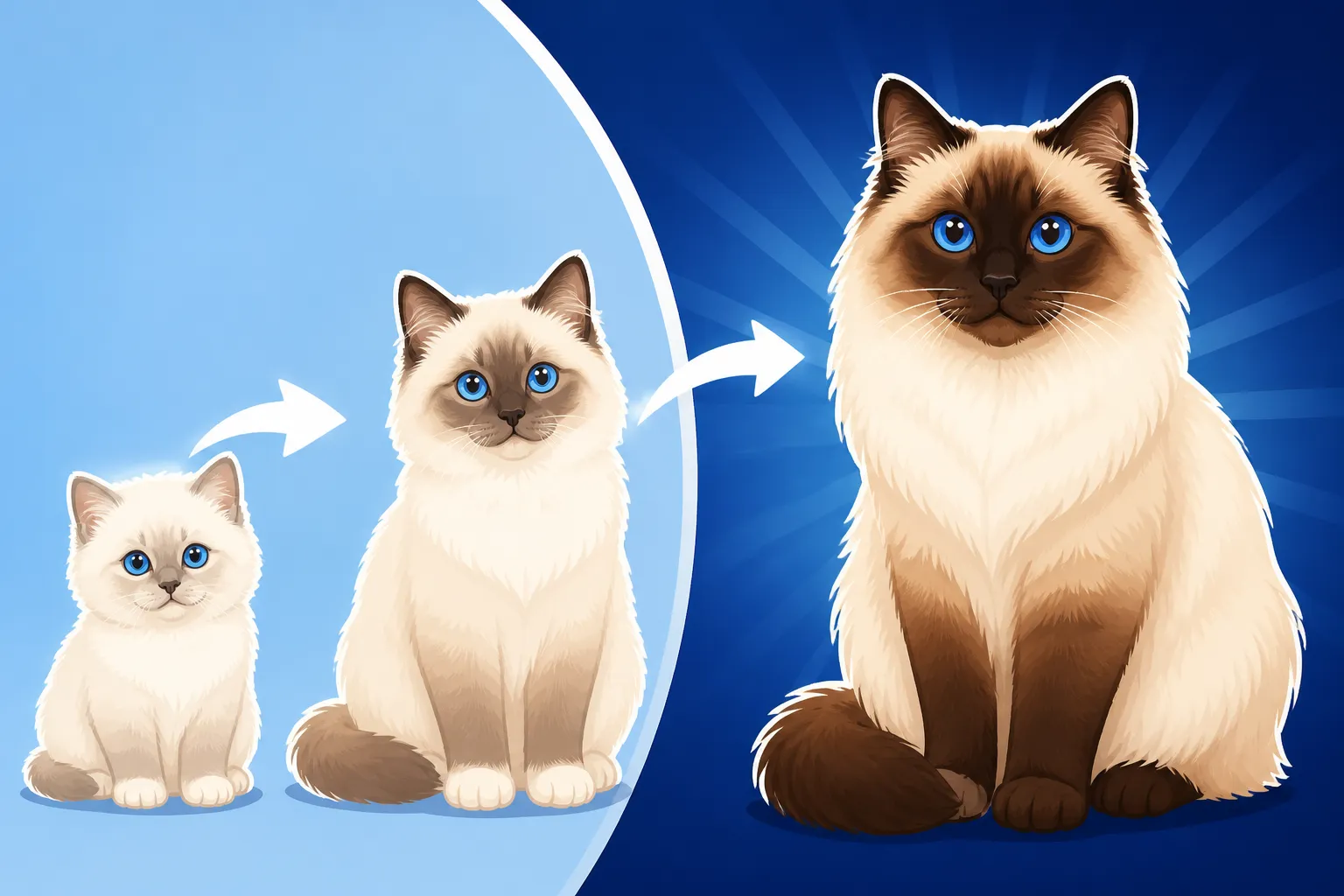
Why a Birman’s Points Darken as It Ages
You’ve probably noticed it happening right before your eyes, a gradual, subtle shift that can sometimes feel quite dramatic: your beautiful Birman’s points are getting darker. That soft, creamy kitten fluff gives way to a more pronounced, deeper coloration on their ears, mask, paws, and tail as they grow. This natural evolution often leaves us Birman parents wondering if it’s truly normal, if something in their environment is causing it, or if it’s a sign of their distinguished journey into older age. Rest assured, this guide will delve deep into the fascinating reasons behind this color transformation, from genetics to lifestyle, and help you understand and appreciate your Birman’s ever-changing beauty.
The Genetic Blueprint: Understanding Birman Point Color
The very essence of a Birman's captivating appearance, particularly its striking point coloration, is rooted deeply in its genetic makeup. It's not just a random occurrence; it's a carefully orchestrated biological process driven by a specific gene. Understanding this genetic blueprint helps us appreciate why your Birman started as a fluffy white marshmallow and gradually developed those rich, dark accents we adore.
The Temperature-Sensitive Enzyme
At the heart of a Birman’s point coloration lies a fascinating genetic trait: a temperature-sensitive enzyme called tyrosinase. This enzyme is crucial for the production of melanin, the pigment that gives fur its color. Here’s the clever part: this particular variant of tyrosinase only becomes active and produces pigment when the body temperature is cooler. Think of it like a tiny, internal thermostat for color. In the warmer core of your Birman’s body – its torso, belly, and back – the enzyme is mostly inactive, resulting in the creamy white or pale body fur. But at the extremities – the ears, nose, paws, and tail – where the body temperature is naturally a few degrees cooler, the enzyme kicks into gear, busily producing melanin, thus creating the characteristic darker points. It’s a beautifully intricate system that dictates the Birman’s signature look. This is also Why Every Birman Kitten Is Born Pure White; inside the warmth of their mother’s womb, their entire body is kept at a consistently warm temperature, preventing the tyrosinase enzyme from activating, so they emerge from birth looking uniformly pale.
The Pure White Birman Kitten Mystery
When a Birman kitten first enters the world, you might be surprised to find it's almost entirely white, or at best, a very pale cream. There's no hint of those rich seal, blue, chocolate, or lilac points yet! This isn't a genetic anomaly; it's a direct consequence of the temperature-sensitive tyrosinase enzyme we just discussed. During their time in the queen's womb, the kittens are kept at a constant, warm body temperature, preventing the enzyme from doing its work. Pigment production is effectively "turned off" across their entire tiny bodies. It's only once they are born and exposed to the cooler ambient air that their extremities begin to cool down, allowing the enzyme to activate. Over the first few weeks and months, you’ll slowly see those points emerge, like a photograph developing before your eyes. It’s truly one of the most charming aspects of Birman kittenhood, watching their true colors unfold.
The "Gloving" Gene's Interaction with Pointing
Beyond the point coloration itself, Birmans have another unique genetic feature: their white "gloves" on their front paws and "laces" on their back paws. These specific white markings are also genetically determined, though they operate a bit differently from the pointing gene. Every Birman carries two copies of the "gloving" gene, which prevents pigment from developing in these distinct areas, creating the illusion of delicate white mitts and stockings. What’s truly remarkable is how these two distinct genetic traits — the temperature-sensitive pointing gene and the gloving gene — interact to create the complete Birman picture. The gloving gene essentially overrides the pointing gene on the lower extremities of the paws, ensuring that even as the points darken with age and environmental factors, those pristine white gloves and laces remain, providing a beautiful contrast. It's why the standard calls for such precise white markings, as they are a hallmark of the breed's genetic uniqueness.
The Role of Temperature in Point Expression
It's not just the initial genetic switch that dictates your Birman's color; the environment, particularly temperature, plays a continuous and significant role throughout their life. What might seem like a subtle difference in room temperature can actually have a noticeable impact on how dark your Birman's points become.
The Science Behind Thermoregulation
Our feline friends, Birmans included, are masters of thermoregulation, constantly adjusting their body temperature to maintain a stable internal environment. This is where the temperature-sensitive tyrosinase enzyme comes back into play. When your Birman is in a cooler room, its body naturally works harder to maintain its core temperature. As a result, the extremities – the ears, nose, paws, and tail – tend to be slightly cooler for longer periods. This extended coolness gives the tyrosinase enzyme more time and opportunity to produce melanin, leading to darker, more intense point coloration. Conversely, a Birman living in a consistently very warm environment might have slightly lighter points simply because their extremities don't experience the same prolonged periods of coolness needed for maximum pigment production. It's a subtle but persistent effect, constantly at play.
Cold Climates and Darker Points
If you live in a region with colder winters, or perhaps your home tends to be kept on the cooler side, you might notice your Birman's points deepening more significantly. This isn't your imagination! A Birman residing in a cooler climate will inherently have their body's extremities exposed to lower temperatures for longer durations. This consistent exposure means the tyrosinase enzyme is almost always actively producing pigment in those areas. This is why How a Birman's Points Darken With Cold is such a noticeable phenomenon. It's not uncommon for Birmans to show a pronounced darkening of their points during the colder months, only for them to subtly lighten again (though never back to kitten white) during the warmer parts of the year if they spend more time in heated indoor spaces. It’s a fascinating, visible example of genetics interacting with the environment, and a key reason why your Birman’s coat can seem to have a seasonal variation in depth of color.
Internal Body Temperature and Point Depth
Beyond external ambient temperatures, internal factors can also play a role in how deep your Birman's point color becomes. Any condition that might slightly alter their internal body temperature, even subtly, could influence pigment production over time. For instance, a Birman that tends to be more active, and thus generates more body heat, might have slightly less pronounced darkening compared to a more sedentary cat. Similarly, certain medical conditions, though rare, could theoretically impact overall body temperature regulation and, consequently, point color. However, these internal factors are generally less impactful than prolonged external temperature exposure. The key takeaway is that the colder the body part, the more active the color-producing enzyme. This is a continuous process throughout their life, contributing to the gradual darkening.
The Gradual Darkening: Why Age Matters
Beyond the initial development of points and the influence of ambient temperature, one of the most significant factors in a Birman’s point coloration is simply age. Your Birman's coat is a living, evolving canvas, and just like us, they experience changes as they mature. The deepening of their points is a beautiful, natural part of their journey through life.
Cellular Changes Over Time
As your Birman ages, the cells responsible for producing melanin continue their work, but their efficiency and output can change. Over years, there's a cumulative effect where more pigment is laid down in the hair shafts in those cooler extremity areas. It's not a sudden switch, but a slow and steady accumulation. Think of it like a beautiful piece of antique furniture acquiring a deeper, richer patina over decades. The individual hairs themselves, as they grow and are replaced, will gradually incorporate more pigment, leading to an overall darker appearance of the points. This is why you’ll notice that How Many Years a Birman's Points Take to Finish Darkening is not a quick process; it can continue for several years as they mature into adulthood and beyond. This cellular activity, combined with environmental factors, paints the picture of their aging coat.
Hormonal Shifts and Pigment Production
Just like in humans, a cat’s hormonal balance can fluctuate throughout their life, particularly as they transition from kittenhood to adolescence and then into their senior years. While the primary driver of point color is the temperature-sensitive enzyme, these hormonal shifts can sometimes play a subtle supporting role in the overall health and vigor of hair growth and pigment production. For instance, spaying or neutering can sometimes lead to slight changes in coat texture or depth of color in some breeds, though this effect is generally minor in Birmans compared to the genetic and environmental influences. The crucial thing to remember is that a healthy hormonal system supports a healthy coat, and a healthy coat will display its genetically determined color more vibrantly.
The Lifelong Process of Color Development
The darkening of a Birman's points is truly a lifelong process, not something that stops once they reach a year or two old. While the most dramatic changes happen in the first couple of years, particularly as the kitten coat gives way to the adult coat, the points will continue to subtly deepen throughout their entire lifespan. It's a continuous, dynamic interaction between their genetics, their environment, and their physiological changes as they age. This is often why Why a Birman's Point Color Deepens With Age is such a consistent observation among owners. You might find that an older Birman, especially past ten years old, has points that are significantly darker and richer than when they were a young adult. It’s a beautiful testament to their journey and a unique characteristic that makes each Birman's coloration truly their own. Don’t be surprised if your fifteen-year-old Birman’s seal points are almost black, or their blue points a deep, smoky grey.
Environmental Factors That Influence Point Color
While genetics lay the foundation and age provides the canvas for your Birman's evolving point color, various environmental factors can also play a role in how quickly and intensely those points deepen. As responsible Birman guardians, understanding these influences can help us appreciate their unique coloration even more.
Exposure to Sunlight and UV Rays
Sunlight, specifically UV rays, can have an impact on hair pigment, and Birmans are no exception. While direct, intense sun exposure is generally not recommended for any cat (especially those with pale fur, due to skin cancer risks), regular, moderate exposure can subtly influence point coloration. Melanin, the pigment in their fur, can respond to sunlight, sometimes leading to a slight lightening or reddening effect in some cat coats, but for Birmans, prolonged exposure to general warmth (from sunbathing) could theoretically slow down the darkening process slightly, or conversely, the UV itself might affect the pigment over time. However, the more significant effect of sunlight often comes back to temperature: a cat routinely basking in warm sunlight will likely have warmer extremities, which, as we know, can inhibit the tyrosinase enzyme's activity. The key is balance and avoiding extremes for their overall health and skin.
Indoor vs. Outdoor Lifestyles
The distinction between an indoor-only Birman and one that spends time outdoors can contribute to differences in point coloration. An indoor Birman, typically living in a more temperature-controlled environment, might experience more consistent and predictable darkening. Their body temperatures fluctuate less drastically, leading to a steady accumulation of pigment in their points over time. This is often Why an Indoor Birman Reaches Sixteen More Often – a controlled environment contributes to overall health stability, which in turn can influence steady coat development.
Conversely, a Birman that spends a lot of time outdoors, particularly in varying climates, might exhibit more pronounced or rapid darkening of their points. They are exposed to cooler ambient temperatures more frequently and for longer durations, which, as discussed, actively promotes melanin production in their extremities. Imagine a Birman spending its days exploring a chilly garden in autumn; those cool paws and ears will be working overtime to produce pigment. While a Birman's gentle nature often makes them ideal indoor companions, if yours does enjoy supervised outdoor time or lives in a cooler home, these temperature variations will be a significant driver of their point deepening.
Humidity and Air Quality
It might seem a bit far-fetched, but even factors like humidity and air quality can subtly influence your Birman's coat health and, by extension, how its colors manifest. While not directly dictating pigment production like temperature, extreme dryness or poor air quality can affect the overall condition of the fur, making it brittle or dull. A healthy, well-nourished coat, maintained in a balanced environment, will naturally display its true color potential. If a coat is unhealthy or prone to breakage, the pigment might appear less vibrant. Ensuring a comfortable, stable indoor environment with good air circulation can support your Birman’s overall health, including the lustrous quality of their evolving point colors.
Grooming and Lifestyle: Minimizing Darkening or Embracing It
While you can't fundamentally change the genetic predisposition of your Birman's points to darken with age, your grooming routine and overall lifestyle choices can play a role in managing coat health and how the color presents. Ultimately, the deepening of points is a natural part of being a Birman, and often, it's a feature to be embraced and celebrated.
Regular Grooming and Shedding Cycles
Regular grooming is crucial for maintaining the health and appearance of your Birman’s coat, regardless of its color. Birmans have a silky, single coat with no undercoat, which means they are less prone to matting than some other long-haired breeds. However, regular combing, ideally three times a week, helps to remove loose hairs and distribute natural oils, keeping the coat lustrous and healthy. When old hairs are shed and new ones grow in, the new hairs will reflect the current stage of pigment production. So, a healthy shedding cycle, encouraged by regular grooming, ensures that your Birman's coat is always presenting its best, most vibrant (and age-appropriate) color. It allows the new, often darker, hairs to come through cleanly. You'll find that Why a Birman's Single Coat Never Developed a Woolly Layer makes them relatively easy to groom.
Keeping the Coat Clean and Healthy
A clean, healthy coat is paramount for any cat, but especially for Birmans with their beautiful, flowing fur and white gloves. Dirt, debris, or residual products can dull the coat's appearance and, in some cases, even stain lighter areas. For instance, the white gloves can easily pick up stains from litter or even certain types of food. While cleaning won't stop the natural darkening of the points, it will ensure that the colors present themselves clearly and vibrantly, without being obscured by grime. Use gentle, cat-safe shampoos if a bath is needed – which for a Birman, due to their less-matting coat, is quite rare beyond spot cleaning. Maintaining a pristine coat ensures that when those points deepen, they do so with clarity and luster, rather than appearing dingy. Investing in a good quality comb from a place like Chewy or Amazon can make a huge difference in keeping their coat in top condition.
Accepting Natural Color Progression
Ultimately, the darkening of your Birman’s points is a natural, inevitable part of their life journey. It's a hallmark of the breed, a beautiful testament to their genetics and the passage of time. Trying to "prevent" it is akin to trying to stop the sunrise – it simply won't happen, and honestly, why would you want to? Instead, embrace this transformation. Many Birman owners find the richer, deeper points of an older cat to be incredibly striking and full of character. It adds a distinguished look to their already regal appearance. Celebrate the evolving beauty of your Birman, recognizing that each stage of their life brings its own unique charm and depth to their stunning coat. It’s part of the beautiful story they are living with you.
Nutritional Considerations for Coat Health
While diet won't reverse or stop the natural darkening of your Birman's points, it absolutely plays a pivotal role in maintaining the overall health, shine, and vibrancy of their coat. A well-nourished Birman will have a healthier coat, which in turn will present its colors—including the deepening points—in their best light.
Essential Nutrients for Pigment
For any cat, a balanced diet rich in essential nutrients is critical for healthy skin and fur. Specifically, certain vitamins, minerals, and amino acids are precursors to melanin production and overall coat quality. Look for high-quality animal protein sources, as these provide the necessary amino acids for hair growth and pigment. Omega-3 and omega-6 fatty acids, often found in fish oils or flaxseed, are vital for maintaining skin barrier function and giving the coat its characteristic shine and silkiness. A dull, brittle coat can make point colors appear less vibrant, so ensuring a diet with optimal levels of these nutrients is beneficial. Always choose a reputable cat food brand that lists these ingredients prominently, and consider consulting your vet about supplements if you have concerns about coat quality. Many premium and tailored cat foods focus on these essential coat-health nutrients.
Hydration and Skin Barrier Function
Water is often overlooked as a crucial nutrient, but for coat health, it's incredibly important. Proper hydration helps maintain the skin's barrier function, which is the first line of defense against environmental irritants and helps keep the hair follicles healthy. Cats, especially those eating mostly dry kibble, can sometimes struggle with adequate water intake. This is why many Birman owners opt for a diet that includes wet food or invest in a cat water fountain. Good hydration ensures that the skin beneath the beautiful fur is supple and healthy, contributing to the growth of strong, pigmented hair shafts. If your Birman is chronically dehydrated, their coat might appear duller or less robust, which could subtly impact how their point colors are perceived. Remember that Which Wet Food Suits a Birman's Kidney History is a relevant consideration for long-term health, directly impacting hydration.
Specialized Diets for Older Cats
As your Birman enters its senior years, their nutritional needs may change. Older cats can sometimes have difficulty absorbing nutrients as efficiently, or they might develop specific health conditions that require dietary adjustments. A diet tailored for senior cats often includes higher quality protein, easily digestible ingredients, and sometimes supplements for joint health or kidney support. Since we know that Caring for an Old Birman That Cannot Reach Its Back can become a challenge, a healthy coat also makes grooming easier for them and you. A healthy older Birman with a shining coat will naturally display its deepened points with more elegance than one whose nutrition has declined. Always discuss your senior Birman’s diet with your veterinarian, especially if you notice any changes in coat quality, weight, or appetite. They can recommend a diet that best supports their aging body and keeps their glorious coat looking its best, points and all.
When Darkening Might Indicate a Health Issue
While the gradual darkening of a Birman's points is almost always a normal and expected part of their aging process, there are very rare instances where a sudden or uneven change might warrant a closer look. It's important to differentiate between natural progression and potential signs of an underlying health concern.
Sudden or Uneven Darkening
If your Birman's points seem to darken very suddenly, or if the darkening appears unevenly – perhaps one leg is much darker than the other, or patches of the body suddenly darken without explanation – this could be a cause for concern. Natural darkening is typically a slow, symmetrical process across all points. A rapid or patchy change might indicate a localized issue such as skin irritation, inflammation, or even a hormonal imbalance that needs veterinary attention. For example, some skin infections or allergic reactions can lead to hyperpigmentation in affected areas, causing them to appear darker. Always observe your Birman carefully for other symptoms accompanying such a change, such as itching, hair loss, redness, or behavioral shifts. Why a Quiet Birman Is Easy to Misread means you need to be observant of subtle changes.
Underlying Medical Conditions
Though rare, certain underlying medical conditions could theoretically influence coat color changes in unusual ways. For instance, some metabolic disorders or issues affecting the thyroid or adrenal glands can sometimes manifest with dermatological signs, including changes in coat quality or pigmentation. However, it's crucial to understand that these conditions would almost certainly present with a host of other, more pronounced symptoms long before any noticeable, problematic change in point color. Issues like lethargy, changes in appetite or thirst, vomiting, diarrhea, or unusual weight fluctuations would be much clearer indicators of illness than an atypical darkening of points. Therefore, while unlikely to be the first or only symptom, unusual coat changes should always be mentioned during a routine vet check-up.
The Vet's Role in Diagnosing Changes
If you're ever concerned about a change in your Birman's point coloration, the best course of action is always to consult your veterinarian. They can conduct a thorough physical examination, ask about your Birman's history, diet, and lifestyle, and perform any necessary diagnostic tests to rule out underlying health issues. They can also provide reassurance that what you’re observing is simply normal aging. During these visits, the vet will likely check for other symptoms that might accompany illness, ensuring a holistic assessment. It's always better to be safe than sorry, and your vet is the best resource for interpreting any health-related changes in your beloved Birman. Regular check-ups are key, especially as your Birman ages, to catch any potential issues early.
Embracing the Birman's Evolving Beauty
The journey of watching your Birman's points deepen with age is one of the many unique joys of sharing your life with this magnificent breed. It's a testament to their longevity and the natural beauty of their genetic heritage. Rather than seeing it as a loss of their kitten-white charm, consider it an evolution, a deepening of their inherent elegance.
Celebrating the Unique Patina
Just as a fine wine improves with age, or a cherished leather develops a unique patina, your Birman’s coat gains character and depth over the years. That rich, almost smoky quality that emerges in their points as they mature is something truly special. Each Birman will darken slightly differently, depending on their individual genetics and their specific environment. This means your older Birman’s coat will be uniquely theirs, a living record of their life and the passage of time. Why an Old Birman's Points Look Almost Black is a stunning example of this, transforming them into a strikingly regal senior cat. Take the time to appreciate these subtle nuances and the way the deeper points highlight their serene blue eyes and classic Birman profile. It’s part of what makes them so captivating.
The Charm of an Older Birman
An older Birman, with their deepened points and serene demeanor, possesses a profound charm that is hard to match. They often become even more affectionate, more settled, and more deeply bonded with their human companions. Their wisdom seems to radiate from their calm eyes, framed by those beautifully matured points. While they may slow down a little, perhaps not jumping quite as high as they once did – What an Old Birman Slows Down From First is often the spring in their step – their presence in the home becomes a comforting constant. The darkening of their coat is simply another beautiful aspect of this transformation, a visible sign of the many happy years you've shared together. It adds to their distinguished appearance, making them truly venerable members of your family.
Documenting Your Birman's Color Journey
Why not make a delightful project out of documenting your Birman’s color journey? Take regular photos, perhaps once a year around their birthday, in similar lighting conditions. Create a little album or a digital timeline. You’ll be amazed at the progression, from that tiny, pale kitten to the magnificent, deeply pointed adult. It’s a wonderful way to appreciate the subtle changes and celebrate the unique evolution of your beloved companion. Sharing these photos with fellow Birman enthusiasts can also be a joy, as you compare notes on how each cat’s points have developed. This isn’t just about the fur; it’s about cherishing every stage of your Birman’s life and recognizing the beauty in every step of their journey.
| Factor | Impact on Point Darkening | Explanation |
|---|---|---|
| Age | Significant & Gradual Increase | Cumulative effect of pigment production over years; points deepen steadily throughout life, especially in first few years and again in old age. |
| Ambient Cold | Moderate to Significant Increase | Cooler body extremities activate the temperature-sensitive enzyme (tyrosinase), leading to more melanin production. More prevalent in colder climates or cooler homes. |
| Ambient Warmth | Minimal to Slight Decrease | Warmer body extremities inhibit tyrosinase activity, potentially resulting in slightly lighter points or slower darkening. Less pigment produced. |
| Genetics | Primary Determinant | The core genetic trait that makes a Birman a pointed cat; dictates the potential for darkening based on temperature, but not the speed or intensity. |
| Diet | Indirect (Coat Health) | Proper nutrition with essential fatty acids and proteins supports overall coat health and vibrancy. A healthy coat displays color better, but diet doesn't directly darken or lighten points. |
| Health | Minimal (Unless Severe Issue) | Generally no direct impact unless a severe underlying metabolic or hormonal issue exists, which would present with other symptoms. Suddden, uneven changes warrant vet attention. |
| Sunlight | Minimal & Complex | Can affect pigment over time, but primarily influences by affecting skin temperature. Excessive sun exposure should be avoided for general health. |
Disclaimer
This article is for general informational purposes only and does not constitute professional advice. Laws, prices and regulations vary by location and change over time. Consult a qualified professional for guidance on your specific situation.