Which Comb Gets Through a Birman’s Ruff Without Pulling
Oh, the majestic Birman ruff! It's one of those features that just screams elegance, isn't it? That beautiful, flowing mane around their neck is utterly captivating, drawing everyone in for a closer look and a gentle stroke. But let's be honest, for us Birman parents, that gorgeous ruff can also be a source of a little grooming anxiety. You want to keep it looking pristine, tangle-free, and gloriously fluffy, but the thought of tugging, pulling, or worse, accidentally hurting your gentle companion, can make you hesitate. Finding a comb that glides through that silky, yet sometimes dense, fur without causing discomfort or damage feels like searching for a unicorn. This guide is all about demystifying the art of combing your Birman's ruff, helping you choose the right tools, and making grooming a peaceful bonding experience rather than a dreaded chore for both of you.
Understanding Your Birman's Unique Coat
Before we dive into the nitty-gritty of combs, let's take a moment to truly appreciate what makes your Birman's coat so special. It's not just "long hair"; it's a specific type of long hair that behaves differently from many other breeds. Knowing these nuances is key to understanding why certain tools work wonders and others are an absolute no-go.
The Birman's Single, Silky Layer
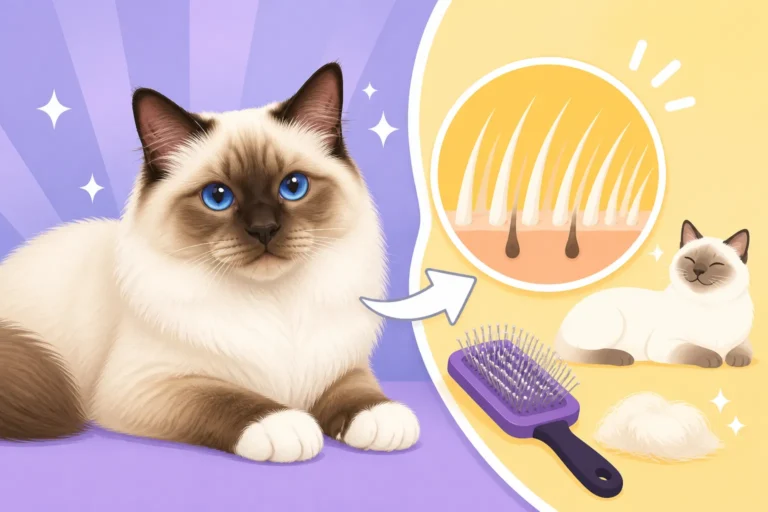
Unlike many other long-haired breeds, Birmans don't have a dense, woolly undercoat. This is a huge, huge plus for us! If you've ever battled the mats of a Persian or a Maine Coon, you know the struggle of that thick, shedding underlayer. Your Birman, however, boasts a single, silky, flowing coat that tends to lie smoothly. It's often described as feeling like spun silk or cashmere. This lack of an undercoat is why your Birman generally mats far less than it looks like it should, which is a blessing in disguise! No Undercoat Is What Makes a Birman Easy to Groom This unique texture means you're dealing with guard hairs that are fine and delicate, yet long and luxurious. It's a coat designed for elegance, but still demands regular, gentle attention to prevent the few tangles it can get from becoming problems.
The Magnificence (and Challenge) of the Ruff
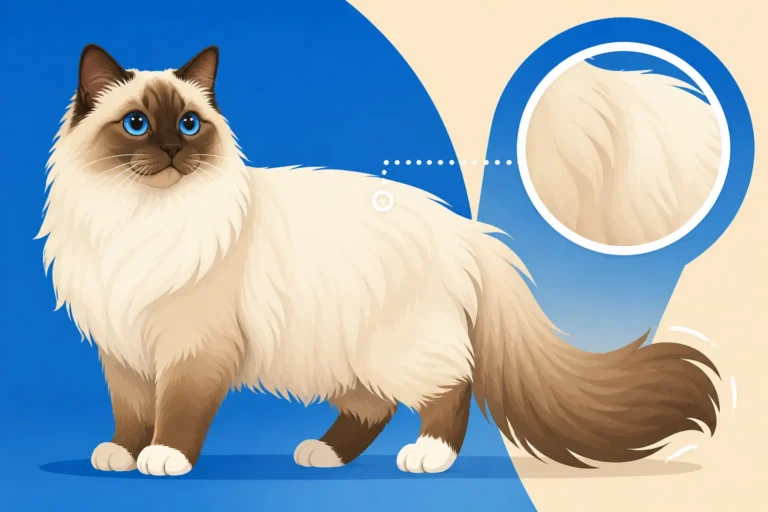
Now, let's talk about the ruff. That glorious collar of fur around your Birman's neck and chest is often the longest and densest part of their coat. It frames their beautiful face and contributes significantly to their dignified appearance. But because of its length and location, it’s also the area most prone to minor tangles and, occasionally, mats. Think about it: every time your Birman grooms themselves, rubs against furniture, or cuddles into your lap, that ruff is getting some action. This constant movement, combined with its density, means it’s a hotspot for hair to intertwine. Why a Birman Mats Far Less Than It Looks Like It Should You might notice small knots forming behind their ears, under their chin, or in the areas where their collar would sit if they wore one. It's these particular spots that require the most thoughtful approach when choosing a comb.
Why the Wrong Comb Can Be a Nightmare
We've all been there – grabbing "a comb" and hoping for the best. But with a Birman's delicate coat, using the wrong tool isn't just inefficient; it can actually cause pain for your cat and damage their beautiful fur, turning grooming into a battle of wills.
The Pain of Pulling and Snagging
Imagine someone yanking on your hair when it's knotted. That's precisely what your Birman experiences when a comb snags on a tangle or pulls at their delicate skin. Birmans are known for their placid and patient nature, which can sometimes be a double-edged sword. They might not vocalize their discomfort immediately, but repeated painful grooming sessions can make them wary and even fearful of the comb. Why a Quiet Birman Is Easy to Misread A cat that flinches, tenses up, or tries to escape every time the comb comes out is telling you, loud and clear, that something isn't right. It’s not just about getting the knots out; it’s about preserving that trust and making grooming a positive experience. Rough combing can lead to skin irritation, microscopic tears in the skin, and an unhappy kitty who associates you and the grooming tools with pain.
Damage to the Delicate Guard Hairs
A Birman’s single coat is made up of those lovely, long guard hairs. These are what give their coat its incredible shine and silky texture. Aggressive combing, especially with tools designed for much thicker, coarser fur, can actually break these hairs. You might not see it happening in the moment, but over time, repeated breakage leads to a duller coat, more flyaways, and even a frizzier appearance. It can compromise the overall health and integrity of their fur. Furthermore, damaging the guard hairs can weaken the coat, potentially making it more susceptible to tangles in the long run, creating a vicious cycle. We want to preserve that beautiful luster, not strip it away with inappropriate tools.
The Best Combs for a Birman's Ruff (and Body)
Now that we understand the unique qualities of a Birman's coat and the pitfalls of using the wrong tools, let's talk about the heroes of the grooming kit: the right combs that will glide through that ruff like a dream.
The Essential Wide-Toothed Comb
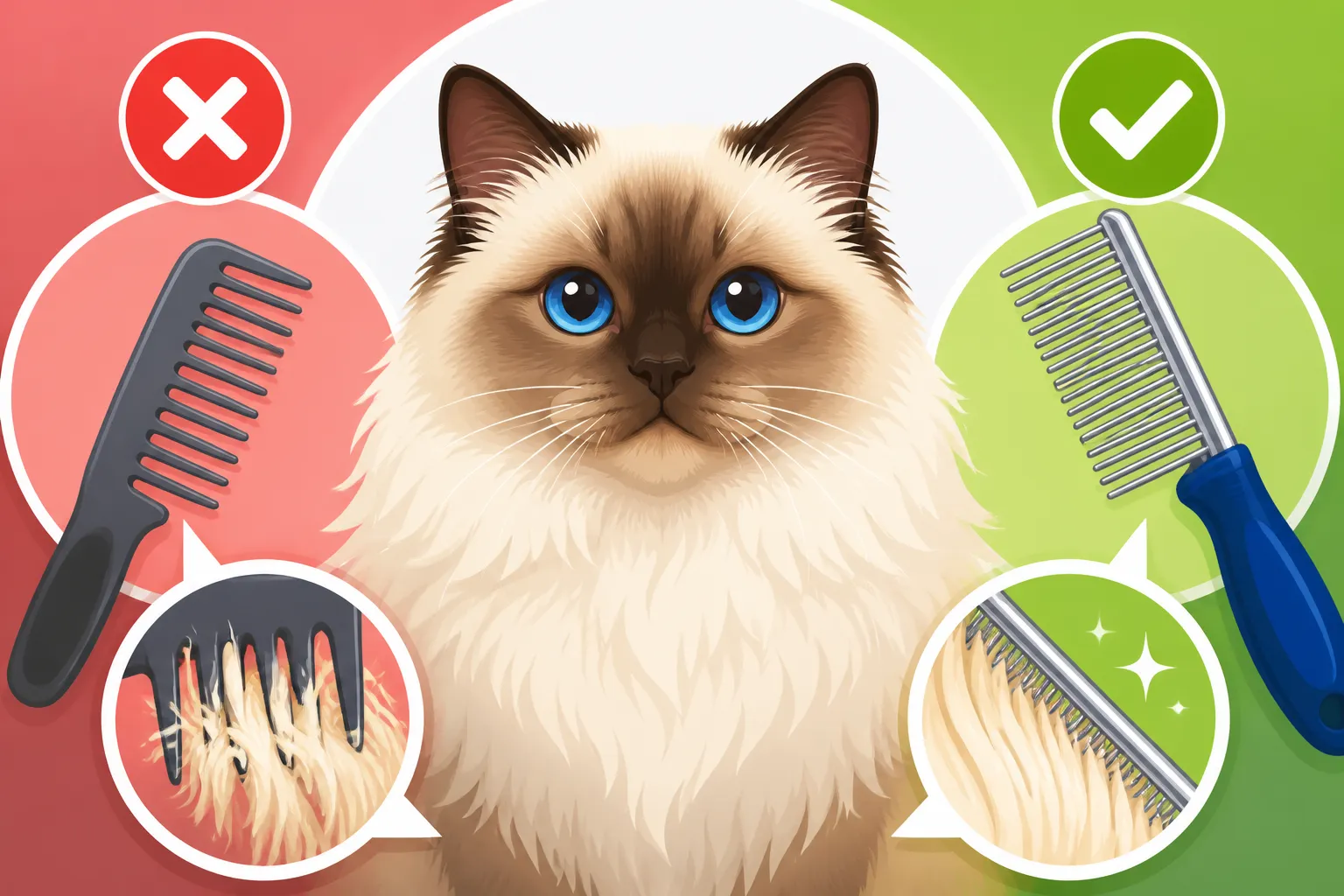
For any Birman owner, a good quality wide-toothed comb is your absolute starting point, especially for that majestic ruff. Imagine untangling your own long hair; you wouldn't start with a fine-toothed comb, right? The same principle applies here. The wider spacing between the teeth allows the comb to gently separate the longer strands of hair without catching on minor snags and pulling.
When choosing one, look for a sturdy metal comb with smooth, polished teeth. Plastic combs can sometimes create static electricity, which isn't fun for your Birman, and their teeth can have tiny seams or rough edges that can snag hair. A metal comb, often made from stainless steel, will last longer, be easier to clean, and glide through the coat more effectively. Which Tooth Spacing Suits a Birman's Fine Coat You'll want to use this comb first on the ruff and any other longer areas like the britches or tail plume. Start at the very ends of the hair, gently working your way up towards the skin, always moving slowly and deliberately. This initial pass helps to loosen any surface tangles and prepare the coat for a finer comb. Think of it as the first step in a gentle detangling process, crucial for both comfort and efficiency. You can find excellent options on online retailers like Amazon or Chewy, often with ergonomic handles that make the process more comfortable for you too.
The Versatility of a Combination Comb
Once you've done the initial sweep with your wide-toothed comb, a combination comb becomes your next best friend. These ingenious tools feature both wide-spaced teeth on one half and finer-spaced teeth on the other. This allows you to smoothly transition from general detangling to a more thorough combing, all with one tool.
You'd typically start with the wider-toothed side, just as described above, to navigate the bulk of the ruff and other long areas. Once those sections feel clear and snag-free, you can flip the comb to the finer-toothed side. This finer side is perfect for getting a really deep, thorough comb through the ruff, ensuring no small tangles are left behind close to the skin. It’s also excellent for shorter areas of the body, or for checking for fleas if your Birman ventures outdoors (though an indoor Birman is usually best to protect their white gloves!). The key is to never force the finer teeth through a tangle; if it snags, go back to the wide-toothed side or even your fingers to gently work out the knot. This comb helps you achieve that complete, silken feel without constantly switching tools.
Considering a Metal Greyhound Comb
For the true connoisseur of cat grooming, or for Birmans with particularly luxuriant ruffs, a dedicated metal greyhound comb is an investment worth considering. These combs are usually quite long, often 7-10 inches, and feature precisely spaced, tapered teeth. They are typically made from high-quality, polished steel, which offers minimal static and maximum glide. The weight and balance of a good greyhound comb feel substantial in your hand, giving you better control.
The "greyhound" name comes from the dog breed, but these combs are fantastic for cats with long, silky coats. Look for one with rounded tips on the teeth to prevent scratching your Birman's skin. They come in various tooth configurations, but one with evenly spaced medium-width teeth is ideal for the Birman's ruff, offering a perfect balance between detangling and thorough grooming. Some models might even have a slight taper to the teeth, which helps them penetrate the dense ruff without pulling. A high-quality metal greyhound comb can make short work of even the most formidable ruff, leaving it looking immaculately smooth and fluffy. Many professional groomers swear by these combs for breeds like the Birman due to their superior performance and durability. You can find these from specialist pet supply stores or through reputable online vendors.
Here's a quick comparison of the best comb types for your Birman's coat:
| Comb Type | Best For | Pros | Cons |
|---|---|---|---|
| Wide-Toothed Metal Comb | Initial detangling, thick ruff sections | Prevents pulling, gentle on tangles, good for starting | May miss very fine tangles, not ideal for close-to-skin grooming |
| Combination Metal Comb | Versatile, full body, medium ruff density | Two tools in one, efficient transition, good for general grooming | Finer side can snag if not pre-detangled with wider teeth |
| Metal Greyhound Comb | Thorough ruff grooming, dense fur, show prep | Superior glide, durable, excellent for deep combing and finish | Can be pricier, requires gentle technique, less compact |
Tools to Avoid for Your Birman's Coat
Just as important as knowing what to use is knowing what not to use. Certain grooming tools, while useful for other breeds, can be detrimental to your Birman's unique coat, causing damage and discomfort.
The Pitfalls of a Slicker Brush
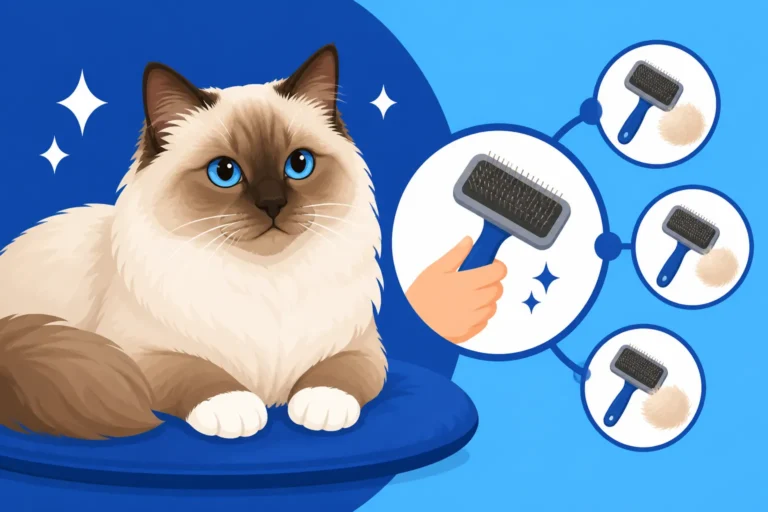
Slicker brushes are those brushes with a flat or curved head covered in fine, short, stiff wires, usually angled. They are fantastic for breeds with dense undercoats, like many double-coated dogs or even some woolly-coated cats, as they effectively grab and remove loose undercoat and can help prevent matting. However, for a Birman, a slicker brush is generally a poor choice.
Remember that single, silky coat? Those stiff wire bristles can be too harsh for a Birman's delicate guard hairs. Instead of gently detangling, a slicker brush can pull, break, and even tear the individual hairs, leading to damage, frizz, and an unhappy cat. Why a Slicker Tears a Birman's Silky Guard Hairs It doesn't have an undercoat to "slicker" out, so all it really does is potentially irritate the skin and damage those beautiful outer hairs. While a very soft slicker might be used very, very gently for a quick fluff, it's typically best to stick to combs that are designed to glide through individual strands rather than rake through layers. If you're looking for a finishing touch or something to add air to the coat, a soft bristle brush or a simple comb is a much safer bet.
Dematting Rakes and Blades (Use with Extreme Caution)
Dematting rakes, often with sharp, inward-curving blades, or tools specifically designed to "cut" through mats, can seem like a quick fix when you encounter a particularly stubborn tangle. And for some breeds with extremely thick, matted coats, they can be a necessary evil when used by a professional. However, for a Birman, these tools should be approached with extreme caution, if at all.
Your Birman's coat, while long, isn't typically prone to the dense, felt-like matting that requires such aggressive intervention. Using a dematting rake can easily cut into healthy fur, thin out the coat unnecessarily, or worse, cut the delicate skin, especially around sensitive areas like the armpits or behind the ears where mats sometimes form. If you encounter a mat that cannot be gently worked out with a wide-toothed comb and your fingers, your first instinct should not be to grab a dematting blade. Instead, try applying a small amount of cornstarch or cat-safe detangling spray, and patiently work at the edges of the mat with your fingers, then a wide-toothed comb. If the mat is still intractable, or if it's tight against the skin, it's always safer to consult a professional groomer or your vet, who can safely shave out the mat without injuring your cat. How to Get a Mat Out of a Birman's Coat Preserve that precious coat and skin!
Mastering the Art of Combing the Ruff
Combing your Birman's ruff isn't just about the tools; it's about the technique and making the experience enjoyable for both of you. A happy cat is a cooperative cat, and a well-groomed ruff is a point of pride!
Preparing Your Birman for a Grooming Session
A successful grooming session starts long before the comb even touches your Birman. Your cat’s mood and comfort level are paramount.
- Start Young: If you have a Birman kitten, introduce the comb early and often. Even short, positive sessions (think 30 seconds to a minute) where you gently comb a small area and then offer a treat and praise can build a lifetime of positive association. How to Start Combing a Birman Kitten
- Choose the Right Time: Avoid grooming when your Birman is overstimulated, sleepy, or otherwise agitated. A calm, quiet moment when they are relaxed, perhaps after a nap or a gentle play session, is ideal.
- Create a Calm Space: Find a quiet spot away from household hustle and bustle. Some Birmans prefer being combed on a raised surface, like a table, which can give you better control and a clearer view of the ruff. Make sure the surface is non-slip to help them feel secure.
- Positive Reinforcement: Keep tasty treats on hand! Offer them throughout the session, especially after successfully combing a sensitive area. Use a soothing voice, lots of praise, and gentle strokes. The goal is for your Birman to associate grooming with pleasant sensations and rewards. Why Praise Motivates a Birman More Than Food
- Gather Your Tools: Have everything you need within reach: your wide-toothed comb, combination comb, treats, and perhaps a cat-safe detangling spray if you anticipate any tricky spots.
Step-by-Step Ruff Combing Technique
Once you and your Birman are ready, here's how to tackle that beautiful ruff with grace and precision:
- Section the Ruff: Don't try to comb the entire ruff in one go. Instead, gently part the hair with your fingers to expose small sections. Start at the bottom, closest to the shoulder, and work your way upwards towards the head.
- Start from the Ends: This is perhaps the most crucial rule for long-haired cats. Begin combing at the very tips of the hair, gently working any tangles out there first. Once the ends are smooth, move a little further up the hair shaft, and repeat. Continue this process, inch by inch, until you can comb smoothly from the root to the tip. This prevents you from pushing tangles further down the hair shaft and creating bigger, tighter knots.
- Support the Skin: As you comb, especially through any denser areas or minor tangles, place your free hand on the skin at the base of the hair you are combing. This "anchors" the skin and helps prevent the comb from pulling directly on their delicate skin, minimizing discomfort.
- Gentle, Short Strokes: Use short, gentle strokes, following the direction of the hair growth. Never yank or apply too much pressure. Your Birman's skin is thin and sensitive under all that fur.
- Be Thorough: Once the wide-toothed comb passes through freely, switch to the finer side of your combination comb or a greyhound comb to ensure every last strand is smooth and separated. Make sure you reach all the way to the skin without scratching. Check behind the ears, under the chin, and around the chest – these are prime spots for hidden tangles.
- Patience is Key: If your Birman starts to get restless, take a break. A short, positive session is always better than a long, stressful one. You can always come back to it later. Remember, How Many Minutes a Week a Birman's Coat Takes is often less than you think if done regularly.
Dealing with Knots and Minor Mats
Even with regular combing, sometimes a sneaky knot or a small mat can appear in your Birman's ruff. Don't panic!
- Finger First: For small knots, try to gently tease them apart with your fingertips first. Often, just separating a few strands is enough to loosen the tangle.
- Cornstarch Trick: A little trick from experienced groomers is to sprinkle a tiny amount of cornstarch (yes, the kind from your kitchen!) onto the mat. Gently work it into the knot with your fingers. The cornstarch helps absorb oils and makes the hairs less slippery, allowing them to separate more easily. Once it's worked in, carefully try to comb it out with a wide-toothed comb, still starting from the ends.
- Detangling Spray: There are also cat-safe detangling sprays available. A light mist can help lubricate the hair and make it easier to comb through. Always choose a product specifically formulated for cats, ideally one that is lick-safe and doesn't leave a sticky residue. You can often find these at pet supply stores or on Amazon.
- Know When to Stop: If a mat is tight, close to the skin, or your Birman is showing significant discomfort, do not force it. Trying to cut it out yourself with scissors is incredibly risky and can easily lead to accidental nicks or cuts. Instead, make an appointment with a professional groomer or your veterinarian. They have specialized tools and expertise to safely remove mats, sometimes with a quick, gentle shave that causes minimal stress to your cat. What an Old Birman Needs Once Its Ruff Starts Matting is often a professional helping hand as they can't reach their own back anymore.
Beyond the Comb: Maintaining Overall Coat Health
While the right comb and technique are paramount for a pristine ruff, true coat health is an inside job. What your Birman eats, and the consistency of your grooming routine, play massive roles.
The Role of Diet in a Healthy Coat
You know the saying, "you are what you eat"? Well, your Birman's coat certainly is! A healthy, balanced diet is fundamental to a shiny, silky, and tangle-resistant coat. If your Birman's diet is lacking in essential nutrients, no amount of combing will give them that lustrous sheen.
Specifically, look for cat foods rich in omega fatty acids, particularly Omega-3 and Omega-6. These are crucial for skin and coat health, helping to keep the hair follicles strong and the fur moisturized from the inside out. Ingredients like fish oil, flaxseed, and high-quality animal proteins contribute to this. A diet deficient in these can lead to a dry, brittle coat that is more prone to breakage and matting. Why Omega Oils Matter for a Birman's Coat If you're concerned about your Birman's coat quality, discuss their diet with your vet. Some premium cat foods, including fresh options, prioritize these beneficial ingredients. Remember, a healthy coat is a strong coat, and a strong coat is easier to comb.
Regular Grooming Routine for a Birman
Consistency is your secret weapon when it comes to maintaining your Birman's coat, especially the ruff. While Birmans are generally low-maintenance compared to some other long-haired breeds, they still thrive on a regular grooming schedule.
Aim for at least Combing a Birman Three Times a Week. These don't need to be hour-long sessions; often, 10-15 minutes focused on key areas like the ruff, britches, and tail are enough. Regular combing helps remove loose hair before it can form tangles, distributes natural skin oils, and provides a wonderful opportunity for bonding with your cat. It also allows you to regularly check for any skin issues, bumps, or parasites. Pay extra attention to the ruff during seasonal shedding times, when they might lose a little more hair. Establishing a routine makes grooming a natural part of their life, rather than an unexpected intrusion. Not only will their coat thank you, but the routine will help you catch any potential health issues early, and your Birman will look and feel their absolute best. Why Early Grooming Habits Decide a Birman's Life – they really do!
Disclaimer
This article is for general informational purposes only and does not constitute professional advice. Laws, prices and regulations vary by location and change over time. Consult a qualified professional for guidance on your specific situation.