Where a Birman’s Few Mats Form
You adore your Birman, cherishing that silky-soft coat and the calm, affectionate nature that melts your heart. It’s often said Birmans are easy keepers when it comes to grooming because they lack that dense undercoat, and for the most part, that's absolutely true. However, the idea that they never mat is a lovely dream that doesn't always hold up in reality. Even with their luxurious, single layer, mats can and will sneak up in specific, sneaky spots. This guide is all about pinpointing those tricky areas so you can proactively keep your beloved Birman's coat pristine and comfortable.
Understanding the Birman Coat: Why Mats Are Rare, But Not Impossible
It’s true, Birmans are often celebrated for their relatively low-maintenance coats compared to some other longhaired breeds. That beautiful, flowing fur often runs through your fingers like silk, and you might even wonder if it's too good to be true. While it’s certainly easier to manage than a Persian’s dense double coat, a Birman's coat isn't entirely immune to tangles. Understanding why they mat, even rarely, is the first step to preventing those pesky knots.
The Unique Single Coat Structure
The magic behind the Birman's generally tangle-resistant coat lies in its unique structure. Unlike breeds such as Persians or some Maine Coons, Birmans famously have no undercoat. This is a huge factor in why they are No Undercoat Is What Makes a Birman Easy to Groom. Their fur consists primarily of long, fine guard hairs that are incredibly soft and, critically, less prone to felting and clumping together. It's this lack of that woolly, insulating layer that makes all the difference.
Think about it: an undercoat is designed to trap air and provide warmth, but its texture often makes it prone to shedding in dense clumps that can then snag and bind the longer guard hairs. Without this, the Birman's coat tends to lie smoothly. This unique characteristic is why many owners breathe a sigh of relief when they realize Why a Birman Mats Far Less Than It Looks Like It Should. However, "less" doesn't mean "never," and those silky strands can still find ways to intertwine, especially when friction is involved. Their glorious ruff and plume-like tail might look substantial, but they’re surprisingly lightweight, as discussed in Why a Birman's Single Coat Never Developed a Woolly Layer.
Areas of Higher Friction and Contact
Even the silkiest, single-coated Birman can develop mats where the fur is subjected to constant rubbing, pressure, or movement. It’s simple physics, really. When individual strands of hair repeatedly rub against each other, against skin, or against surfaces, they can tangle and knot. These are the areas where the coat experiences mechanical stress day in and day out. Think about where your Birman likes to rub its head, where its legs bend, or where it lies down most often.
These points of high friction become prime real estate for mats to start forming. A small knot might begin innocently, perhaps after a vigorous play session or a nap in a crumpled position. If not caught early, these tiny tangles quickly tighten, drawing in more surrounding hair and forming a dense, painful mat. This is why even with a Birman's coat, vigilance is key. It’s not about the volume of hair, but the interaction of hair strands in specific, vulnerable locations. The good news is, once you know these spots, you can make your grooming routine far more efficient and effective.
Prime Matting Zones: Where to Focus Your Grooming Efforts
So, where exactly do these stealthy mats tend to appear? It's all about identifying those high-traffic, high-friction areas on your Birman's body. These aren't random occurrences; they're predictable hotspots that every Birman parent should pay special attention to during their regular grooming sessions. Don't be caught off guard – knowing these zones is half the battle.
Behind the Ears and Under the Chin
These are classic trouble spots for almost any cat breed, and Birmans are no exception. The fur behind their ears, especially where their magnificent ruff begins, is often finer and prone to tangling because of constant head movements, scratching, and rubbing against furniture or their favorite human. Similarly, the area directly under the chin and around the jawline sees a lot of friction from eating, drinking, and simply stretching their neck.
Imagine your Birman happily rubbing its head against your leg, or vigorously scratching an itch behind its ear with a back paw. Each of those actions can cause tiny knots to form. If your Birman wears a collar, even a loose one, this can also contribute to matting under the chin and around the neck, as the collar constantly rubs against the fur. These areas are often overlooked during a quick comb-through because they're not immediately visible or easy to reach. Make it a habit to gently run your fingers through the fur in these spots, feeling for any small clumps or sticky textures that might be the start of a mat. A few seconds of attention here can save you a lot of heartache later.
The Armpits and Leg Junctions
The armpits – or axillary regions – and the inner thighs where the legs meet the body are another major hotspot for matting. Think about how much movement happens in these areas throughout the day: walking, running, stretching, jumping, even just shifting positions during a nap. This constant friction of skin-on-skin, or fur-on-fur, combined with the slight dampness that can accumulate, creates an ideal environment for mats.
These areas can also trap debris. Imagine your Birman stepping out of the litter box, and a few granules cling to the fine fur of their inner thighs or behind their front legs. If not quickly dislodged, these can become anchors for mats, especially if the fur gets damp. Furthermore, the fur in these regions can be quite dense, even in a single-coated breed like the Birman, simply due to the way the coat grows and moves with the body. When a mat forms here, it can be particularly uncomfortable and restrictive for your cat's movement, making them reluctant to stretch or play. This is where patience and a good comb, like those found on Amazon, become your best friends.
The "Britches" and Tail Base
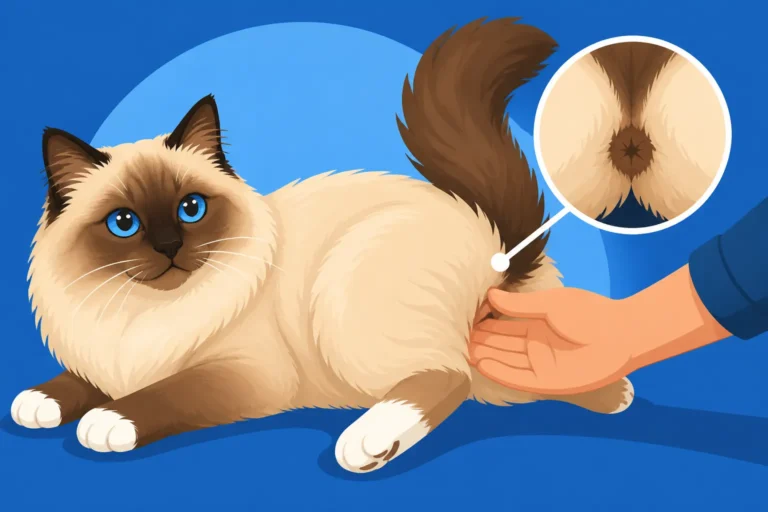
Ah, the britches! That lovely, fluffy pantaloons effect on the back of a Birman's hind legs. While stunning, this area, along with the fur at the very base of the tail, is prone to matting for a few key reasons. Firstly, the fur here is often longer and thicker than on other parts of the body. Secondly, it's an area that can easily get soiled during litter box visits, especially if your Birman isn't the most fastidious groomer or if they have softer stools.
Even if hygiene isn't an issue, the mere act of sitting down and moving around causes this fur to compress and rub. A Birman's dignified sitting posture can press the fur into tangles that, when left unchecked, can quickly become felted. The base of the tail, where the fur transitions from the body to the glorious plume, is another high-friction zone where mats can hide, often unnoticed until they're quite tight. Regular checks here are crucial, not just for mat prevention but also for cleanliness, as any lingering dampness or waste can exacerbate matting. This part of the body needs consistent attention to ensure your Birman's comfort and dignity.
Recognizing the Early Signs of Mat Formation
Sometimes, it feels like mats appear out of nowhere, transforming a silky patch into a stubborn knot overnight. But often, there are subtle clues if you know what to look for. Catching a mat in its infancy is key to an easier, less stressful grooming experience for both you and your Birman. It’s about more than just seeing a visible clump; it's about feeling and observing.
Texture Changes and Small Tangles
The most immediate and effective way to spot an impending mat is by feeling your Birman's coat. A Birman's fur should feel consistently silky and free-flowing. Any area that feels different – a little coarser, clumpy, or sticky – is a red flag. These are often tiny tangles, barely visible to the eye, that are just starting to form. They might feel like a small lump under your fingertips, even if you can't see the fur overtly knotted.
When you're combing, pay close attention to resistance. If your comb snags repeatedly in a particular spot, that's a sign hair strands are interlocked. Don't just pull through; gently investigate. A small, tight knot the size of a pea can quickly grow into a larger, painful mat if left alone. It's much easier to work out these nascent tangles with a wide-toothed comb and a bit of cornstarch or detangling spray than to tackle a fully matted area later. Make it a part of your routine to methodically check all the common matting zones, feeling for any textural inconsistencies, as part of your Combing a Birman Three Times a Week schedule.
Behavioral Cues from Your Birman
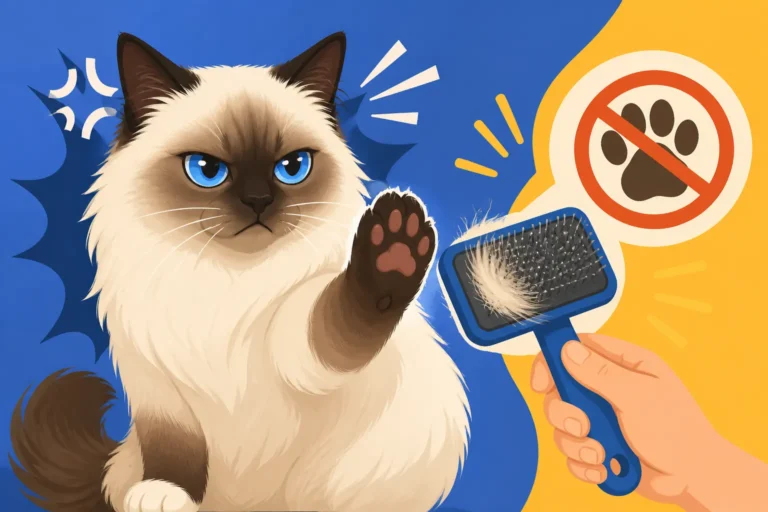
Birmans are famously placid and don't always broadcast their discomfort with loud complaints or aggressive displays. They are masters at subtly letting you know something is wrong, or in some cases, hiding it entirely. This means you need to be a keen observer of their behavior, especially when it comes to grooming or touching certain areas. If your normally tolerant Birman suddenly flinches, pulls away, or even gives a soft growl when you touch a particular spot, that’s a strong indication of pain or discomfort, very possibly from a hidden mat. This can be especially true since Why a Placid Birman Hides Pain.
Other signs might include reduced activity, a reluctance to stretch or jump, or even excessive licking or chewing at a specific area of their body. While these behaviors can indicate a variety of issues, an increase in self-grooming in a particular spot can sometimes worsen a developing mat or be a reaction to its discomfort. If you notice any of these behavioral shifts, especially alongside a grooming session, it’s time to thoroughly inspect the suspected area. Their quiet nature means you have to be their advocate, always attentive to their subtle messages.
Proactive Strategies to Prevent Mats
Prevention is always better than cure, especially when it comes to mats on your beautiful Birman. A consistent, thoughtful grooming routine focused on those high-risk areas will save you a lot of hassle and keep your cat comfortable and happy. It's not about spending hours every day, but about being strategic and using the right tools and techniques.
Regular, Targeted Combing Techniques
The cornerstone of mat prevention for a Birman is regular combing, but it needs to be targeted. Instead of just a superficial brush, you need to systematically work through those problem areas. Start with a wide-toothed comb, like a good quality metal greyhound comb which you can find on Chewy or Amazon. This will gently separate the hairs without pulling. For the fine fur behind the ears and under the chin, use your fingers first to separate the hair, then follow with a fine-toothed comb. For the armpits and britches, work in small sections, always combing away from the skin to avoid snagging.
It’s crucial to use the right comb; Which Comb Gets Through a Birman's Ruff Without Pulling is essential for maintaining their delicate coat without damaging it. A slicker brush, while good for some breeds, can be too harsh for a Birman's single coat, potentially pulling out healthy hair or tearing delicate knots into bigger problems. Focus on gentle, even strokes. If you encounter a snag, don't force it. Instead, use your fingers to carefully loosen the tangle before gently working it out with the comb. The goal is to prevent tangles from tightening, so frequent, gentle passes are more effective than infrequent, vigorous ones.
Environmental and Lifestyle Considerations
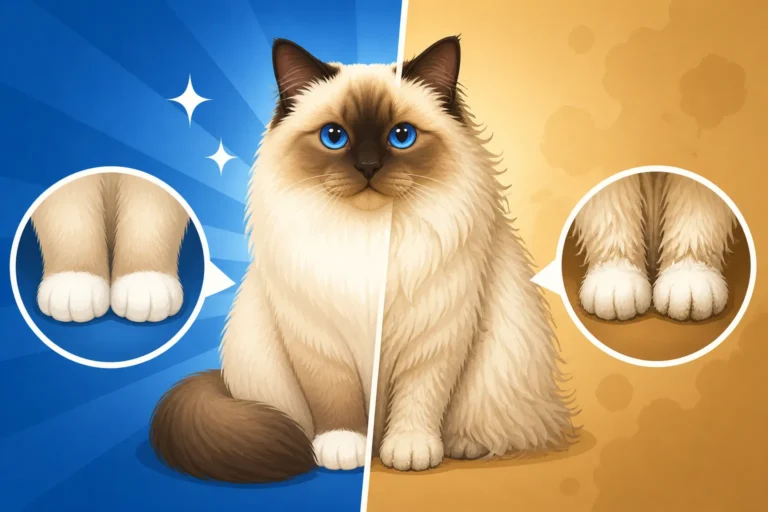
Beyond direct grooming, there are several things you can do around the house to minimize matting. The type of litter you use, for example, can have a surprisingly big impact, particularly on those white gloves and britches. Dusty or fine-grained litters can cling to the fur, especially when wet, creating tiny, tenacious clumps that quickly develop into mats. Opt for a low-dust, larger-granule litter or even paper-based options. Which Litter Suits a White Gloved Cat will guide you towards litters that are less likely to stick to their beautiful white paws and hindquarters.
Consider their sleeping arrangements. Soft, fluffy beds are lovely, but if your Birman frequently kneads or shifts on them, the friction can contribute to matting, especially on their belly or behind their legs. A smooth, natural fiber blanket that can be washed frequently might be a better choice in some high-traffic sleeping spots. Also, keeping your Birman at a healthy weight means they can groom themselves more effectively, reaching all those tricky spots. Just as we monitor our own health, regularly checking in on your Birman's overall well-being and dental health – for instance, considering How Often a Birman's Narrow Jaw Needs a Scale and Polish – contributes to their general comfort and ability to maintain their pristine coat.
Addressing Existing Tangles Safely
Even with the best preventative measures, a small tangle might still appear. When it does, the key is to address it immediately and gently. Never, ever try to yank or cut a mat out with scissors unless you are absolutely sure of what you are doing. The skin under a mat can be pulled taut and thin, making it incredibly easy to accidentally cut your cat. Instead, gather your tools: a wide-toothed comb, a fine-toothed metal comb, a detangling spray (look for cat-safe options from brands like Chewy), and possibly some cornstarch.
Sprinkle a little cornstarch directly into the mat; it can help absorb oils and make the hair slicker, allowing the strands to separate more easily. Work the mat from the outside in, using just the very tips of your comb. Hold the base of the mat firmly against the skin with one hand to prevent pulling the skin, then gently tease apart the strands. This technique is detailed further in How to Get a Mat Out of a Birman's Coat. Patience is paramount here. If the mat is too large, too tight, or too close to the skin, or if your Birman is becoming distressed, stop immediately. For stubborn or painful mats, a professional groomer or veterinarian is your safest bet. They have specialized tools and techniques to remove mats without causing injury or undue stress.
The Birman Owner's Grooming Kit: Tools for Tangle-Free Living
One of the beautiful things about owning a Birman is that their grooming needs, while consistent, are rarely extreme. You won't often find yourself booking regular, expensive professional grooming appointments. Instead, you'll become an expert in home grooming, equipped with a few essential tools and a whole lot of love.
The Joy of Home Grooming
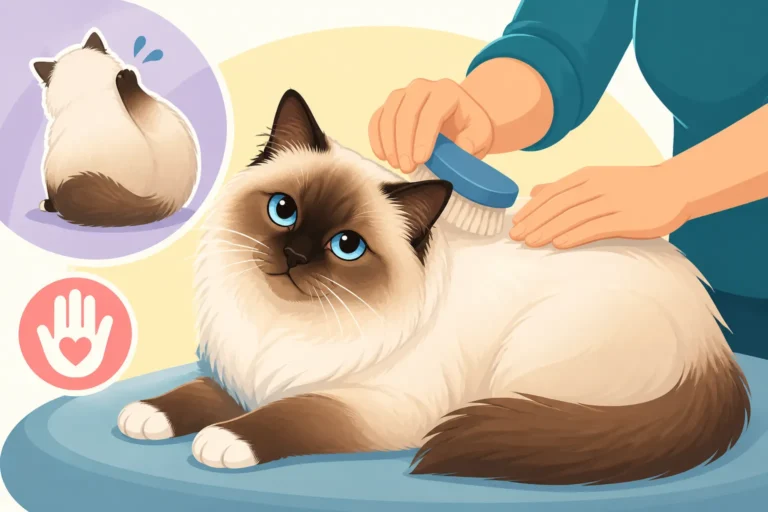
For most Birman owners, the idea of professional grooming appointments for routine coat maintenance feels quite foreign. Their single, silky coat is genuinely easy to maintain at home with the right approach. This not only saves money but also strengthens the bond between you and your Birman. Those quiet moments of gentle combing become a cherished ritual, a time for affection and connection. You get to know every inch of your cat's fur, spotting changes and potential issues early.
Building a simple, effective home grooming kit is easy. You'll want a sturdy metal comb with both wide and fine teeth – a staple you can find readily on platforms like Amazon or Chewy. A good pair of blunt-nosed scissors (again, for only cutting carefully away from the skin, and only if you know exactly what you're doing, for hygiene trims around the britches) and perhaps a detangling spray designed for cats are also invaluable. You might also want to invest in a low-dust litter, as previously mentioned, to prevent those white gloves from getting stained and matted. Looking into What a Birman Owner Spends on Grooming Tools will give you a good idea of the reasonable investment involved in setting up your home grooming station.
Knowing When to Call for Backup
While home grooming is generally sufficient and preferred for Birmans, there are definitely times when professional intervention is necessary. These situations usually arise when a mat has become too large, too tight, or too close to the skin for you to safely remove it yourself. If you try to remove a mat and your Birman becomes stressed, aggressive, or shows signs of pain, it's a clear signal to call in the experts. A professional groomer or your veterinarian has the experience and specialized equipment (like clippers with appropriate blades) to remove severe mats safely and efficiently, often with less stress for your cat.
Sometimes, a mat might be hiding a skin irritation or infection underneath, which a professional will be able to identify and address. Don't feel guilty about seeking help; it's a responsible part of pet ownership. Your primary goal is your Birman's comfort and well-being. Even if you've done everything right, sometimes a tricky mat just needs a professional touch. While it's true that Why a Birman Owner Never Books a Grooming Appointment for regular combing, these specific, challenging situations are precisely when their expertise becomes invaluable.
| Matting Zone | Fur Characteristics | Why Mats Form Here | Recommended Grooming Frequency |
|---|---|---|---|
| Behind the Ears | Fine, silky, slightly denser | Head rubbing, scratching, ear cleaning | Daily quick check, 2-3x/week comb |
| Under the Chin/Collar | Fine, often compressed | Eating, drinking, collar friction, stretching | Daily quick check, 2-3x/week comb |
| Armpits & Inner Thighs | Fine, moderate density, high movement | Constant movement, skin-on-skin friction, debris | Daily thorough check, 3x/week comb |
| "Britches" (Hind Legs) | Long, dense, often in contact with surfaces | Sitting, litter box visits, movement, hygiene | Daily thorough check, 3x/week comb |
| Base of Tail | Dense, subject to compression and movement | Sitting, tail wagging, rubbing against surfaces | Daily quick check, 2-3x/week comb |
Disclaimer
This article is for general informational purposes only and does not constitute professional advice. Laws, prices and regulations vary by location and change over time. Consult a qualified professional for guidance on your specific situation.