What Makes a Birman’s Coat Silky Rather Than Woolly
It's easy to look at a majestic Birman with its flowing, semi-longhair coat and immediately picture endless hours of daily grooming, a battle against mats, and a constant flurry of shedding. Many prospective owners, and even those who adore the breed, often worry that such a beautiful coat must be incredibly high maintenance, perhaps woolly and prone to tangles like some other famous longhaired breeds. However, the truth about the Birman's coat is wonderfully different, and this guide is here to shed light on exactly what makes their fur so uniquely silky and manageable.
The Unique Structure of the Birman Coat
When you run your hand through a Birman's fur, there's an undeniable luxuriousness to it—a softness that feels almost ethereal. This isn't just a happy accident; it's a testament to the specific genetic makeup of the breed's coat, designed in a way that truly sets it apart from many other long-haired felines. Understanding this structure is key to appreciating why their grooming needs are surprisingly modest.
The Defining Absence: No Undercoat
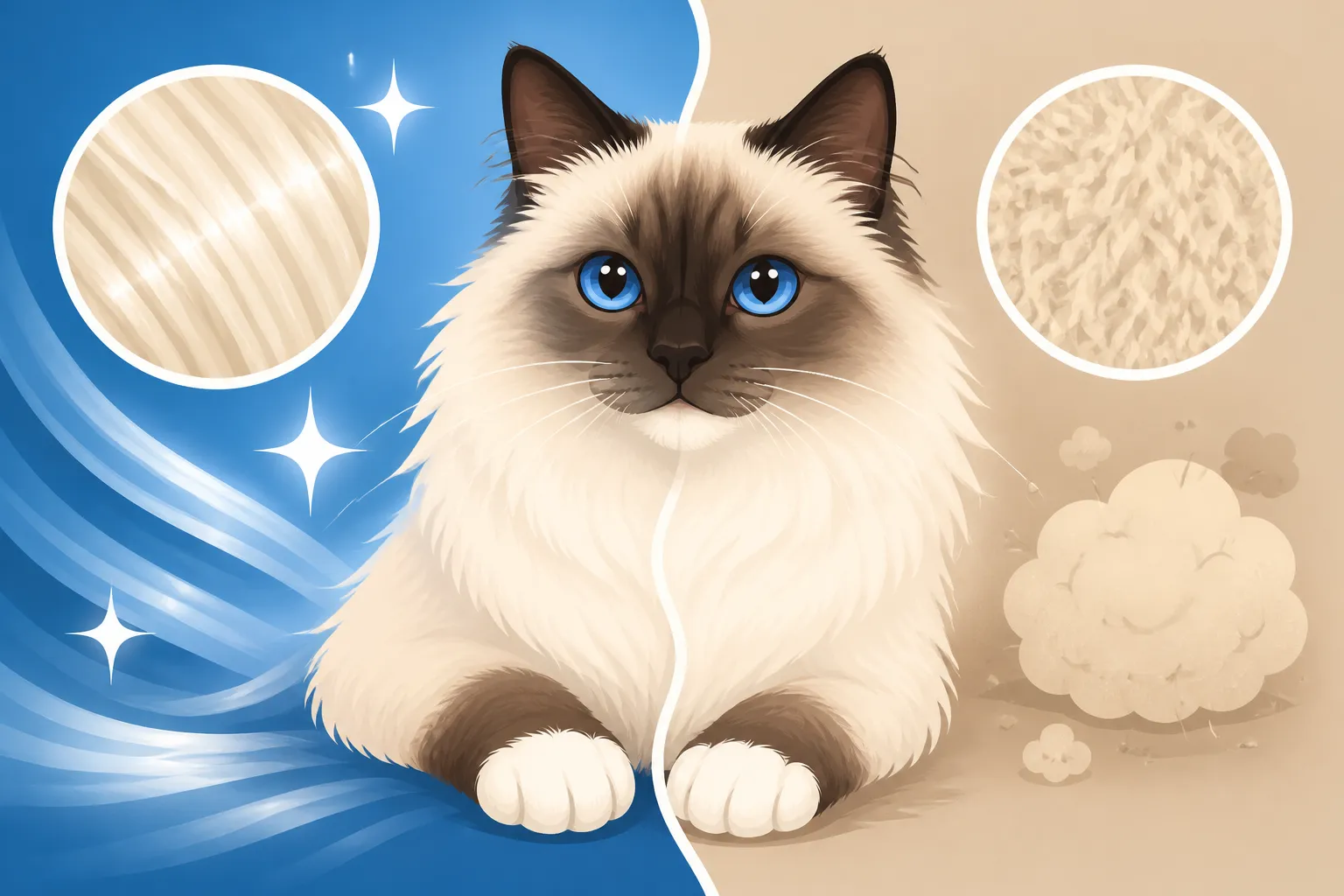
One of the most remarkable characteristics of the Birman's coat is its defining lack of a dense, woolly undercoat. Unlike breeds such as the Persian or even the Maine Coon, which boast a thick, insulating layer of fine, downy fur beneath their longer guard hairs, the Birman primarily possesses a single layer of medium to long guard hairs. This absence is not just a subtle difference; it fundamentally changes the texture and behavior of their fur. Imagine the difference between a plush, deep-pile carpet and a sleek, silky throw rug—that's somewhat akin to the contrast. This unique quality is precisely what No Undercoat Is What Makes a Birman Easy to Groom.
This lack of undercoat is the primary reason why a Birman's fur feels so incredibly smooth and 'slippery' to the touch. The individual hair strands are fine but strong, and because there isn't a tangled mass of shorter, crimped hairs underneath, they lie much flatter against the body. This smooth presentation is not only aesthetically pleasing but also contributes significantly to the cat's comfort and ease of care. It's a genetic blessing that simplifies what would otherwise be a demanding grooming routine for a cat of their glorious appearance.
The Role of Genetics in Birman Fur Texture
The distinct texture of the Birman's coat isn't merely a random occurrence; it's a direct result of their genetic heritage. The breed's development, especially after the challenging times of the post-war era when outcrossing was necessary to save the breed, led to a coat type that retains its unique characteristics. While the exact genetic markers for this specific silky texture are complex, it's widely understood that their genetic blueprint favors this single-coat structure. This means that every Birman kitten is born with the inherent potential for that coveted silky touch.
Breeders, through careful selection over generations, have worked to preserve and enhance this characteristic. They prioritize breeding cats that exhibit the desired soft, flowing texture without the heavy undercoat, ensuring that the breed standard is consistently met. This commitment to genetic integrity is why, despite variations in length and density, all Birmans share that signature silken feel. It’s a testament to the breed's intentional development, ensuring that this cherished trait is passed down reliably from parent to kitten. You can learn more about how their unique lineage affected their health and physical traits in What a Narrow Founder Base Left in the Birman.
How the Single Coat Influences Shedding
Many people assume that long-haired cats automatically shed more, covering furniture and clothes with a constant layer of fur. While all cats shed, the Birman's single coat actually has a fascinating impact on the amount and type of shedding you'll experience. Because there's no dense undercoat, the volume of fur shed tends to be less than that of a double-coated breed. When a Birman sheds, it's typically those longer, fine guard hairs that come loose.
Instead of thick clumps of woolly fur, you'll often find lighter, finer strands that are generally easier to manage. This isn't to say Birmans don't shed at all – they certainly do, especially during seasonal changes – but the quality of the shed fur means it's less likely to create large, stubborn mats in your home. These shed hairs tend to float more, making them visible and easier to sweep or vacuum. It’s a practical advantage that often surprises new Birman owners, alleviating a common concern about living with a long-haired cat.
Why "Silky" is the Birman's Signature Trait
The term "silky" isn't just a marketing buzzword when it comes to the Birman; it's an accurate description of a coat that feels utterly unique. This isn't a coat that you just admire from afar; it's one you want to continually run your hands through, and for good reason. Its texture offers distinct advantages both for the cat and for its human companions.
A Touch Like Fine Silk: The Tactile Difference
There's a reason Birmans are often described as having fur like "spun silk." The individual hairs are fine, incredibly soft, and possess a natural sheen that catches the light beautifully. When stroked, the fur parts easily and then falls back into place, smoothly and without resistance. This is in stark contrast to the slightly coarser, more voluminous feel of a double coat, where you might encounter more friction and a denser texture. This tactile pleasure is one of the joys of owning a Birman, making petting a truly delightful experience.
This smooth texture also contributes to the Birman's elegant appearance. The fur doesn't stand out from the body in a bushy way; instead, it flows gracefully, accentuating their lovely physique. It feels cool and light, not heavy or overwhelming, even on a fully-coated adult. It's a feature that makes them not just beautiful to behold but also incredibly appealing to cuddle and interact with.
The Practical Benefits of a Non-Matting Coat
The most significant practical benefit of the Birman's silky, single coat is its remarkable resistance to matting. Owners of other long-haired breeds often spend considerable time detangling knots and cutting out painful mats, especially in high-friction areas like the armpits, hind legs, and behind the ears. For Birmans, this struggle is largely minimized. Because there's no woolly undercoat to trap shed hairs and bind them together, the fur is far less likely to tangle into dense knots. This is truly the key differentiator when it comes to grooming effort. You can delve deeper into this benefit with Why a Birman Mats Far Less Than It Looks Like It Should.
This doesn't mean a Birman will never get a mat, especially if grooming is neglected for extended periods or if they have a particularly active lifestyle that involves rolling in debris. However, any mats that do form are typically much looser and easier to gently comb out than those found in double-coated breeds. This reduces stress for both cat and owner during grooming sessions, making it a much more pleasant bonding experience rather than a dreaded chore. This inherent quality of their coat saves a lot of time and potential vet visits for mat removal.
Keeping the Coat Clean and Radiant
The silky texture of a Birman's coat also plays a role in keeping them looking clean and radiant with relatively little effort. The smooth, fine hairs are less prone to picking up and holding onto dirt, dust, and debris compared to a coarser, more textured coat. Things tend to slide off, rather than getting embedded in the fur. This is a huge advantage for an indoor cat, as it means less frequent bathing and generally less mess around the house.
Of course, a Birman’s famous white “gloves” on their paws do present a unique challenge, as they can show dirt more readily, particularly from certain types of litter. However, even these areas are easier to keep clean thanks to the fur’s quality. Regular, gentle combing helps to distribute natural oils, enhancing the coat's natural luster and keeping it gleaming. This natural cleanliness is part of what makes owning a Birman such a joy—you get all the beauty of a long-haired cat without the constant battle against a dingy or dull coat. For more tips on maintaining their pristine paws, check out Keeping a Birman's White Gloves White.
Birman Coat vs. Other Beloved Longhairs
To truly appreciate the Birman's silky coat, it helps to compare it directly with other popular long-haired cat breeds. Each breed has its own unique charm, but when it comes to fur texture and density, the differences are quite striking, offering insights into why Birmans are often considered a more manageable option for those who love long-haired cats.
Contrasting with the Plushness of a Persian
Perhaps the most dramatic contrast can be found when comparing the Birman's coat to that of a Persian. Persians are renowned for their incredibly long, dense, and luxuriant fur, which features a thick, woolly undercoat that contributes to its plush, voluminous appearance. This undercoat is what gives a Persian its distinctive, almost cloud-like aura, but it also makes their grooming needs significantly higher. A Persian's coat is prone to serious matting, often requiring daily, thorough combing and even professional clipping if neglected.
A Birman's coat, by comparison, feels much lighter and flows more freely. While both breeds are beautiful, the Persian's heavy, double coat often feels denser and requires a much more intensive commitment to prevent tangles and skin issues. Where a Persian's fur might feel like a rich, plush blanket, a Birman's feels like a whisper of silk. This difference directly translates into vastly different grooming routines, with the Birman requiring substantially less effort to maintain its pristine look and feel.
Distinguishing from the Flowing Fur of a Ragdoll
Ragdolls are another beloved semi-longhaired breed often compared to Birmans, and indeed, they share some similarities, including a generally docile temperament. However, there are subtle yet important differences in their coats. Ragdolls also have a soft, silky coat that tends to resist matting, but it can be slightly denser than a Birman's, sometimes possessing a lighter undercoat or a more voluminous quality. A Ragdoll's fur often has a distinct "rabbit-like" texture, especially around the ruff and tail, feeling incredibly soft and plush. You can explore this further in How a Birman's Coat Differs From a Ragdoll's.
While a Ragdoll's coat is also relatively low maintenance compared to a Persian's, a Birman's typically feels even more lightweight and less prone to collecting debris. The Birman's fur lies very flat against the body, whereas a Ragdoll's can have a bit more "loft." These nuances mean that while both are beautiful and easy to groom, the Birman still edges out the Ragdoll in terms of sheer non-matting quality and the unique 'run-through-your-fingers' silkiness.
Why a Birman's Coat is Different from a Maine Coon's Density
Maine Coons are majestic, large long-haired cats with shaggy, dense coats designed for harsh climates. Their fur is water-repellent, often quite coarse, and features a thick, heavy undercoat that provides significant insulation. This contributes to their rugged, wild appearance, but also means their coats can be quite prone to matting and require regular, dedicated grooming, especially during shedding seasons. Their fur feels robust and substantial, perfect for braving the elements.
The Birman, on the other hand, possesses a far more refined and delicate coat. It lacks the Maine Coon's density and waterproofing qualities, feeling much softer and lighter. While a Maine Coon's coat might evoke images of a hardy wilderness explorer, a Birman's is more reminiscent of an elegant indoor companion. The sheer volume and texture difference between the two breeds make them distinct in terms of both aesthetics and practical care. You'll find that where a Maine Coon needs substantial grooming tools to penetrate its thick layers, a Birman's fine comb will glide through its single coat effortlessly.
Daily Rituals for a Glorious Birman Coat
Even with their naturally easy-care coats, Birmans still benefit immensely from a consistent, gentle grooming routine. It's not about preventing severe mats so much as maintaining that glorious shine, keeping their skin healthy, and reinforcing the bond you share. These rituals are less of a chore and more of an enjoyable interaction that keeps your Birman looking and feeling their best.
Essential Grooming Tools for a Silky Finish
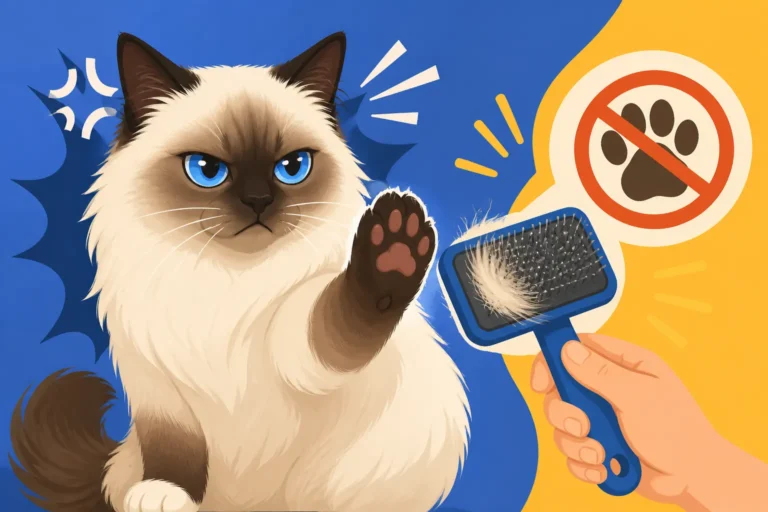
You don't need a vast arsenal of grooming tools for a Birman, but having the right few items makes all the difference. The most crucial tool is a good quality comb. Look for a metal comb with both wide and fine teeth. The wide-toothed side is perfect for gently working through the body fur, while the finer teeth can be used around the face, behind the ears, and on the "britches" where hair might be a little denser. Avoid slicker brushes, which can be too harsh for a Birman's delicate guard hairs and might actually damage the silky texture. A soft bristle brush can be used for a final polish, distributing natural oils and adding shine.
Additionally, a good pair of cat-specific nail clippers is essential, especially for those white-gloved paws. Keeping their claws trimmed not only protects your furniture but also prevents snags in their own fur. For keeping those famous white feet pristine, a gentle, cat-safe shampoo might be handy for occasional spot cleaning. You can often find these grooming essentials, along with trusted brands of cat nail clippers, on platforms like Amazon or Chewy, ensuring you have everything you need at your fingertips.
The Gentle Art of Combing: Frequency and Technique
For most Birmans, combing two to three times a week is perfectly sufficient to keep their coats free of tangles and remove any loose hair. This isn't a long, arduous process; usually, ten to fifteen minutes per session is all it takes. The key is gentleness and consistency. Start by combing your Birman from head to tail, working in sections. Always comb with the direction of hair growth, never against it, to avoid pulling or causing discomfort. Pay particular attention to the ruff around their neck, their belly, and the 'feathers' on their hind legs, as these are the areas where any minor tangles are most likely to form. You can gain more insights into the frequency in Combing a Birman Three Times a Week.
Many Birmans actually enjoy these grooming sessions, purring contentedly as you work. It’s a wonderful opportunity to check their skin for any irritations, bumps, or parasites. Remember, the goal is to glide the comb through the fur, not to yank or tug. If you encounter a small knot, use the wide-toothed comb first, gently teasing it apart with your fingers before attempting to comb it through. A patient approach ensures that grooming remains a positive experience for your Birman, turning a necessary task into a cherished bonding ritual.
Nutrition's Role in Coat Health
While genetics lay the foundation for a Birman's silky coat, diet plays a crucial supporting role in maintaining its health, shine, and overall quality. A high-quality diet rich in essential fatty acids, particularly Omega-3 and Omega-6, is vital for healthy skin and a lustrous coat. These nutrients help to keep the skin moisturized and the hair follicles strong, reducing excessive shedding and promoting that beautiful, characteristic sheen. Look for cat foods that list these fatty acids, often derived from fish oils or flaxseed, prominently in their ingredient list.
Protein is also incredibly important, as hair is primarily made of protein. A diet with adequate, high-quality animal protein sources will support strong, healthy hair growth. Some owners opt for fresh or freeze-dried raw food options, or premium wet foods, which can contribute to better hydration and nutrient absorption, both beneficial for coat condition. Always ensure your Birman has access to fresh water, as hydration impacts skin and coat health significantly. A dull, dry coat can sometimes be an early indicator of dietary deficiencies or underlying health issues, so paying attention to your cat’s nutrition is a proactive step in maintaining their splendid fur.
Common Myths and Realities of Birman Coat Care
With such a striking appearance, it's natural for myths and misconceptions to swirl around the Birman's coat care. As a seasoned lifestyle blogger who adores Birmans, I’ve heard them all! Let's clear up some of the most persistent misunderstandings and bring a dose of reality to Birman grooming.
Dispelling the Myth of Constant Grooming
One of the biggest misconceptions about Birmans is that their long, flowing coats demand constant, daily grooming, akin to some other show-stopping longhaired breeds. I've heard so many potential owners express apprehension, thinking they'll be tethered to a brush for hours every day. The reality, as we’ve discussed, is refreshingly different. Thanks to their single coat and lack of a woolly undercoat, Birmans are surprisingly low maintenance in the grooming department.
While regular combing is beneficial for removing loose hair and distributing oils, it's typically a quick, pleasant session a few times a week, not an exhaustive daily battle. For a pet Birman, this routine is more than enough to keep them looking immaculate and feeling comfortable. The frustration of endless mat removal that haunts many long-hair cat owners simply isn't a common experience for Birman families. This makes them an ideal choice for busy individuals or families who want the beauty of a long-haired cat without the overwhelming grooming commitment. In fact, you might be surprised by How Many Minutes a Week a Birman's Coat Takes.
The Allergy Question: Is a Birman Hypoallergenic?
Another common question, especially from those with sensitivities, is whether the Birman is a "hypoallergenic" cat. This is a nuanced area, and it's important to approach it with realism. The simple answer is no, no cat breed is truly 100% hypoallergenic. Allergies to cats are typically triggered by a protein called Fel d 1, found in a cat's saliva, skin flakes (dander), and urine, not just the hair itself. When a cat grooms, it spreads this protein, which then dries and becomes airborne on dander particles.
However, some breeds are often better tolerated by allergy sufferers because they produce less Fel d 1, shed less dander, or have coats that trap allergens more effectively. While Birmans have a single coat and shed less volume of hair compared to double-coated breeds, they still produce Fel d 1. Their silky fur doesn't prevent the protein from being present. So, while some individuals with mild allergies might find them easier to live with than, say, a very heavily shedding Persian, it’s not a guarantee. It's always recommended for allergic individuals to spend time with a Birman before committing to adoption to see how they react. You can read more on this topic in Whether a Single Coat Makes a Birman Easier on Allergies.
When Professional Grooming Might (Rarely) Be Needed
For the vast majority of Birmans, professional grooming is simply not a necessity. Their easy-care coats are designed to be managed with basic home grooming tools and a consistent routine by their owners. Unlike breeds with extremely dense or curly coats that benefit from specialized trims or de-matting services, a Birman rarely requires anything beyond what you can provide at home.
However, there are a few rare circumstances where a professional groomer might be a good idea. If a Birman has been severely neglected and developed extensive, tight matting that is too painful or difficult to remove at home, a professional groomer or even a vet might be needed to safely shave down the affected areas. Similarly, an elderly Birman who can no longer reach certain parts of its body due to arthritis or other health issues might benefit from periodic assistance. But these are exceptions, not the rule. For a healthy, regularly groomed Birman, a visit to the groomer is almost unheard of; their natural elegance and your simple care routine are all they need to maintain their magnificent silky coat.
| Feature | Birman Coat | Persian Coat | Ragdoll Coat | Maine Coon Coat |
|---|---|---|---|---|
| Undercoat | Absent or very minimal | Very dense, woolly | Often present, light/fluffy | Thick, heavy, insulating |
| Texture | Silky, fine, flowing | Plush, soft, voluminous | Soft, rabbit-like, semi-long | Shaggy, coarse, water-repellent |
| Matting Tendency | Low, easily managed | High, requires daily care | Low to moderate | Moderate to high, esp. in dense areas |
| Shedding Volume | Moderate, fine hairs | Moderate to high, thick dander | Moderate, finer hairs | High, coarse hairs and dander |
| Grooming Needs | 2-3 times/week combing | Daily, thorough combing/brushing | 2-3 times/week combing/brushing | Regular brushing, de-matting as needed |
| Appearance | Elegant, body-hugging flow | Cloud-like, round | Flowing, plush, "rabbit-like" | Rugged, shaggy, wild |
Disclaimer
This article is for general informational purposes only and does not constitute professional advice. Laws, prices and regulations vary by location and change over time. Consult a qualified professional for guidance on your specific situation.