Why a Birman Kitten Left at Six Months Is Cheaper
It’s a common scenario for aspiring Birman owners to spot an advertisement for a slightly older kitten, perhaps six months or more, at a noticeably lower price than the tiny, fluffy bundles typically advertised. This can feel like a fantastic opportunity, and in many ways, it truly is. But it also raises questions: why is this older kitten cheaper, and what exactly does that mean for you? This guide will delve into the various reasons behind the price difference, helping you understand the value and considerations when bringing an older Birman kitten into your home.
The Timeline of a Birman Kitten's Development and Pricing
The journey of a Birman kitten from birth to its forever home is a carefully managed process by responsible breeders. Every stage has implications for its development, its readiness for a new family, and ultimately, its price.
Early Weeks: The Critical Period for Breeders
From the moment they're born, Birman kittens require intensive care. The first few weeks are crucial for their health, early socialization, and ensuring they meet developmental milestones. Breeders invest heavily during this time in nutrition for the queen and her litter, veterinary checks, and creating a stimulating yet safe environment. They're monitoring growth, checking for any health issues, and beginning the gentle process of handling that shapes a Birman’s famously placid temperament. This early investment is a significant part of the initial cost of a kitten.
The Twelve-Week Mark: When Most Kittens Go Home
The generally accepted minimum age for a Birman kitten to leave its mother and littermates is around 12-13 weeks. This isn't an arbitrary number; it's a critical period for their social development. During these weeks, kittens learn vital cat manners, bite inhibition, and how to interact appropriately with other felines from their siblings and mother. They've also typically received their core vaccinations, been dewormed, and microchipped. Many breeders will also have had them spayed or neutered by this point, especially pet-quality kittens.
A kitten that leaves at 12-13 weeks has benefited from this crucial developmental stage, making for a more well-adjusted pet. This is when most kittens are priced at their premium, reflecting the breeder's time, care, and the extensive health testing done on the parents (like screening for HCM in a Birman Has No DNA Test, Only an Echo or Why a Birman Breeder Still Tests for PKD). If you're wondering what has been done by this stage, consider reading What a Birman Kitten Has Had Done by Thirteen Weeks.
Beyond Six Months: Why a Kitten Might Still Be Available
So, why would a Birman kitten still be with the breeder at six months or even older? There are several common reasons, and rarely are they indicative of a "problem" kitten, but rather a shift in circumstances or initial expectations.
- Show Potential Didn't Pan Out: Often, a breeder holds back one or two kittens from a litter that they believe have "show potential" – meaning they exhibit excellent breed characteristics, conformation, and, critically for Birmans, near-perfect glove markings. However, as the kitten matures, these markings can sometimes develop imperfectly, such as What Counts as a Mismarked Birman or Why Perfect Birman Gloves Are Almost Impossible to Breed. While still a gorgeous, healthy Birman, it might not meet the strict show ring criteria. These kittens, initially held for breeding or showing, are then offered as pets.
- Logistical Challenges: Sometimes, a kitten's ideal home might fall through due to unforeseen circumstances on the buyer's end, or the breeder might have had a particularly large litter, making it harder to place every kitten quickly.
- Personality Match: Occasionally, a kitten might have a very specific personality that the breeder is trying to match with the absolute perfect family. While Birmans are generally adaptable, some might be shyer or more boisterous, requiring a bit more time to find their ideal human companions.
- Breeder Retention Shift: A breeder might initially plan to keep a kitten for their own breeding program but decide against it for various reasons, perhaps due to a genetic line not needing further representation or a change in their cattery plans.
These older kittens still represent the same investment in health, care, and early socialization, but the prolonged stay at the cattery incurs additional costs for the breeder without the immediate return of a younger kitten's sale.
Factors Influencing a Birman's Price Decline
The price of a Birman kitten isn't just about age; it's a complex interplay of various factors, each contributing to the final figure. When a kitten is older, some of these factors have become clearer, leading to the price adjustment.
The Impact of Glove and Point Markings
For Birmans, the "gloves" – the white markings on their paws – are incredibly distinctive and a huge part of the breed standard. The Gloves Decide What a Birman Kitten Costs. A kitten with perfectly symmetrical white gloves on its front paws and laces on its hind legs commands the highest price, especially for show or breeding potential. However, these markings can be notoriously unpredictable. A kitten that a breeder initially thought had perfect gloves might, as it grows, develop slight asymmetries, a "runner" of white up a leg, or an uneven "lace" on its hind paws.
- "Pet Quality" vs. "Show Quality": A kitten with minor marking faults is still 100% a Birman, just as loving and beautiful, but it's designated "pet quality." This immediately reduces its price because it won't be competing in shows or contributing to a breeding program focused on perfect markings. Why a Mismarked Birman Is a Pet Price Cat explains this in detail.
- The Waiting Game: Breeders can't definitively judge glove markings until kittens are several weeks old, and even then, some subtle nuances emerge as they mature further. This means a kitten held back for perfect gloves might turn out to have minor imperfections by six months, making it available at a lower price. It's often simply a matter of aesthetic perfection rather than health or temperament.
Health Screening Costs and Breeder Investment
Responsible Birman breeders put a substantial amount of money into health screenings for their breeding cats. This includes genetic tests for conditions like Polycystic Kidney Disease (What the PKD1 Test Costs for a Birman) and Hypotrichosis with Thymic Aplasia (FOXN1) (What the FOXN1 Test Costs), as well as regular cardiac ultrasounds (echos) to screen for Hypertrophic Cardiomyopathy (HCM). These tests are expensive, but they are crucial to ensure healthy kittens and to give new owners peace of mind.
- Ongoing Veterinary Care: An older kitten has naturally received more vaccinations, deworming treatments, and general vet check-ups than a younger one. While this adds to the breeder's cost, these are often "sunk costs" by the time the kitten reaches six months. The breeder isn't looking to recoup every single penny of extended care, but rather to find a good home for the animal.
- Peace of Mind for the Buyer: When you adopt an older kitten, you often get the benefit of more extensive veterinary history. You might know, for example, that the kitten has had additional check-ups, potentially a clearer bill of health as it's passed more developmental hurdles, or that its temperament is fully formed and visible.
The Breeder's Operational Costs and Time Investment
Running a reputable cattery is not a money-making venture for most. It's a passion that involves significant time, effort, and financial outlay.
- Food and Litter: Imagine feeding a growing Birman kitten, known for their decent appetite, for an additional three months after the typical 12-week departure. That's a lot of premium food and low-dust litter (especially if you're trying to keep those white gloves pristine!). Brands like Chewy offer auto-ship options that can help breeders manage these ongoing costs, but they add up significantly over time.
- Socialization and Enrichment: The breeder has spent extra months socializing this kitten, ensuring it's well-adjusted, confident, and familiar with household sounds, people, and potentially other pets. This isn't just food and shelter; it's emotional and behavioral investment. How to Handle a Birman Kitten From Day One is a key part of their upbringing.
- Space and Resources: Each kitten requires space and resources that could be allocated to a new litter. An older kitten still living with the breeder might take up a valuable "spot" that a younger kitten could occupy, impacting the breeder's overall capacity. This is why sometimes, they are eager to find a good home for these older, but still perfectly wonderful, kittens.
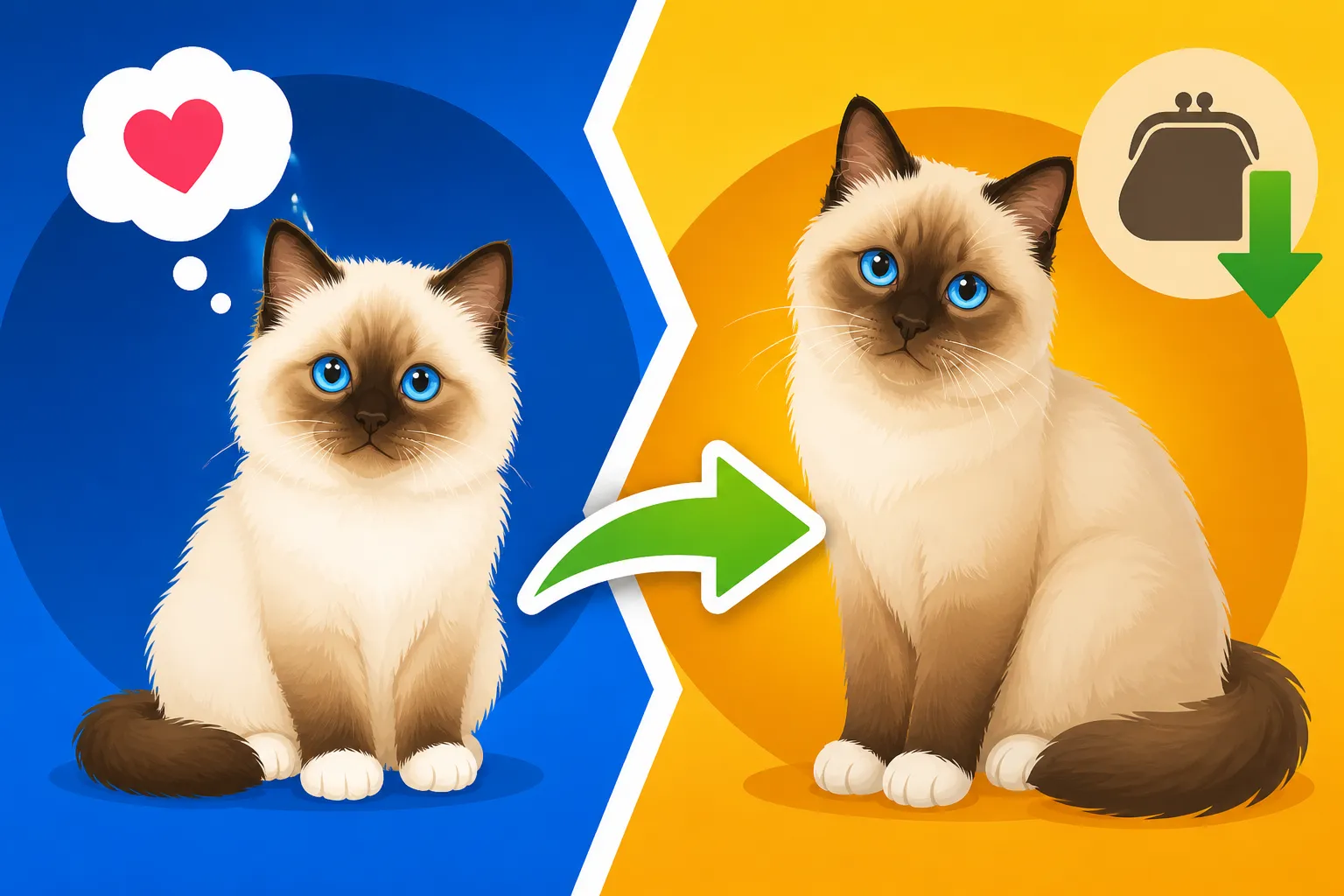
These accumulating costs, coupled with the desire to find a loving home, often lead breeders to reduce the price of an older kitten. They are prioritizing a good match over maximizing profit on an individual animal that has been with them longer than anticipated.
| Factor | Younger Kitten (12-16 Weeks) | Older Kitten (6+ Months) | Impact on Price |
|---|---|---|---|
| Glove Markings | Still developing | More established, imperfections clearer | Lower if imperfect |
| Show/Breeding Potential | High, if promising | Likely reduced if held back | Lower if pet-quality |
| Veterinary Costs | Core vaccinations, initial checks | Extended vaccinations, ongoing checks | Sunk cost for breeder |
| Food & Litter Costs | ~3 months worth | ~6+ months worth | Sunk cost for breeder |
| Socialization | Foundation building | More advanced, temperament clearer | Already invested by breeder |
| Demand | High for young, pristine kittens | Lower, as buyers seek young ones | Decreased |
| Breeder's Time | Significant | Even more significant | Prioritizing rehoming |
The Benefits and Considerations of Adopting an Older Birman Kitten
While a lower price is certainly appealing, adopting an older Birman kitten offers a unique set of advantages and a few things to consider.
What You Gain with an Older Kitten
There are some truly wonderful benefits to bringing home a Birman who's a bit older.
- Established Personality: With an older kitten, their personality is generally much more defined. You'll have a clearer idea of whether they're an outgoing explorer, a quiet observer, or a playful companion. This can be invaluable for ensuring a good match with your family and lifestyle. When choosing a Birman, knowing their temperament can help predict how they might interact with children or other pets, as Birmans are known for being quite adaptable, a topic explored in Why the Birman Ends Up in Houses With Both Kids and Dogs.
- Basic Training & Socialization: Older kittens from a reputable breeder have usually had more exposure to household sounds, routines, and basic manners. They've often learned good litter box habits, how to use scratching posts, and how to interact politely with people and other cats. This can make the transition into your home smoother than with a younger, less experienced kitten. What a Birman Kitten Should Learn by Twelve Weeks is just the starting point; an older kitten will have mastered even more.
- Reduced "Kitten Chaos": While still playful, an older kitten is typically past the most intense, sometimes destructive, phases of kittenhood. They might be less prone to scaling curtains or attacking your toes at 3 AM. This can be a huge plus for those who love the idea of a kitten but prefer a slightly calmer start.
- Physical Maturity & Health Clarity: As a Birman matures, certain aspects of their physical development and potential health markers become clearer. An older kitten will have fully developed its point colors, and any minor quirks in its gait or vision (though rare in Birmans) would likely be evident to the breeder. You also have the advantage of knowing they've successfully navigated the vulnerable early months of life.
Potential Drawbacks and Adjustments
Every coin has two sides, and while the benefits are compelling, there are a few points to consider.
- Less "Cuddle Time" in the Tiny Stage: If you dreamt of a tiny, brand-new kitten that fits in the palm of your hand, an older kitten won't quite fit that image. They're already larger, more developed, and might be less inclined to be constantly picked up, though Birmans are known for being incredibly affectionate and often sit next to you rather than directly on your lap. The Birman Sits Against Your Leg, Not on Your Lap delves into their unique way of showing affection.
- Pre-Existing Habits: While generally well-socialized, an older kitten might have developed certain habits or preferences at the breeder's home. These are usually minor and easily adaptable, but it's something to be aware of. For instance, they might prefer a certain type of litter or have specific play preferences.
- Initial Adjustment Period: An older kitten has spent more time in one environment, so the transition to a new home might take a little longer than for a younger kitten who adapts more readily to change. Patience and a consistent routine are key. How Long a Birman Takes to Settle After a Move provides excellent guidance on making this transition smooth. Creating a safe, quiet space for them initially can work wonders.
Finding an Older Birman Kitten
Your search for an older Birman kitten should follow the same principles as finding a younger one: prioritize reputable breeders.
- Contact Reputable Breeders: Many breeders will advertise older kittens on their websites or social media, often under a "retired adults" or "available older kittens" section. Don't hesitate to reach out to breeders even if you don't see one listed – sometimes they have a kitten they're considering rehoming.
- Birman Rescue Organizations: While the focus of this article is on breeders, rescue organizations occasionally have older Birman cats or kittens that need homes. These often come with a lower adoption fee and can be a wonderful option for giving a cat a second chance.
- Be Prepared to Explain Your Home: Breeders want the best for their cats, regardless of age. Be ready to discuss your living situation, family members (including other pets), your experience with cats, and your commitment to providing a loving home.
What to Expect When Bringing Home an Older Birman
Bringing any new pet home is an exciting time, and an older Birman kitten is no different. Knowing what to expect can help you prepare and ensure a smooth transition for everyone.
Settling into a New Home
Even the most placid Birman will need time to adjust. Remember, this kitten has known one home for several months.
- Quiet Introduction: Set up a dedicated "safe room" for your new Birman kitten – a quiet bedroom or bathroom with their food, water, litter box, a comfortable bed, and some toys. Let them explore this space at their own pace for the first few days, only introducing family members gradually. This helps them feel secure and gives them a base to return to if overwhelmed.
- Consistency is Key: Try to maintain a consistent routine for feeding, playtime, and quiet time. Birmans thrive on predictability and appreciate a calm environment. Using familiar scents, such as a blanket from their previous home, can also help.
- Patience and Affection: An older kitten might be a bit shy at first. Offer gentle interaction, soft voices, and tempting treats. Birmans are known for their affectionate but not overly demanding nature; they will seek closeness when they're ready. Many Birmans are happy to simply be in the same room as you, as discussed in A Birman Would Rather Be Near You Than On You.
Continued Care and Socialization
Your responsibility for their care and socialization continues after they're home.
- Nutrition: Continue with the food the breeder was using initially to avoid stomach upset, then transition slowly if you choose a different brand. Quality nutrition is vital for their coat health and overall well-being. Consider personalized meal plans or other high-quality options.
- Grooming: Birmans have a single, silky coat that mats far less than many other longhairs, but it still benefits from regular combing, perhaps three times a week. An older kitten will likely be accustomed to this routine. You can explore Combing a Birman Three Times a Week for detailed tips.
- Veterinary Care: Schedule a vet check-up within a few days of bringing them home. This allows your vet to establish a baseline, verify their vaccination status, and discuss any future care needs. Even a seemingly healthy Birman benefits from regular check-ups, and don't forget to inquire about pet insurance options like Healthy Paws for peace of mind. How Often a Birman With Clear Papers Still Needs a Vet emphasizes ongoing care.
- Play and Enrichment: Provide a variety of toys that encourage gentle play. Birmans are not typically high-energy cats but enjoy interactive play sessions. Wand toys, soft balls, and puzzle feeders can be great for mental stimulation. Which Toys Suit a Birman That Plays Quietly offers great suggestions.
Long-Term Commitment and Budgeting
Remember that a Birman is a long-term commitment, often living 12 to 16 years. The Twelve to Sixteen Years a Birman Usually Gets. While an older kitten might be cheaper initially, the ongoing costs remain.
- Annual Costs: Factor in food, litter, routine vet visits, vaccinations, and potential pet insurance premiums. What Keeping a Birman Costs Every Year provides a comprehensive overview.
- Unexpected Health Costs: While reputable breeders screen for genetic diseases, no animal is immune to all health issues. Having pet insurance can be a lifesaver for unexpected illnesses or accidents.
- Companionship: Birmans thrive on company. If you work long hours, consider if an older kitten would do better with a companion animal, as Why a Birman Does Better With Company highlights their need for interaction.
Ultimately, an older Birman kitten available at a reduced price is often a hidden gem. You're getting a well-socialized, often visually stunning cat with a clearer personality, all while giving a deserving feline a loving, permanent home. It's a win-win situation for those who understand the value beyond the initial "kitten fluff."
Disclaimer
This article is for general informational purposes only and does not constitute professional advice. Laws, prices and regulations vary by location and change over time. Consult a qualified professional for guidance on your specific situation.