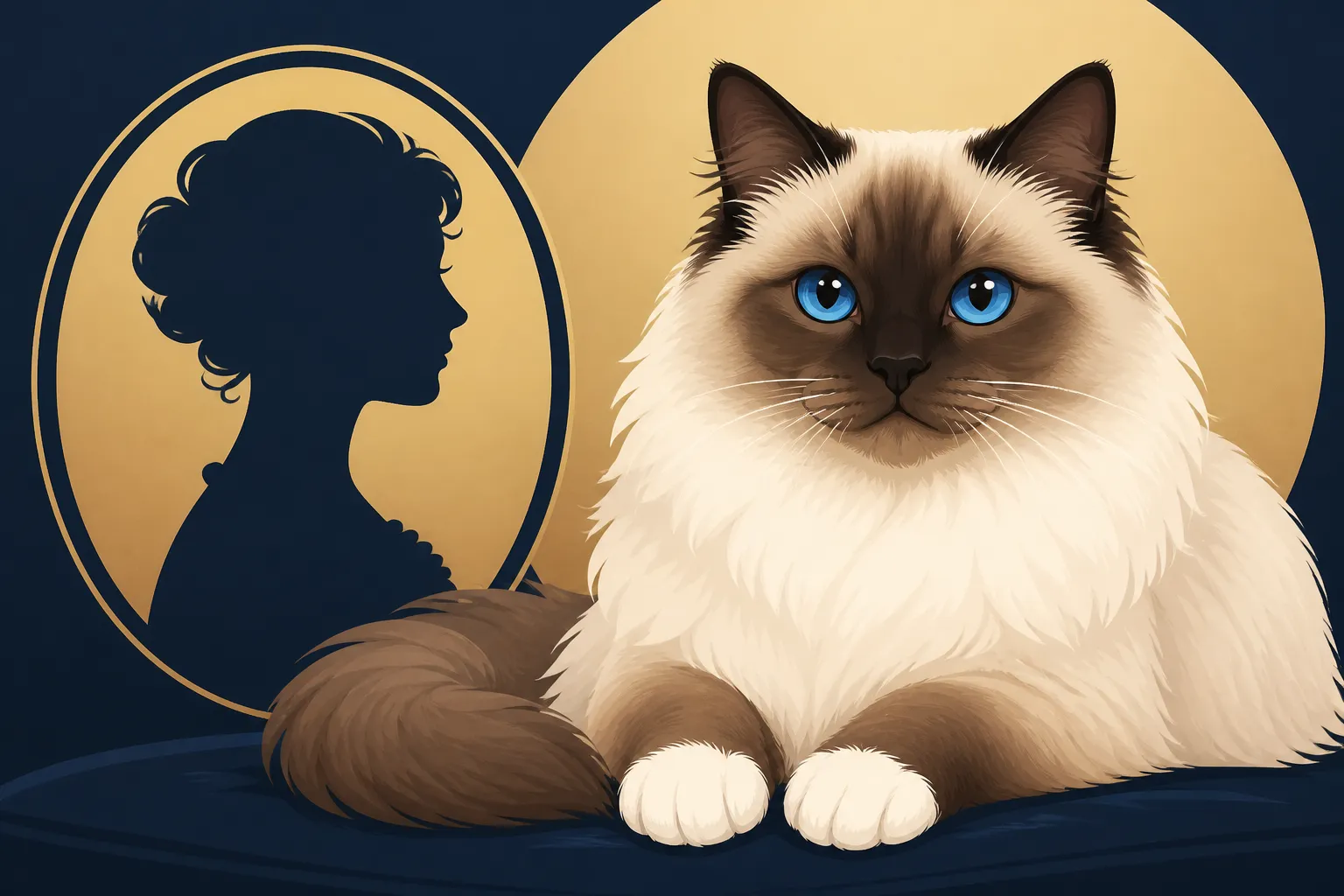
Who Poupee de Madalpour Was
When we talk about the history of the Birman cat, it's easy to get lost in the mists of ancient legends and romantic tales. But behind the beautiful mythology, there's a very real story of survival and the incredible resilience of a few crucial individuals. This guide delves into the specific, vital role played by one such cat, Poupee de Madalpour, a true matriarch whose genetic contribution was instrumental in saving the Birman breed from almost certain extinction after the devastation of World War II.
The Birman's Precarious Origins and the Need for Founders
The Birman cat, with its striking blue eyes, silky coat, and distinctive white "gloves" and "laces," holds a mystique that few other breeds can match. Its origins are often intertwined with enchanting legends, but the reality of its early development was far more fragile, culminating in a crisis that nearly wiped it out entirely.
The Legend Versus Reality of Early Birmans
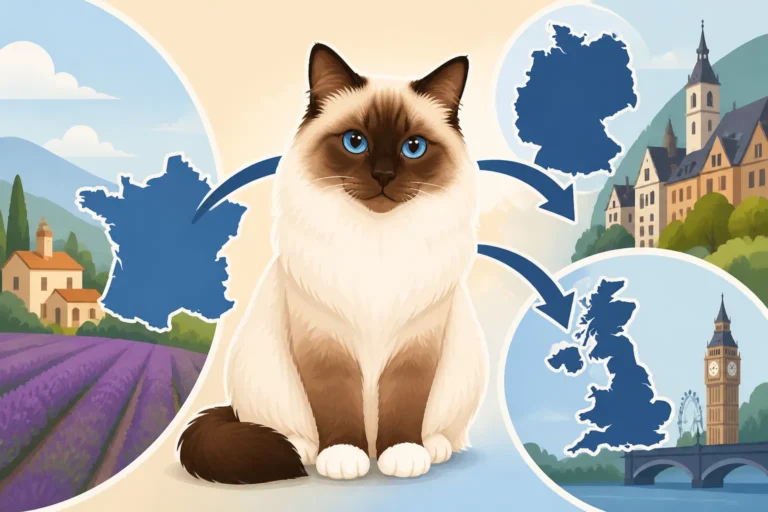
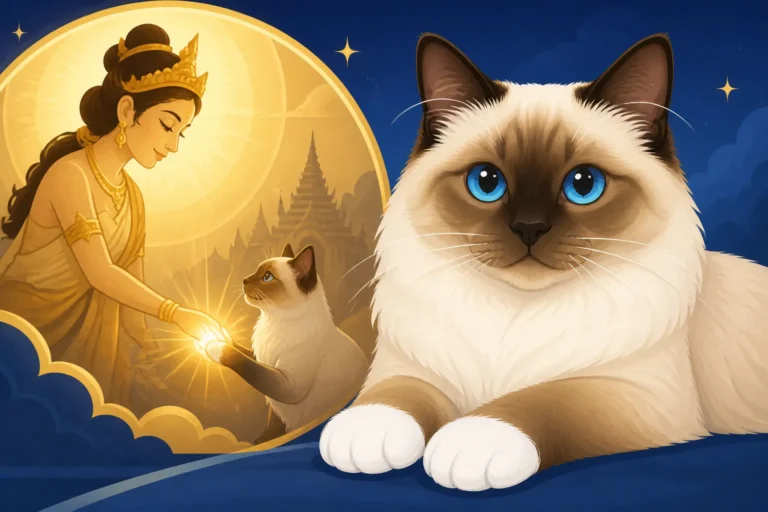
The most famous story associated with the Birman is the legend of the Temple of Lao-Tsun, a tale of a golden-eyed goddess, a dying priest, and a white cat named Sinh who received the sacred transformation. This beautiful narrative, which purports to explain the Birman's unique markings, adds a layer of enchantment to the breed. However, most historians and geneticists agree that the Birman, as we know it, was developed in France. Early records are sparse and often contradictory, making it difficult to pinpoint exact origins. What we do know is that by the early 20th century, cats resembling the modern Birman began to appear in Europe, brought over from various parts of Asia. These early pioneers were precious, but their lineage was often fragmented, and the breed was still in its nascent stages of stabilization, with breeders working diligently to establish a consistent type and temperament.
The Devastation of World War II
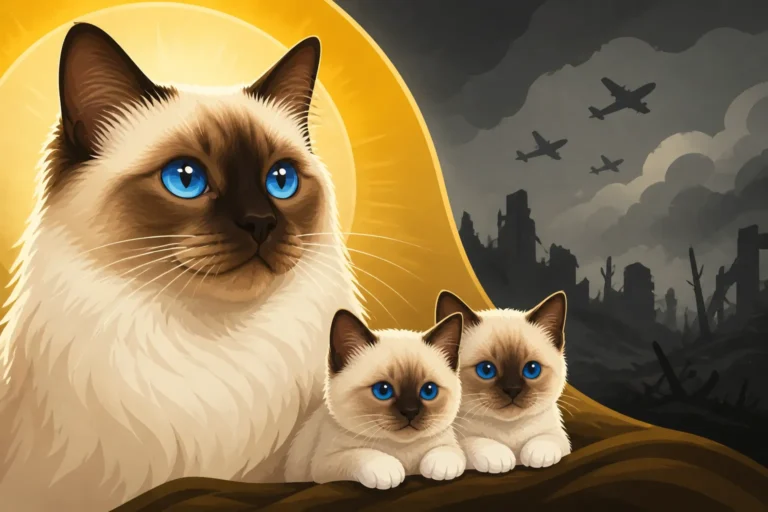
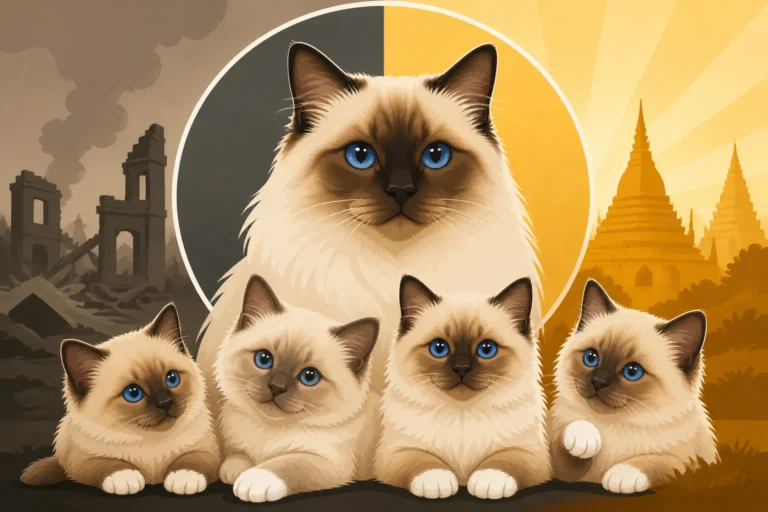
Just as French breeders were making progress in establishing the "Sacre de Birmanie," a catastrophe of global proportions struck: World War II. The war years were brutal for everyone, and domesticated animals, including pedigree cats, suffered immensely. Catteries were abandoned, supplies became scarce, and the meticulous breeding programs that had been slowly building the Birman population came to a grinding halt. Many cats were lost due to lack of food, disease, or simply the chaos of wartime displacement. The already small gene pool of the Birman breed shrank dramatically, pushing it to the very brink of extinction. By the time the war concluded in 1945, the situation was dire. It's often said that the entire modern Birman breed can be traced back to just two surviving cats, a testament to how close they came to vanishing forever. The Birman Was Rebuilt From Two Cats and It Shows
Poupee de Madalpour's Emergence and Role
In the grim aftermath of World War II, the future of the Birman cat hung by a thread. The breed desperately needed individuals to carry its torch forward, and among the few known survivors, one female cat, Poupee de Madalpour, emerged as a pivotal figure.
The Lone Survivor and the Search for Companions
Imagine the sheer relief, and perhaps desperation, of breeders in post-war Europe realizing that their beloved Birman cat was on the verge of disappearing. The few surviving individuals were scattered, and finding a suitable mate for them was a monumental task. Poupee de Madalpour was one of these crucial survivors. She represented a vital link to the pre-war Birman type, carrying the distinct genetic markers that made the breed so unique. Her mere existence was a miracle. To secure the breed's future, she needed a compatible male. This is where another key figure, Orloff de Kaabaa, comes into the story. He was another of the few known survivors, and together, Poupee and Orloff formed the foundation of the modern Birman breed. Their union was less about planned breeding for specific traits and more about sheer preservation – a desperate effort to ensure that the Birman lineage did not end. Who Orloff and Xenia de Kaabaa Were
Her Unique Contribution to the Gene Pool
Poupee de Madalpour was not just a survivor; she was a genetic treasure trove. She embodied the essential Birman characteristics that breeders were striving to preserve: the beautiful, medium-length silky coat, the deep sapphire blue eyes, the characteristic pointed coloring, and, most importantly, the distinctive white "gloves" on her paws and "laces" on her hind legs. These traits were precious, and her genetic material was paramount for the breed's continuation. Breeding from such a tiny genetic pool presented immense challenges. Breeders had to make difficult decisions, carefully selecting mates for her descendants to slowly rebuild the population while trying to maintain the integrity of the Birman type. It was a painstaking process that required dedication and a deep understanding of feline genetics, even if that understanding was largely empirical at the time. Every kitten from Poupee and Orloff was a beacon of hope, carrying forward the genetic blueprint that defines the Birman.
The Reconstruction Efforts and Poupee's Descendants
With Poupee de Madalpour and Orloff de Kaabaa as the foundation, the arduous journey of reconstructing the Birman breed began. This was not a quick fix but a dedicated, multi-generational effort that relied heavily on their offspring and strategic outcrossing.
The First Post-War Litters
The kittens born from Poupee and Orloff were nothing short of miraculous. These litters were the literal embodiment of the Birman's future. Each kitten represented a step away from extinction, a precious addition to a critically small gene pool. Breeders meticulously monitored these offspring, looking for consistency in type, temperament, and, of course, the signature markings. The focus was on strengthening the breed's numbers and re-establishing the standard traits that defined the Birman before the war. It was a slow and careful process, with every mating pair chosen with the utmost consideration to avoid further narrowing the genetic base while still aiming for the ideal Birman appearance. These early descendants of Poupee and Orloff formed the crucial link between the almost-lost pre-war lines and the vibrant, healthy breed we know today. Which Two Cats Every Birman Descends From
The Influence of Outcrosses on Her Lines
While Poupee and Orloff provided the initial spark for recovery, their genetic contribution alone was not enough to fully restore the breed's viability. The gene pool was simply too restricted, increasing the risk of inbreeding depression and the proliferation of genetic health issues. To overcome this, responsible breeders made the difficult but necessary decision to introduce other breeds into the Birman lines. This process, known as outcrossing, primarily involved using Persians and Siamese cats. The goal was to infuse new genetic diversity, improve vigor, and increase the population size without losing the distinctive Birman look. Poupee's direct descendants were then carefully bred back to these outcrossed lines. This delicate balancing act involved selecting offspring that retained the Birman's unique characteristics while benefiting from the broader genetic base. The challenge was immense: how to gain genetic diversity without diluting the very essence of what made a Birman a Birman. Which Breeds Were Crossed In to Save the Birman This is why you sometimes see the debate around What the Outcrossing Brought Into the Birman. It was a necessary step, but one that required careful management to ensure the Birman's integrity.
Poupee's Lasting Genetic Legacy
Poupee de Madalpour's impact wasn't just about survival; it was about ensuring the continuity of the Birman's most cherished traits. Her genetic blueprint, passed down through generations, solidified the distinct look that makes the Birman so recognizable.
The Gloving Gene and Other Traits
One of the most remarkable aspects of the Birman is its pristine white gloves and symmetrical laces, a trait almost unique among pointed breeds. Poupee de Madalpour is widely regarded as a primary source for the specific genetic variant responsible for these markings. This isn't just a random occurrence; it's linked to a particular gene that controls white spotting on the paws. Every Birman cat today carries two copies of this "gloving gene," a direct inheritance from their foundational ancestors like Poupee. The Gloving Gene Every Birman Carries Two Copies Of Her genetics didn't stop there; they also heavily influenced the Birman's overall body type—a sturdy, medium-boned build that is neither extreme like the cobby Persian nor slender like the foreign Siamese. Furthermore, the characteristic silky, single coat, less prone to matting than other longhairs, and the placid, gentle temperament are all part of the genetic tapestry woven by early Birmans, with Poupee being a key thread.
The Birman's Inbreeding Coefficient and Poupee's Impact
The fact that the modern Birman breed traces its ancestry back to such a limited number of individuals, including Poupee de Madalpour, has a profound impact on its genetic makeup. This phenomenon is known as a "founder effect," where a new population (in this case, the post-war Birman) is established by a very small number of individuals. While these founders saved the breed, they also inadvertently created a relatively narrow genetic base. This is reflected in the breed's inbreeding coefficient, which, while managed by careful breeding, remains something breeders are acutely aware of. What a Narrow Founder Base Left in the Birman A narrow founder base means less genetic diversity, which can make a breed more susceptible to certain hereditary conditions if those conditions were present in the founding lines. However, modern genetic testing and responsible breeding practices work to mitigate these risks. Knowing the impact of historical figures like Poupee allows breeders to make informed decisions to continue safeguarding the breed's health for generations to come.
Here's a look at the key figures in the Birman's post-war reconstruction:
| Figure | Role in Birman Reconstruction | Key Contribution | Impact on Modern Birman |
|---|---|---|---|
| Poupee de Madalpour | One of the two primary female post-war founders | Provided essential genetic blueprint for type, temperament, and white gloving. | Matriarchal line, ensuring the continuation of core Birman traits. |
| Orloff de Kaabaa | One of the two primary male post-war founders | Provided essential genetic blueprint for type, temperament, and white gloving. | Patriarchal line, partnered with Poupee to rebuild the breed. |
| Persian Outcrosses | Introduced to broaden the gene pool and increase numbers | Brought genetic diversity, improved vigor, and sometimes specific color points. | Helped prevent severe inbreeding, but required careful selection to maintain Birman type. |
| Siamese Outcrosses | Less common, but also used for genetic diversity | Potentially contributed to certain point colors or body structures. | Further diversified the gene pool without losing Birman elegance. |
The Birman Today: A Tribute to Resilience
The story of Poupee de Madalpour is more than just a historical footnote; it's a powerful reminder of the incredible dedication that went into preserving the Birman cat. Today's Birman is a direct legacy of that resilience, and understanding its past helps us appreciate its present.
The Modern Birman's Connection to Poupee
Every Birman cat you encounter today, from the energetic kitten exploring its new home to the serene senior basking in a sunbeam, carries a piece of Poupee de Madalpour's genetic heritage. Her survival, and the subsequent meticulous efforts of breeders, mean that the Birman is still here for us to cherish. Breeders continue to work tirelessly, not just to preserve the beautiful looks but also the gentle temperament and robust health of the breed. They look for lines that have been tested and cleared for common genetic conditions, ensuring that the legacy of those early founders is one of enduring health and vitality. Resources like reputable breeders' websites, breed club information, and trusted pet supply retailers like Chewy are invaluable for new owners looking to understand and care for their Birman.
The Ethical Responsibilities of Breeding
The knowledge of the Birman's narrow genetic bottleneck, stemming from its post-war reconstruction, places a significant ethical responsibility on modern breeders. It underscores the critical importance of extensive health screening and responsible breeding practices. Genetic tests for conditions like FOXN1 (Birman Hypotrichosis) and PKD1 (Polycystic Kidney Disease) are paramount. Knowing What Testing a Birman for FOXN1 and PKD1 Together Costs is crucial for breeders committed to transparency and the health of their lines. Responsible breeders readily provide documentation of these tests, along with clear information about the health history of their breeding cats and kittens. They understand that every mating decision impacts the future of the breed, a lineage that literally traces back to the courage and genetic generosity of cats like Poupee de Madalpour. This careful approach helps to ensure that, even with a limited founding base, the Birman gene pool continues to be managed to produce healthy, happy cats. Regular vet check-ups, quality nutrition – which you can easily find on Chewy – and proper grooming all contribute to a long, happy life for your Birman, a testament to its hardy origins. How Many Litters It Takes to Get a Well Gloved Birman often relates to the careful selection within these healthy lines.
Disclaimer
This article is for general informational purposes only and does not constitute professional advice. Laws, prices and regulations vary by location and change over time. Consult a qualified professional for guidance on your specific situation.