Which Tests Belong on a Birman Panel
Bringing a beautiful Birman into your home is an absolute joy, but it also comes with a big responsibility: making sure they live the longest, healthiest life possible. It can feel really overwhelming trying to figure out which health tests are truly necessary, especially with all the information out there. You want to do right by your furry family member, but where do you even begin? This guide is here to cut through the confusion and walk you through the essential health tests that every Birman cat should undergo, helping you understand why each one matters for their specific breed.
Understanding the Birman's Unique Health Landscape
To truly appreciate why certain health tests are so important for our beloved Birmans, we first need to take a little stroll through their unique history. It’s not just about what they look like; it's about the genetic tapestry woven over generations that makes them who they are, both in beauty and in potential vulnerabilities.
The Legacy of a Narrow Gene Pool
Our beautiful Birman cats have quite a story, and frankly, it’s a miracle they’re with us today. The breed faced a significant bottleneck after World War II, when their numbers dwindled down to an alarming low – literally just two cats, Orloff and Xenia de Kaabaa, were pivotal in restarting the breed. Imagine that! This incredibly narrow founder base meant that while the breed was saved, it also had very limited genetic diversity.
Think of it like this: if you have a very small group of people restarting a population, any genetic quirks or predispositions they carry are much more likely to show up in future generations. This is precisely What a Narrow Founder Base Left in the Birman – a genetic inheritance where certain conditions, even rare ones, became more concentrated. Breeders had to make difficult choices, carefully outcrossing with other breeds like Persians and Siamese in the immediate post-war years to expand the gene pool, but even so, some predispositions persisted. Understanding this history isn't just a fascinating anecdote; it's crucial for understanding why we screen for certain conditions today. It’s why conscientious breeders are so dedicated to health testing – they're working to safeguard the future of the breed, one kitten at a time. The health legacy of How Two Cats in 1945 Shaped the Birman's Health is something we live with today, requiring our vigilance.
Why Proactive Testing is Crucial for Birman Owners
One of the most endearing qualities of a Birman is their wonderfully placid and gentle nature. They are often described as the "gentle giants" of the cat world, calm and sweet-tempered. While this makes them fantastic companions, it also presents a unique challenge when it comes to their health: Birmans are notoriously stoic. They tend to hide illness and discomfort incredibly well, often until a condition is quite advanced. This isn't them being dramatic; it's an instinctual survival mechanism ingrained in cats.
For us, as their caretakers, this means we can't always rely on obvious signs of distress to tell us something is wrong. A Birman might quietly endure pain or discomfort, Why a Birman Hides Illness Behind a Placid Temperament, continuing to eat, purr, and seek affection, even when they're not feeling their best. This stoicism makes proactive health testing not just a good idea, but an absolute necessity. Early detection, often through routine screening tests, can mean the difference between managing a condition effectively and facing a much more severe, untreatable illness down the line. It allows vets to intervene sooner, often leading to better outcomes and a significantly improved quality of life for our beloved cats. Waiting until symptoms are undeniable might mean we've lost precious time.
Essential Genetic Tests for Birmans
When it comes to the Birman breed, there are a few genetic conditions that astute breeders and responsible owners prioritize testing for. These aren't just random checks; they target specific predispositions that have been identified within the breed, directly impacting their health and lifespan.
FOXN1 (Hypotrichosis) Screening
One of the most critical genetic tests for Birmans, especially in breeding lines, is for a condition called FOXN1, also known as Birman Hypotrichosis with Thymic Aplasia. This is a big name for a devastating genetic disease. Essentially, cats affected by two copies of the FOXN1 gene deletion are born either completely bald or with an extremely sparse, thin coat. But the hair loss is just the tip of the iceberg; the real danger lies in the "Thymic Aplasia" part. The thymus gland, crucial for developing a healthy immune system, either doesn't develop properly or is completely absent.
This leaves affected kittens with a severely compromised immune system, unable to fight off even common infections. Sadly, What FOXN1 Does to a Birman Kitten means they typically succumb to opportunistic infections within their first few months of life. Why a Birman Kitten Born Bald Will Not Reach Eight Months due to their inability to mount an immune response.
The good news is that we have a DNA test for FOXN1! It's a simple cheek swab that can identify if a cat is clear, a carrier (meaning they have one copy of the gene but are healthy), or affected (two copies). Reputable labs, such as Optimal Selection or UC Davis Veterinary Genetics Lab, perform Which Lab Runs the Birman FOXN1 Test. For breeders, testing is non-negotiable. Identifying How a Birman Carrier Is Identified is paramount because mating two carriers together will, statistically, produce affected kittens. This test allows breeders to make informed decisions and prevent this heartbreaking disease from appearing in their litters. FOXN1 Is the Birman's Own Genetic Disease, and while rare, the consequences are so severe that screening is an absolute must.
PKD1 (Polycystic Kidney Disease) Screening
Another significant genetic concern for Birmans is Polycystic Kidney Disease (PKD1). While most commonly associated with Persians, PKD made its way into the Birman gene pool through necessary outcrossing during the breed's rebuilding efforts after WWII, when Persians were used to widen the genetic base. This means that even today, Birmans can carry the gene for this progressive kidney disease.
PKD is characterized by the development of multiple fluid-filled cysts in the kidneys. These cysts are present from birth, but they gradually grow larger over time, eventually taking over healthy kidney tissue and leading to kidney dysfunction and, ultimately, kidney failure. The progression can be slow, with cats not showing symptoms until middle to old age, but it is relentless.
Thankfully, just like FOXN1, there's a definitive DNA test for PKD1. A simple cheek swab can tell you if your Birman is clear, a carrier, or affected. Why a Birman Breeder Still Tests for PKD is crucial because a clear result means that cat will never develop PKD due to this specific gene, nor will they pass it on to their offspring. How the PKD1 Test Clears a Birman is a fantastic advancement, allowing breeders to confidently eliminate the disease from their lines. This test empowers breeders to ensure they are producing PKD-clear kittens, sparing future generations from the suffering of this debilitating disease.
Blood Type Testing: Preventing Neonatal Isoerythrolysis
While not a disease in the traditional sense, knowing your Birman's blood type is incredibly important, particularly for breeding cats, as it directly impacts the health and survival of kittens. Cats, like humans, have different blood types, with the A, B, and AB systems being the most relevant. In Birmans, the primary concern revolves around Type A and Type B.
The issue arises when a Type B queen (female cat) is mated with a Type A tom (male cat). The Type B queen's immune system recognizes the Type A blood cells of her kittens (inherited from the father) as foreign. During nursing, antibodies from the mother's colostrum (first milk) are passed to the kittens. If these kittens are Type A, the mother's anti-A antibodies attack their red blood cells, causing a severe and often fatal condition called Neonatal Isoerythrolysis (NI).
Kittens affected by NI may appear healthy at birth but rapidly decline within hours or days. They can become weak, anemic, jaundiced, fail to thrive, and tragically, often die. This devastating scenario is entirely preventable if breeders are aware of their cats' blood types. Why a Birman's Blood Type Matters at Mating is critical for making informed breeding decisions. By testing both parents, breeders can avoid incompatible pairings that lead to NI. For instance, a Type B queen should only be bred to a Type B tom, ensuring all kittens are Type B and safe. Knowing this beforehand protects precious litters from What Neonatal Isoerythrolysis Does to a Birman Litter.
Crucial Health Screenings Beyond Genetics
While genetic testing gives us invaluable insight into inherited predispositions, a comprehensive health panel for a Birman extends beyond DNA. Regular physical examinations and specific screenings for common, non-genetic conditions are equally vital to ensure a long and healthy life for your feline companion.
HCM (Hypertrophic Cardiomyopathy) Echocardiograms
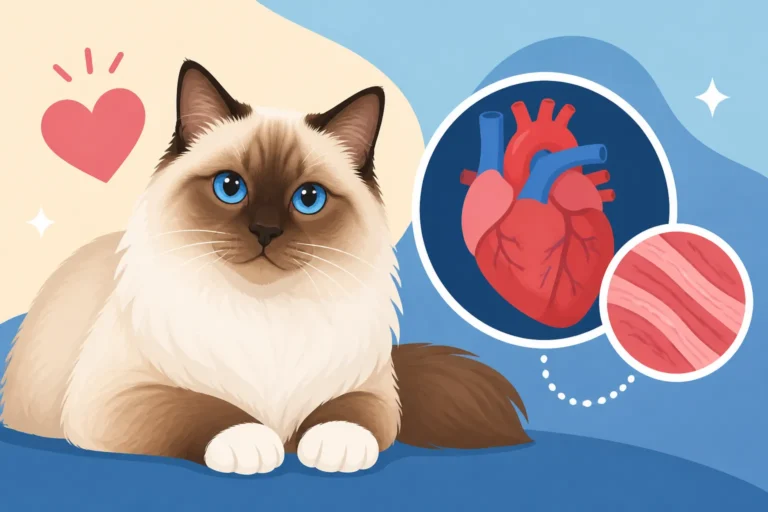
Hypertrophic Cardiomyopathy, or HCM, is the most common heart disease in cats, and unfortunately, Birmans are among the breeds identified as being predisposed to it. HCM causes the muscular walls of the heart's ventricles to thicken abnormally, making it harder for the heart to pump blood effectively. Over time, this can lead to heart failure, fluid in the lungs, and the formation of blood clots, which can cause paralysis or sudden death.
The challenging aspect of HCM in Birmans is that, unlike FOXN1 or PKD, there is currently no definitive DNA test for the condition in this breed. This means that the only reliable way to screen for HCM is through regular echocardiograms (ultrasound scans of the heart) performed by a board-certified veterinary cardiologist. HCM in a Birman Has No DNA Test, Only an Echo, making these scans absolutely essential for proactive management.
For breeding Birmans, annual echocardiograms are strongly recommended starting around one year of age and continuing throughout their breeding career. This helps breeders identify affected cats before they pass on potential genetic factors (though the exact inheritance in Birmans is complex and not fully understood). Even for pet Birmans, a baseline echo around The Age a Birman Starts Needing Yearly Heart Checks or if a heart murmur is detected can be incredibly valuable. Remember, Birmans are stoic; early How HCM Shows Up in a Birman might be incredibly subtle, like a slight reduction in activity or a tendency to hide more often. Therefore, Why an Echo Is the Only Way to Screen a Birman remains paramount. Regular screening greatly improves the chances of early detection and management, potentially adding years to a cat's life and improving its quality. We want to avoid a situation where What Kills a Birman Whose Line Was Never Echo Scanned comes as a devastating surprise.
Routine Veterinary Check-ups and General Health
Beyond the specific genetic and cardiac screenings, the cornerstone of any Birman's health panel is consistent, thorough routine veterinary care. These regular check-ups allow your veterinarian to assess your cat's overall health, catch potential issues early, and provide preventative care.
Every annual visit should include a full physical examination, where your vet will check everything from nose to tail. This means listening to their heart and lungs (to detect any murmurs that might prompt an HCM echo), palpating their abdomen, checking their joints, inspecting their eyes and ears, and assessing their dental health. Birmans, with their often narrow jaws, can be particularly prone to dental issues like gingivitis and periodontal disease. Regular dental checks and professional cleanings are vital to prevent How Dental Disease Progresses in a Birman and avoid painful extractions down the line.
As Birmans age, these routine check-ups become even more critical. Older Birmans may start to slow down, What an Ageing Birman Slows Down From, making it harder to spot subtle changes indicative of age-related conditions. Your vet will want to keep a close eye on their weight, muscle mass, and organ function. Blood and urine tests, especially as they enter their senior years, are crucial for monitoring kidney and thyroid function. Conditions like chronic kidney disease and hyperthyroidism become more common with age, and early detection through annual bloodwork, which tracks Which Blood Values a Birman's Kidney History Makes Important, allows for timely intervention and management.
Having a robust pet insurance plan, like one from a provider such as Healthy Paws, can be incredibly helpful in managing the costs associated with these routine screenings, unexpected illnesses, and potential treatments. Knowing that you have financial support can ease the burden and ensure your Birman receives the best possible care throughout their life.
Building a Comprehensive Birman Health Panel
So, you've decided to welcome a Birman into your family – fantastic! Now, let's talk about putting all this information into practice. Ensuring your Birman's health isn't just a one-time thing; it's a partnership between you, your breeder, and your veterinarian that lasts a lifetime.
The Breeder's Responsibility
The journey to a healthy Birman often begins with a responsible breeder. A good breeder is transparent, knowledgeable, and proactive about the health of their breeding cats and kittens. When you’re looking for a Birman kitten, don't be shy about asking questions – lots of them! A reputable breeder will welcome your inquiries and be able to provide clear, verifiable answers.
Specifically, they should be able to show you proof of health screenings for both the kitten's parents. This means providing actual certificates for genetic tests like FOXN1 and PKD1, demonstrating that their breeding cats are either clear or carefully managed carriers. You should also ask to see recent echocardiogram reports for their breeding cats, proving they are actively screening for HCM. Which Results a Birman Breeder Must Put in Writing goes beyond just showing them; you should receive copies with your kitten's paperwork.
Be wary of any breeder who dismisses health testing, claims their lines "don't have those problems," or offers vague assurances without documentation. How to Spot a Birman Breeder Selling Untested Kittens often comes down to this lack of transparency or an unwillingness to discuss the health challenges of the breed openly. A great breeder is proud of their health testing program and understands its vital role in preserving the Birman's well-being. They'll talk to you about the history of their lines, any health challenges they’ve faced, and how they’ve worked to mitigate risks. They are your first line of defense in bringing home a healthy companion.
Your Role as a Birman Owner
Once your Birman joins your family, the responsibility shifts to you to maintain their health journey. This means establishing a strong relationship with a veterinarian who understands the specific needs of the Birman breed. Work with them to create a preventative health schedule, which will include annual check-ups, appropriate vaccinations, and parasite control.
Keep up with the recommended screenings. Even if your Birman came from fully tested parents, life-long health vigilance is still important. This means scheduling those regular echocardiograms for HCM, even if your cat is a pet and not part of a breeding program. Discuss with your vet when these should start and how frequently they should be done, considering your cat's age and any new findings.
Financially, the costs associated with comprehensive veterinary care, including specialized screenings like echoes and potential treatments for illnesses that may arise, can add up quickly. This is where pet insurance can be a game-changer. Companies like Healthy Paws offer plans that can cover a significant portion of unexpected vet bills, from accidents to illnesses. Enrolling your Birman in a good pet insurance plan early can provide invaluable peace of mind, ensuring that you can always make health decisions based on what’s best for your cat, not just what you can afford. This financial safety net allows you to consistently provide the highest level of care throughout your Birman’s long and happy life.
Remember, you are your Birman's advocate. By being informed, proactive, and committed to their ongoing care, you'll be giving them the best possible chance at a vibrant, healthy life by your side.
Here's a quick overview of the recommended health panel for a Birman cat:
| Test Name | Type of Test | Purpose | Recommended For | Frequency (approx.) |
|---|---|---|---|---|
| FOXN1 (Hypotrichosis) | DNA (Cheek Swab) | Screens for genetic mutation causing hair loss and immune deficiency; identifies carriers. | All breeding Birmans & kittens | Once (definitive result) |
| PKD1 (Polycystic Kidney Disease) | DNA (Cheek Swab) | Screens for genetic mutation causing kidney cysts; identifies carriers. | All breeding Birmans & kittens | Once (definitive result) |
| Blood Type (A/B) | Blood Test | Determines blood type to prevent Neonatal Isoerythrolysis in kittens (for breeding pairs). | All breeding Birmans | Once (definitive result) |
| HCM Echocardiogram | Ultrasound | Screens for Hypertrophic Cardiomyopathy (heart thickening). | All breeding Birmans; Pet Birmans as recommended | Annually for breeders; Every 1-2 years for pets from age 1-2+ |
| Annual Veterinary Exam | Physical Exam | Overall health assessment, includes dental check, palpation, auscultation. | All Birmans | Annually (or bi-annually for seniors) |
| Routine Bloodwork | Blood Test | Monitors organ function (kidneys, liver), thyroid, red/white blood cell count. | All Birmans (especially seniors) | Annually (from middle age), or as needed |
| Urinalysis | Urine Test | Checks kidney function, detects urinary tract infections or other issues. | All Birmans (especially seniors) | Annually (from middle age), or as needed |
Disclaimer
This article is for general informational purposes only and does not constitute professional advice. Laws, prices and regulations vary by location and change over time. Consult a qualified professional for guidance on your specific situation.